La fermentación tiene unos diez mil años de historia como técnica de preservación y transformación de alimentos. Lo que es reciente es su integración en la alta cocina de autor como herramienta de sabor con argumento técnico, no solo como guiño a la tradición ancestral.Fermentation has about ten thousand years of history as a food preservation and transformation technique. What is recent is its integration in author haute cuisine as a flavor tool with technical argument, not just as a nod to ancestral tradition.
At La Makha, fermentation did not arrive with the wave of gastronomic trends of recent years. It arrived because the Colombian ingredient needs it to be at its best. And that difference in origin, necessity vs. trend, is what determines whether fermentation produces something genuinely good or just something that sounds good on the menu.
Why fermentation transforms the Colombian ingredient
Colombia has fruits with acidity and sugar profiles that make them ideal for fermentation processes. The North of Santander peach, the Pacific sour guava, Caribbean tamarind and highland uchuva have sugar and acid compositions that respond specifically to fermentation microorganisms.
The North of Santander peach kimchi that accompanies the Yolombó Duck Magret at La Makha is not an arbitrary combination. The peach from that region has a natural acidity and pulp firmness that make it ideal for Korean-style salt fermentation: the salt draws water from the fruit, concentrates its sugars and creates the environment for lactic bacteria to develop the characteristic kimchi acidity. The final result has a flavor complexity that fresh peach does not have, and that complexity is exactly what the duck dish needs to balance the magret’s intense fat.
For those who want to understand how these preparations integrate with the rest of the menu’s ingredients, the article on the star ingredients of La Makha explains the origin of each one and why they are on the menu.
The types of fermentation in La Makha’s kitchen
Fermentation is not a single technique. It is a set of microbiological processes that produce radically different results depending on the acting microorganism, the temperature, the time and the substrate being fermented.
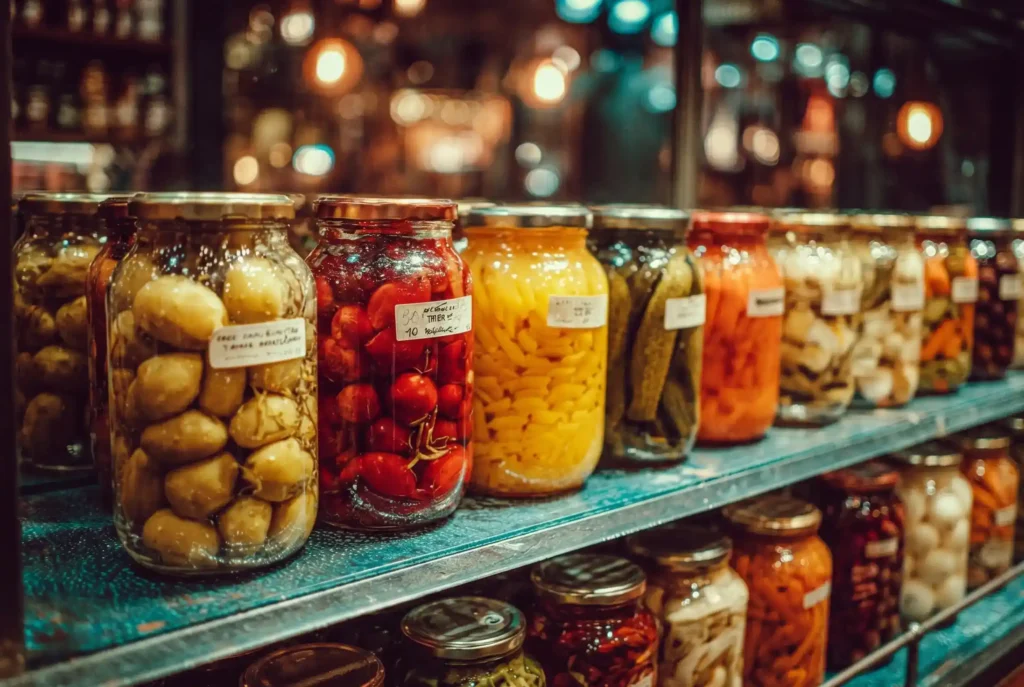
Lactic fermentation. The process that produces kimchi, sauerkraut and pickles. Lactic bacteria convert the food’s sugars into lactic acid, which acts as a natural preservative and produces the characteristic acidity of these preparations. At La Makha, the Pacific Colombian ají chombo pickles use lactic fermentation to develop a softer, rounder acidity than fresh ají, making them more versatile as a sauce and accompaniment component.
Acetic fermentation. Produces vinegars. The chef uses Colombian fruit vinegar reductions instead of imported industrial vinegars: the acidity profile difference is perceptible and produces sauces with more geographic identity.
Alcoholic fermentation. Produces alcohols and CO2. In La Makha’s kitchen it appears in fermented dough preparations and in some marinating techniques where the alcohol produced in fermentation acts as an aroma carrier in the meat.
Fermentation as a balance tool in the dish
One of the most important functions of ferments in La Makha’s cooking is flavor balance. Haute cuisine dishes have complex flavor profiles where fat, protein, sweetness and umami need an acidity element that balances them without extinguishing them.
The lactic acid of a well-constructed ferment has a softer, more persistent acidity than vinegar or lime. It does not hit the palate with intense acidity and disappear: it gradually integrates into the dish’s flavor and sustains it for longer. That makes ferments work better than direct acids in dishes with intensely flavored proteins like lamb or duck.
The Caldas Lamb at La Makha is accompanied by preparations that include fermented elements because the fat of Colombian altitude lamb needs a balancing agent that is persistent but not dominant. Ferments fulfill that function more elegantly than any direct acidulant.
Fermentation and living menu: why they are coherent
La Makha’s living menu and fermentation as a central technique have an internal coherence that goes beyond philosophy: they have operational coherence.
A restaurant that ferments needs time. Ferments are not prepared the day they will be used: they are prepared days or weeks in advance, when the ingredient is at its optimal point of freshness and ripeness. That requires forward planning of the menu based on what will be available and when.
The logic of the living menu, where the menu is designed around what is available and at its best, is perfectly compatible with that advance fermentation planning. The chef knows that in two weeks he will have North of Santander peaches at their optimal point, starts the kimchi fermentation in advance and the dish arrives on the menu when the kimchi has reached the correct fermentation level. That coordination, described in more detail in the article on the seasonal menu at La Makha, is invisible to the diner but determines the quality of what arrives at the table.
Frequently asked questions
Does fermentation change the nutritional profile of the ingredients?
Yes. Lactic fermentation increases the bioavailability of some nutrients, produces B-complex vitamins as a by-product of bacterial metabolism and modifies the structure of certain carbohydrates making them more digestible. That is not La Makha’s main argument for using ferments, which is flavor, but it is a verifiable additional benefit.
Do La Makha’s ferments contain alcohol?
Lactic ferments (kimchi, pickles) produce minimal amounts of alcohol as a secondary by-product of fermentation, but not in quantities significant from a consumption standpoint. The alcoholic ferments the chef uses in some marinating techniques do contain alcohol, but in the final preparation the alcohol evaporates or reduces to levels that have no effect on the diner.
Can I ask for information about the specific ferments on the menu that week?
Yes. La Makha’s dining room team can give detailed information about the fermented preparations present on that week’s menu, including the fermentation time, the process and the origin of the base ingredient.