Colombia does not have the cheesemaking tradition of France, Italy or Spain, but it has something those countries do not have: artisan cheeses with unique flavor profiles produced in specific microclimates that exist nowhere else in the world.
Paipa cheese, produced in the Boyacá municipality of the same name at more than 2,500 meters altitude, has a semi-aged profile with natural acidity and altitude milk notes not found in any European cheese. Huila quesillo, the Colombian Caribbean coastal cheese and the fresh cheeses of the Cundiboyacense savanna are each expressions of a specific territory with a production tradition that spans decades or centuries.
The question is not whether Colombian cheeses are comparable to European ones. It is whether they have enough character of their own to build interesting pairings with wines of different structures.
Paipa cheese: the only one with Colombian designation of origin
Paipa cheese is the only Colombian cheese with protected designation of origin. That means only cheese produced in the municipalities of Paipa, Sotaquirá, Duitama and Cerinza in Boyacá, with regional cow’s milk and following the traditional production process, can be called “queso Paipa.”
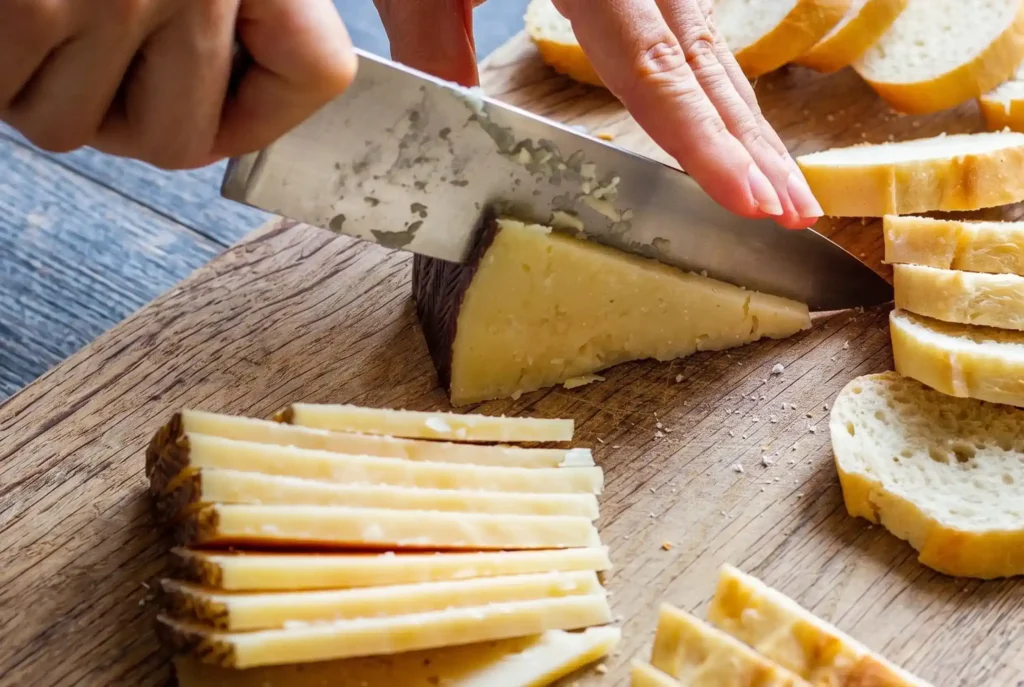
It is a semi-aged cheese with a natural yellow-orange rind, pale yellow semi-firm paste and a flavor that combines moderate lactic acidity with butter notes and a slight piquancy that develops with aging. Its salt content is higher than most European semi-firm cheeses, which affects both its flavor profile and its behavior in the kitchen.
At La Makha, Paipa cheese appears in the sixth course of the tasting menu as a Paipa cheese foam accompanying the Caldas lamb capelletti. The foam is not an arbitrary use of the cheese: the heat emulsification process develops the Paipa’s butter aromas and softens its acidity, producing a creamy, savory component that balances the lamb’s intensity and the pasta’s texture. To learn more about how the chef builds that type of preparation, the article on haute cuisine techniques at La Makha explains the process in detail.
European wines that work with Colombian cheeses
Cheese and wine pairing has principles that apply regardless of the cheese’s origin: the wine’s acidity must be at least at the level of the cheese’s acidity so neither is overshadowed, and the wine’s tannin must be compatible with the cheese’s protein and fat without producing excessive astringency.
With those principles as a base, the European wines that work best with Colombian cheeses are the following.
- With Paipa cheese (semi-aged, medium acidity, pronounced salt). Whites with good acidity and medium body are the most coherent option: a Galician Albariño, a Sardinian Vermentino or an unoaked Burgundy Chardonnay. The wine’s acidity balances the cheese’s salt and the medium body does not compete with the lactic aromas. A young Rioja Tempranillo without pronounced oak also works if red is preferred.
- With Huila quesillo (fresh, acidic, elastic). The quesillo’s high acidity calls for a wine with equivalent acidity that does not add unnecessary tannin: a Prosecco extra brut, a brut nature Cava or an Austrian Grüner Veltliner are options that balance the profile without dominating it.
- With aged cheeses from the Cundiboyacense savanna. For cheeses that have developed more complexity with aging, a cured Manchego, a Pecorino Toscano or a Grana Padano are European references with comparable profiles. The wines that work with those profiles are medium-structured reds: a Barbera d’Asti, a Côtes du Rhône or a Mencía de Bierzo.
Cheese pairing in the context of La Makha’s menu
La Makha does not have a separate cheese board as an independent service in the French restaurant style. Paipa cheese appears integrated into a specific tasting menu preparation (the foam accompanying the lamb) because in that context it has a concrete gastronomic argument.
That integration of the cheese into the dish, rather than presenting it as a separate board, reflects the same philosophy with which La Makha works all its Colombian ingredients: the cheese is not on the menu to demonstrate that Colombia has interesting artisan cheeses. It is there because in that specific preparation it produces the most coherent flavor result with the accompanying ingredient.
For diners who want to explore Colombian cheese pairings with wines from La Makha’s wine list as part of the experience, the dining room team can advise on which preparations in that week’s menu include cheese and which wines from the list have the most suitable structure. The exclusive wine list at La Makha has European options curated specifically to complement the restaurant’s Colombian author cuisine.
Frequently asked questions
Does La Makha have a Colombian cheese board?
La Makha does not have a separate cheese board as a standard service. Colombian cheese, primarily Paipa cheese from Boyacá, appears integrated into specific tasting menu preparations. For specific cheese pairing experiences, the team can advise on the options available on that week’s menu.
Which European wine pairs best with Paipa cheese?
For semi-aged Paipa cheese with pronounced salt, whites with good acidity and medium body are the most coherent option: Galician Albariño, Sardinian Vermentino or unoaked Burgundy Chardonnay. If red is preferred, a young Rioja Tempranillo without pronounced oak works well with the Paipa’s profile.
Does La Makha work with Colombian cheeses other than Paipa?
La Makha’s menu is a living menu that changes according to seasonal ingredient availability. Paipa cheese is the most frequent due to its semi-aged character and verifiable designation of origin, but the chef can incorporate other Colombian cheeses when the seasonal menu calls for them.