Colombia has a geographic position that should make fish one of the central axes of its haute cuisine gastronomy: two coastlines, the Pacific and the Caribbean, with radically different marine ecosystems, plus one of the richest freshwater biodiversity river networks in South America.
And yet, most high-level restaurants in Medellín serve Norwegian salmon or imported tuna as if Colombia had no oceans of its own.
La Makha does the opposite.
The Colombian Pacific: biodiversity and depth of flavor
The Colombian Pacific has one of the richest marine ecosystems in the world. The cold Humboldt current and the confluence with tropical waters produce marine biodiversity that few seas on the planet match.
Bahía Solano tuna is the most representative Pacific fish in La Makha’s concept. Bahía Solano is a municipality on the Pacific coast of the Chocó department where artisan fishermen catch tuna using responsible fishing techniques that La Makha’s team verifies directly.
Colombian Pacific tuna has a different fat profile from imported tuna. The water temperature and the diet of the specimens living in those waters produces intramuscular fat infiltration with more omega-3 fatty acids than Mediterranean or north Pacific tuna. That difference is perceptible in the flavor and in how the tuna responds to the acidity of mandarina lime in the ceviche.
Caribbean red snapper, Pacific coast mangrove shrimp and shellfish are other Colombian sea ingredients that La Makha incorporates into the menu according to the season. You can see how that process works in the article on local fish on the plate at La Makha.
The Colombian Caribbean: spices, coconut and tradition
The Colombian Caribbean’s sea cuisine has a completely different profile from the Pacific. The African, indigenous and Spanish influences that merged in the Atlantic coastal communities produce a culinary tradition where coconut, plantain and spices are protagonists alongside the fish.
The San Andrés pala conch, the northern Colombian Pacific prawn and the Caribbean sierra fish are ingredients that appear on La Makha’s menu when season and availability allow. Each has a specific flavor profile that determines which technique and accompaniments work best.
The difference between working with Caribbean fish and Pacific fish is not only geographic: it is one of flavor profile, texture and behavior with heat. A Caribbean snapper has firmer, leaner flesh than a Pacific tuna. That difference determines whether the fish works better raw (as in ceviche), cooked at low temperature (sous vide) or grilled at high heat.
River fish: bocachico and Colombia’s fluvial culinary tradition
The culinary tradition of Colombia’s rivers predates that of the seas in many regions of the country. The Magdalena, Cauca, Atrato and Amazon rivers have freshwater fish species that are the foundation of the cooking of riverside communities that have spent centuries developing preparation techniques specific to each species.
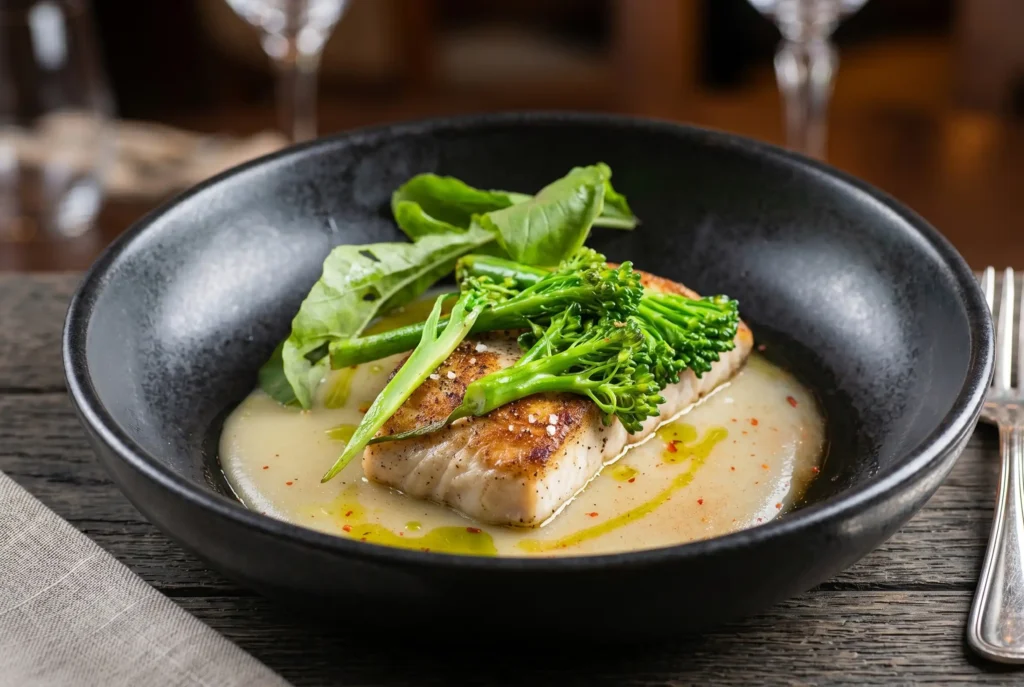
Bocachico is the most representative river fish in Colombian gastronomy. It is a large-scaled fish with white flesh and mild flavor that Antioquian tradition prepares fried whole, in sancocho or in sudado. At La Makha, when bocachico appears on the menu, the preparation applies haute cuisine technique to an ingredient with deep cultural history: the challenge is elevating the presentation and technique without losing the ingredient’s identity.
Other Colombian river fish such as Magdalena catfish, llanos cachama and Amazon pirarucu have fat and texture profiles that make them interesting for haute cuisine preparations. The pirarucu, in particular, has scales so large and resistant they can be used as a kitchen tool, making the whole fish an ingredient with multiple technical possibilities. You can see how that reflects week by week in the seasonal menu at La Makha and which dishes are available in each period.
The catch of the day as an exercise in gastronomic honesty
The fourth course of La Makha’s tasting menu is called “Catch of the Day.” That name is not a gastronomic trope: it is literally what arrived from the supplier that day, in its best possible state.
The catch of the day can be Bahía Solano tuna, red snapper, corvina, sierra or any other fish that La Makha’s team received that morning in the best freshness conditions. The dish has no fixed recipe because the protagonist changes. What is constant is the criterion: the fish that arrives for that course has to be the best that was available that day.
That gastronomic honesty has a cost: the team cannot predict exactly what it will serve in that course until the catch arrives. But it produces something that menus with fixed imported ingredients cannot give: an experience where the central ingredient is the best that exists at that specific moment.
Frequently asked questions
Does La Makha serve imported salmon or Colombian fish?
La Makha’s concept prioritizes Colombian fish with verifiable traceability: Bahía Solano tuna, Caribbean red snapper and other seasonal fish. Norwegian salmon is not an ingredient that fits with the restaurant’s Colombian origin cooking philosophy.
What is the “catch of the day” in La Makha’s tasting menu?
It is the fourth course of the 7-course menu, and it corresponds literally to the highest-quality fish that arrived from the supplier that day. The dish has no fixed recipe because the protagonist changes according to availability. What is constant is the selection criterion and the level of the preparation.
Can I know in advance which fish will be on the menu?
Fish availability depends on the season and the supplier’s delivery. When booking, the team can give information about the most likely catch for that week, but cannot guarantee it precisely because the living menu responds to what effectively arrives in the best conditions.