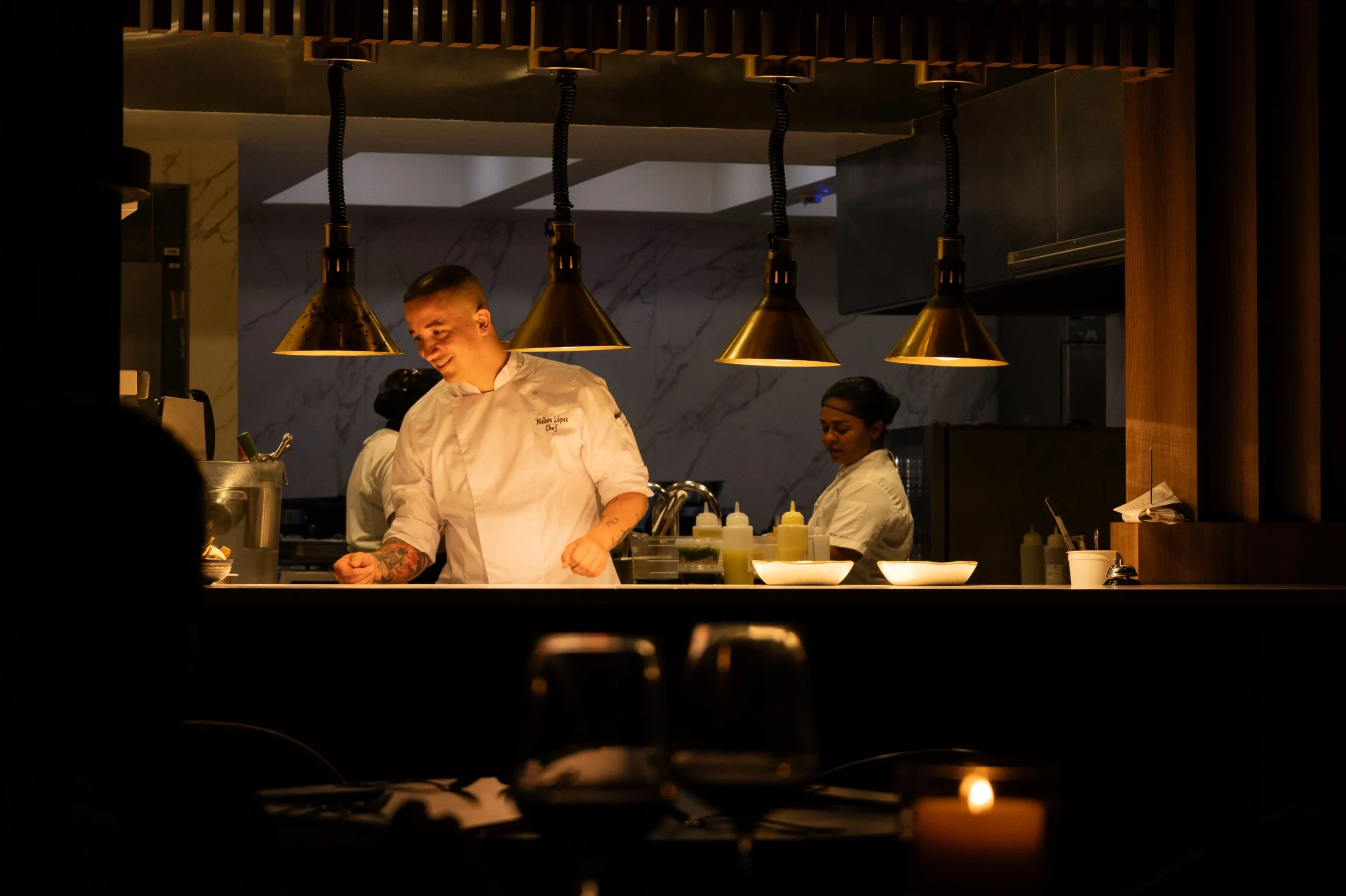
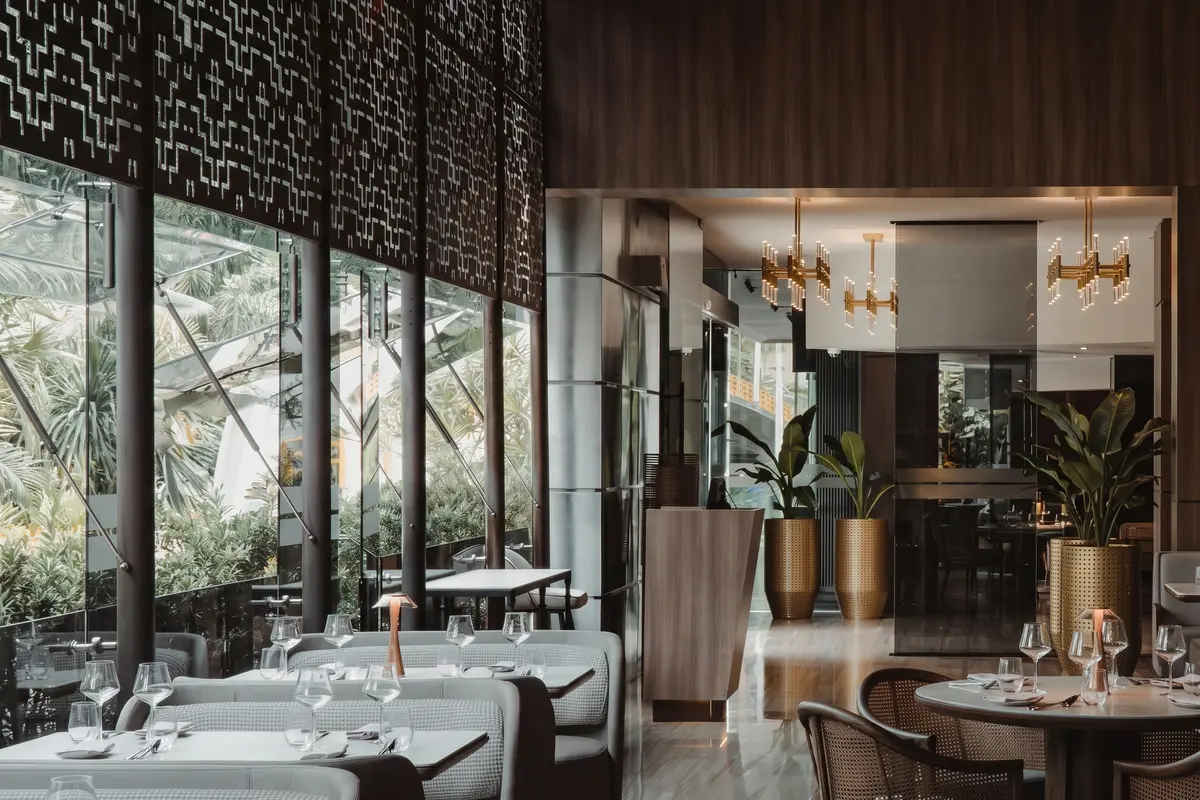
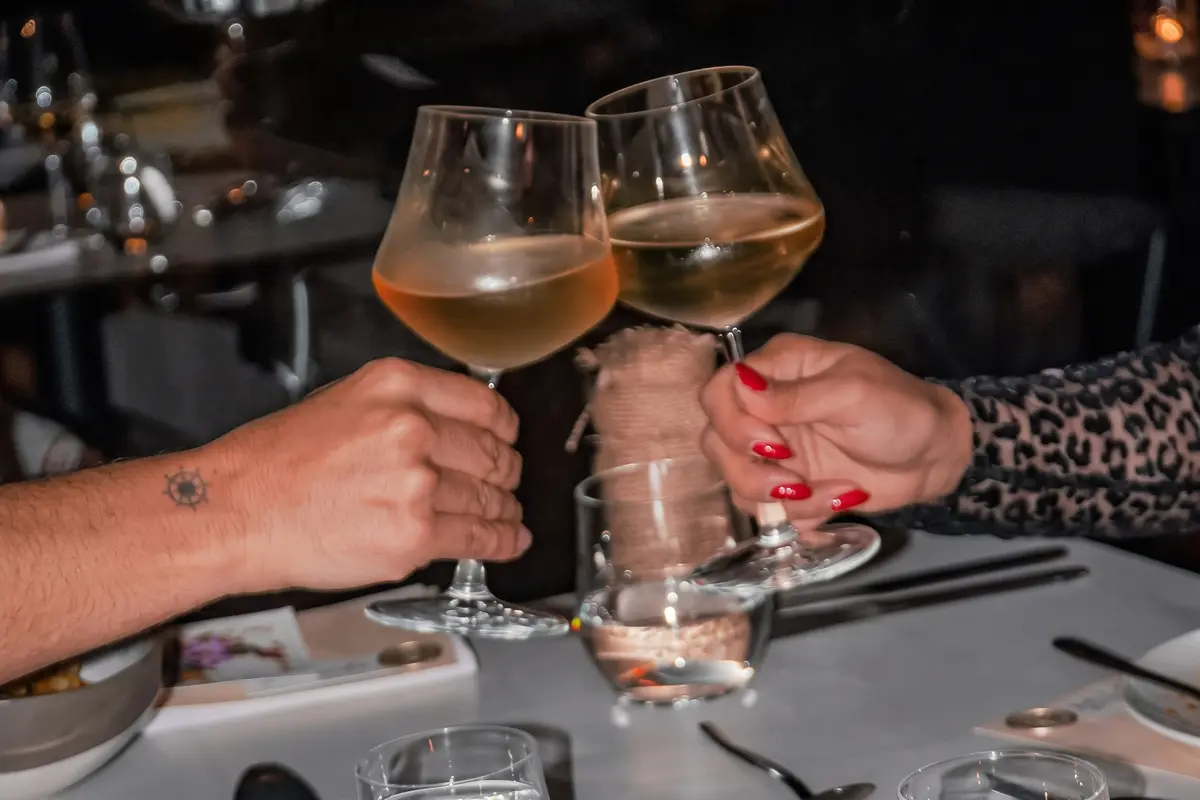
Gastronomic trends do not all arrive at the same time, nor do they affect all restaurants in the same way. Some spaces adopt them when they are already at the peak of their media cycle. Others anticipate them because their way of working was already pointing in that direction before anyone gave it a name. La Makha belongs to the second group.
What is now called “origin cooking,” “ingredient traceability” or “seasonal menu” are concepts that La Makha’s team has practiced since opening. Not because they followed a trend, but because it is the only approach that makes sense when the starting point is a country with Colombia’s biodiversity.
Origin cooking: from label to real practice
Origin cooking as a 2026 trend has a problem: many restaurants use the term without anything behind it. They put “local ingredients” on the menu and serve imported tomatoes with garden herbs.
At La Makha, origin cooking works differently. The tuna comes from Bahía Solano, on the Colombian Pacific. The octopus is from La Guajira. The lamb is from Caldas. Paipa cheese comes from Boyacá. Every ingredient has a verifiable region of origin because the team works directly with producers it knows by name.
That approach to sourcing has consequences for the menu: it cannot be fixed. If the Caldas lamb is not at its best this week, the dish changes. If the Bahía Solano tuna arrives in smaller volume than usual, the preparation adjusts. The living menu is not a marketing concept but the natural result of working with real seasonal product. The difference in 2026 is that more restaurants are trying to replicate it. At La Makha it is not a trend: it is the restaurant’s normal operation from day one.
Fermentation and preservation: the technique that came back to stay
One of the most solid trends in global haute cuisine in 2026 is the return of ancestral fermentation and preservation techniques, now integrated into contemporary haute cuisine concepts.
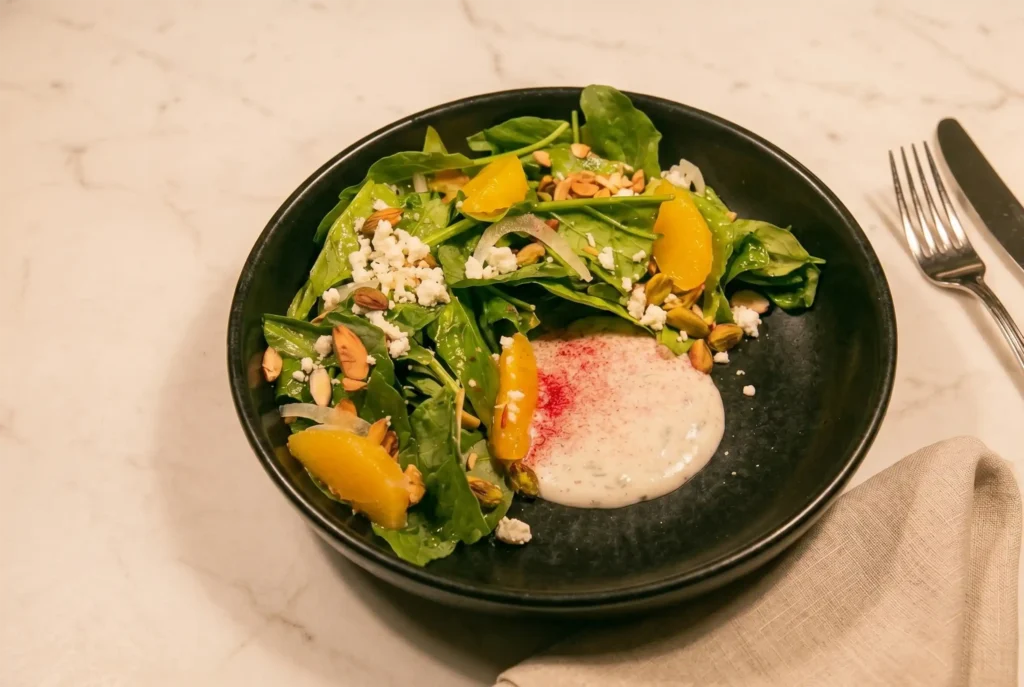
La Makha has worked with ferments for some time. The North of Santander peach kimchi that accompanies the Yolombó Duck Magret is an example of how a Korean fermentation technique is applied to a specific Colombian ingredient from a concrete region. The result is not fusion in the sense of mixing for the sake of it: it is the application of a preservation technique that makes sense for that ingredient in that context.
Colombian fruit ferments, ají chombo pickles and Andean root clarifications are part of La Makha’s usual technical vocabulary. You can see how each of these techniques is applied in the article on the exclusive author techniques behind La Makha’s menu.
Living menu: the answer to menu rigidity
Menu rigidity is one of the problems global haute cuisine is trying to solve in 2026. A restaurant with a printed menu that does not change in six months has a coherence problem with its own principles of freshness and seasonality.
La Makha does not have that problem. The 7-course tasting menu is not always the same. The 7 courses have a structure (cold starter, warm starter, intermediate, fish, meat, savory close and dessert) but the content of each course changes according to what is available and at its best that week.
For the returning diner, that produces something restaurants with fixed menus cannot offer: a genuinely different experience on each visit. Not cosmetic variations in the garnish of a dish that never changes. Real changes of protagonist, region of origin and technique. The tendency in 2026 is for more restaurants to attempt this model. The difficult part is not announcing it: it is having the supplier network, the kitchen team and the diner’s trust to operate that way consistently.
Traceability as a standard, not a differentiator
In 2026, ingredient traceability stopped being a differentiating argument in haute cuisine and became a minimum standard that the informed diner demands.
La Makha has that standard covered. When the dining room team presents a dish with Bahía Solano tuna, it can answer precisely where that tuna comes from, which fishermen caught it and what cold chain process it followed from the coast to the El Poblado kitchen.
That information is not a corporate transparency exercise. It is the result of La Makha’s team knowing its sustainable suppliers directly, without intermediaries adding layers between the producer and the kitchen.
The role of Colombian cuisine on the global gastronomic map
2026 is the year Colombian cuisine starts to have genuine presence in international gastronomic conversations. Not as an exotic curiosity but as a concept with its own identity, technique and argument.
Medellín is part of that movement. The concentration of restaurants with Colombian contemporary cuisine concepts in El Poblado and Provenza makes the city a real gastronomic destination for travelers who arrive specifically to eat well.
La Makha is part of that conversation. Not because it is the only high-level Colombian restaurant in the city, but because its origin cooking approach with well-applied international technique is precisely the type of concept that the global gastronomic market is looking for in 2026: authenticity with rigor.
Frequently asked questions
What are the most relevant gastronomic trends in Medellín for 2026?
The three most solid are origin cooking with verifiable traceability, fermentation and preservation techniques integrated into haute cuisine, and dynamic menus that change according to seasonal availability. La Makha operates with all three as its foundational philosophy.
¿Cómo anticipa La Makha las tendencias gastronómicas de 2026?
La Makha does not anticipate trends in the sense of getting ahead of what will be fashionable. It operates with origin cooking and living menu principles that have been coherent with its concept from the beginning. That those principles are a trend in 2026 is a timing coincidence, not the result of following a forecast.
How does La Makha anticipate the gastronomic trends of 2026?
At La Makha, 1st floor of Binn Hotel, Carrera 25 # 10 – 51, El Poblado, Medellín. The 7-course tasting menu is the most complete way to experience the concept. Direct booking through Binn Hotel’s official channels.