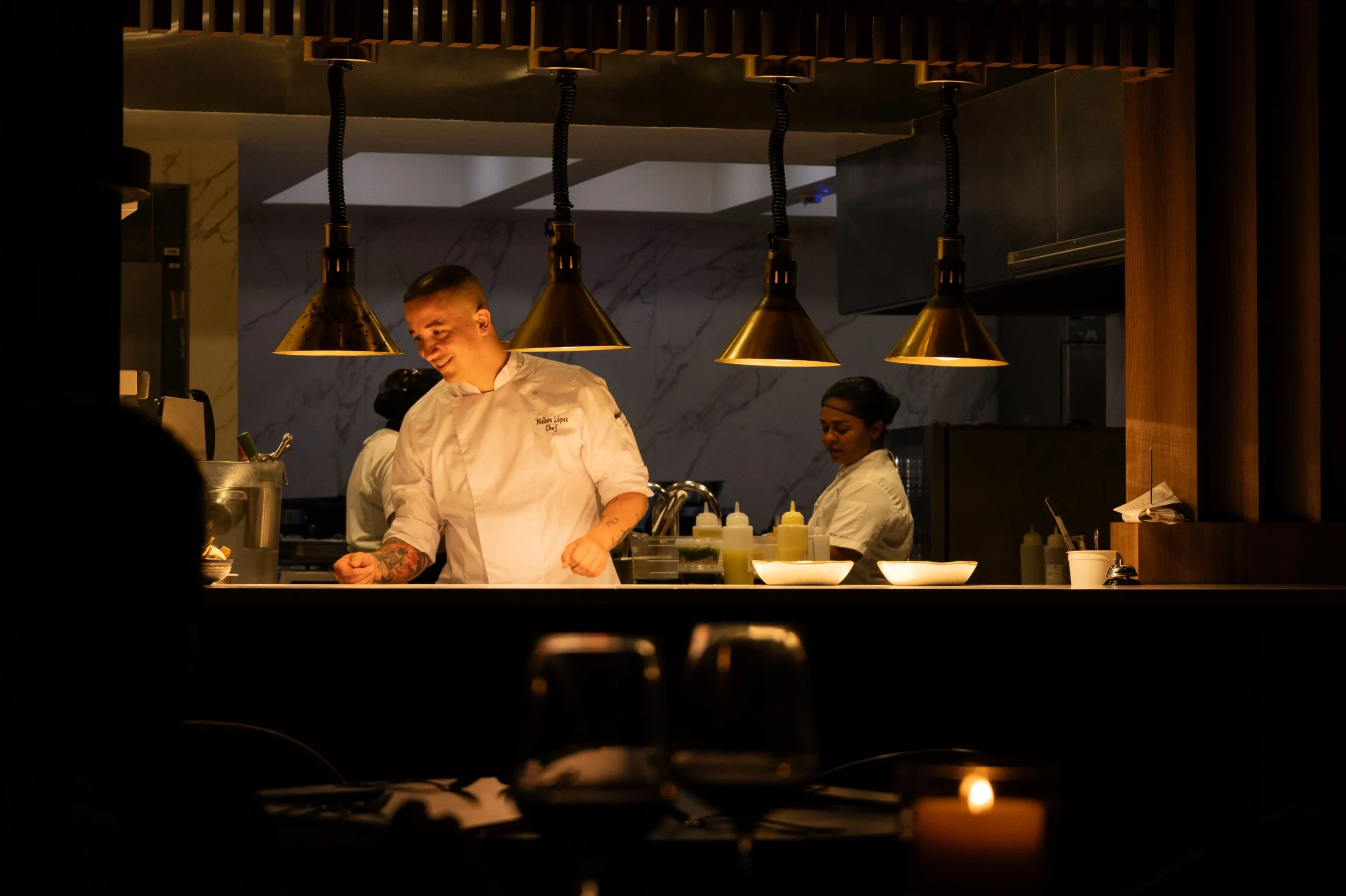
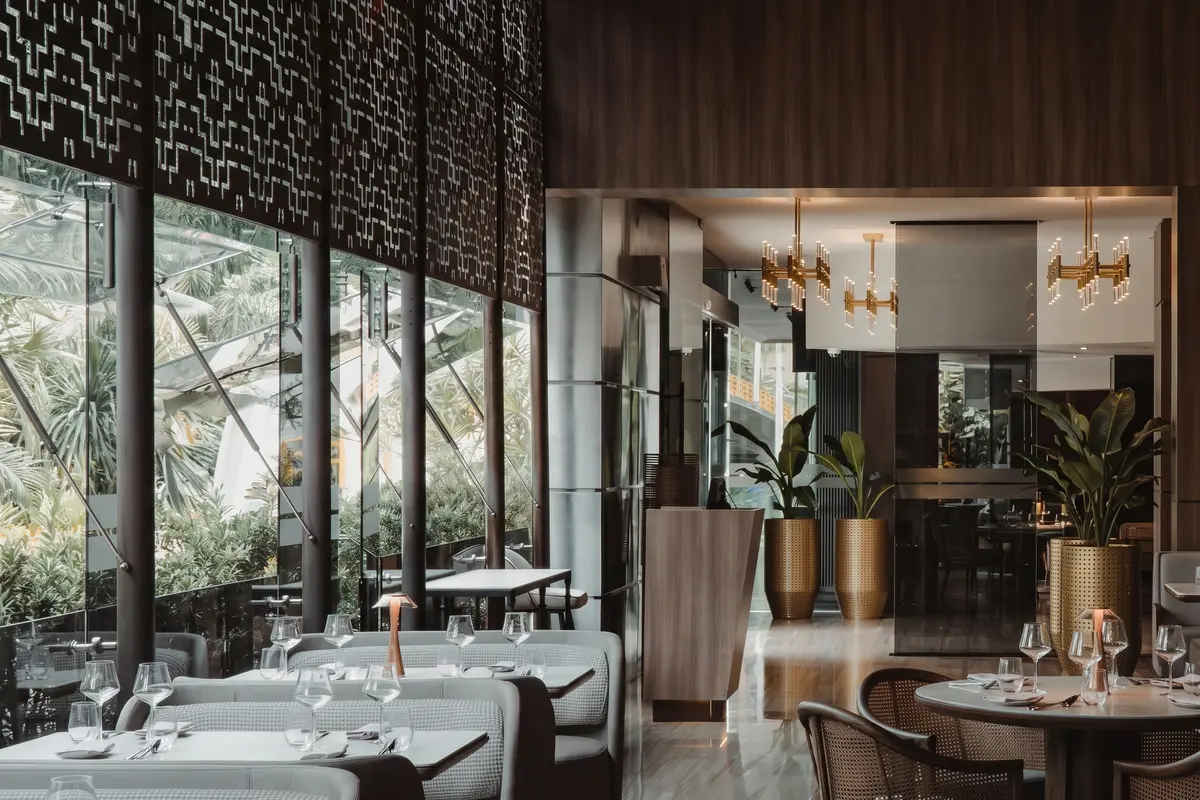
Nelson López Villa is the executive chef of La Makha, the restaurant at Binn Hotel in El Poblado. He has held the role since November 2025, after two years working in the hotel’s kitchen as sous chef. He is responsible for the restaurant’s culinary direction, including the selection of the dishes he personally recommends to diners.
From sous chef to executive chef at Binn Hotel
Nelson’s career at Binn Hotel started in August 2024 as sous chef. During that time he worked on menu development, supplier management, and training the kitchen team. Fifteen months later, in November 2025, he was promoted to executive chef, the position he currently holds.
The move from sous chef to executive chef in just over a year makes more sense once you look at the rest of his career: before joining Binn Hotel, Nelson had already held several kitchen leadership roles at hotels and restaurants across Medellín.
Nelson López’s career before La Makha
Before joining Binn Hotel, his professional background includes these roles:
- Tequendama Hoteles, chef (March to June 2024).
- JO&JOE, chef and food and beverage supervisor (May 2022 to January 2024, one year and nine months). In this role he was responsible for menu creation, inventory control, supplier negotiation, staff selection and training, and dish costing.
- Restaurante Mondongo’s, production supervisor (November 2020 to May 2022).
- Hotel Dann Carlton Belfort, head cook (August 2017 to October 2020, three years and three months). There he was responsible for shift management, staff and inventory oversight, and preparing menus for the hotel’s large events.
This entire background is based in Medellín, which means Nelson already knew the city’s supplier network and local product landscape before arriving at La Makha.
Cocina de origen under his direction
At La Makha, Nelson López leads the cocina de origen approach that defines the restaurant, built around Colombian ingredients in every dish. His clearest signature is the three dishes he personally recommends: the corn crisp from Montes de María, the rice and beef, and the catch of the day, each described by him with the technical detail of its preparation, from the browned butter in the corn crisp to the twelve-hour braised beef in the rice and beef dish.
That same approach carries through to the seven-course tasting menu the restaurant offers, where every dish comes with a specific pairing designed to complement the Colombian cuisine the chef directs.
His participation in Kitchen by Heimtextil Colombia
In April 2026, Nelson López represented La Makha as executive chef at that year’s edition of Kitchen by Heimtextil Colombia, a three-day event that brings cooking, design, and textiles together. It was the first time he led an event of this kind since taking on the role of executive chef. His participation adds to La Makha’s track record of appearing in spaces where kitchen work meets other creative disciplines in the city.
Technical training at Sena
Nelson López’s formal culinary training is a technical degree in cooking and gastronomy from Colombia’s National Learning Service (Sena), completed between December 2016 and February 2017. The rest of his professional development was built on the job, through the staff management and menu creation roles he held in the years that followed.
Frequently asked questions
Who is the executive chef of La Makha?
The executive chef of La Makha is Nelson López Villa, who has held the role since November 2025.
How long has Nelson López worked at Binn Hotel?
Since August 2024, when he joined as sous chef. He was promoted to executive chef in November 2025.
What dishes does the chef at La Makha recommend?
Nelson López personally recommends three dishes: the corn crisp from Montes de María, the rice and beef, and the catch of the day, each with a detailed preparation that he describes himself.
Has Nelson López taken part in events outside La Makha?
Yes, in April 2026 he represented La Makha as executive chef at Kitchen by Heimtextil Colombia, an event connecting cooking, design, and textiles. It was his first time leading an event of that kind in that role.
Where did chef Nelson López train?
He trained as a technician in cooking and gastronomy at Colombia’s National Learning Service (Sena), between December 2016 and February 2017.