Coffee is the most recognized Colombian product in the world. And yet, in most Medellín restaurants it is served at the end of dinner as a formality: machine coffee in a small cup, without context, without selection criteria and without any relationship to what was just eaten.
La Makha does something different with coffee. Not because it has a “specialty coffee” policy to mention on the menu, but because Colombian coffee has enough character of its own to integrate into the gastronomic concept with a genuine argument.
Why Colombian coffee deserves a place at the haute cuisine table
Colombia produces some of the most complex coffees in the world. The combination of altitude, temperature, humidity and soil variety in the Antioquian coffee regions produces beans with cup profiles ranging from the fruity, bright acidity of coffees from Jardín and Salento to the more chocolatey, dense profiles of the higher-altitude areas of the Antioquian southwest.
That diversity of profiles has the same pairing potential as wine. A Jardín coffee with notes of maracuyá and panela has an acidity that can complement a tropical fruit dessert in the same way a sweet wine with good acidity would. An Andes coffee with a dark, chocolatey profile can close a braised meat dish better than many spirits.
Most restaurants do not develop that potential because specialty coffee requires a handling chain that goes from producer to cup with criteria at every step. Roasting well, grinding at the moment, choosing the right extraction method for each bean: these are decisions that most restaurants never make. The B Coffee space at Binn Hotel extends that origin philosophy to the breakfast coffee and the everyday work coffee in the same building.
The Carajillo as the closing course of the tasting menu
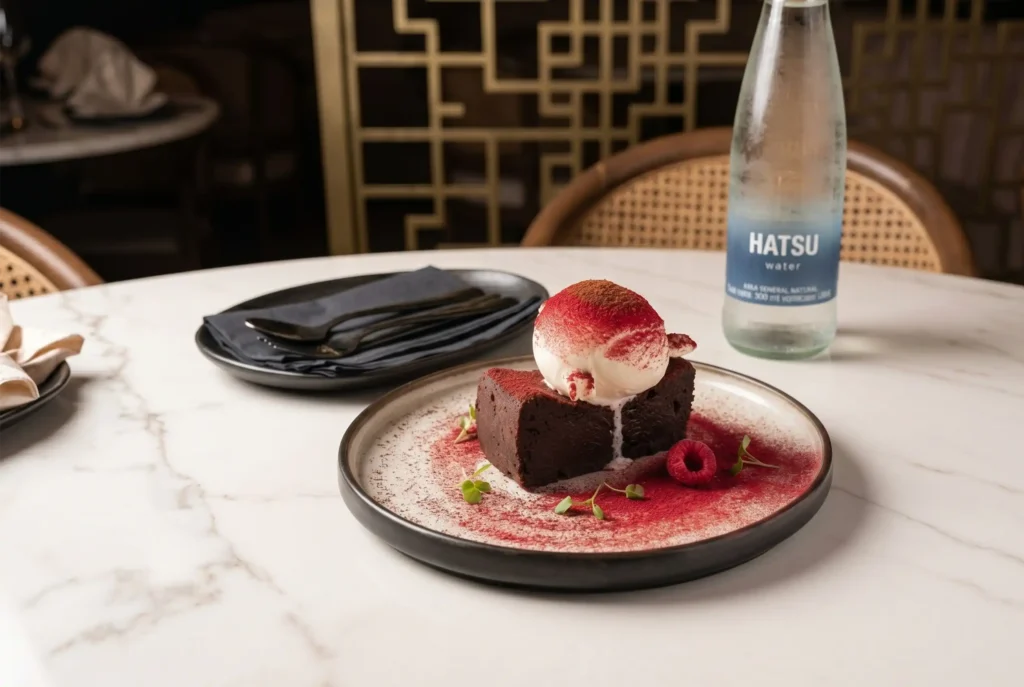
The seventh course of La Makha’s tasting menu is the Flan, and its suggested pairing is the Carajillo. That is not a coincidental pairing: it is the result of thinking about coffee as an ingredient in the complete experience, not as an automatic conclusion.
The Carajillo is a coffee preparation with liqueur (usually Licor 43 in its best-known version) that has a flavor structure where the coffee’s bitterness balances the liqueur’s sweetness and the creaminess of some additional ingredients. In the context of La Makha’s menu, that balance works with the dessert because the Flan has a controlled sweetness that does not need an even sweeter pairing: it needs something that contrasts it without extinguishing it.
That type of pairing decision, where contrast is the argument rather than harmony, is what distinguishes a thought-through pairing from one that simply exists because something has to be served at the end.
Coffee as an ingredient in La Makha’s kitchen
Beyond the Carajillo as a close, specialty coffee can appear as an ingredient in cooking preparations in La Makha’s seasonal menu. A reduction of Antioquian coffee with chocolatey notes can work as a sauce for a heavy meat protein. An oil infused with roasted coffee beans can add depth to a starter with tubers.
La Makha’s living menu allows that flexibility. When the chef finds that an ingredient makes sense in a specific dish, it is incorporated without any printed menu constraint preventing it. Coffee is one of those ingredients with genuine gastronomic potential beyond the cup.
How to choose the right coffee for a pairing
Not all specialty coffees work for all pairings. Selecting coffee for a gastronomic experience requires understanding the cup profile with the same criteria used to select a wine.
Fruity and acidic profile coffees (Jardín, Salento, high-altitude regions): work well with tropical fruit desserts, fish preparations with citrus and starters where acidity is already present. Their lightness does not compete with more delicate flavors.
Chocolatey and dense profile coffees (medium-altitude regions, natural processed): work well with meats, chocolate desserts and menu closes where depth is the goal. Their density holds up against intense flavors without disappearing.
Balanced profile coffees (washed, medium altitude): the most versatile for pairing because they have enough character to have presence at the table but not so marked as to compete with the dish’s flavors.
The coffee selection at Binn Hotel’s B Coffee works with single-origin Colombian beans that the team knows with the same level of detail with which La Makha knows its ingredient suppliers. The bridge between the two spaces is the same philosophy: verifiable origin, careful process, coherent result.
Preguntas frecuentes
Does La Makha offer specialty coffee pairing in its tasting menu?
The Carajillo is the suggested pairing for the seventh course (dessert) of the tasting menu. For those who prefer not to drink alcohol, the team can suggest specialty coffee alternatives prepared in the method that best complements that week’s dessert.
What is the difference between a specialty coffee and a standard restaurant coffee?
A specialty coffee has verifiable origin traceability (region, farm, variety), a recent and controlled roasting process, and preparation at the moment with the correct extraction method for that bean. A standard restaurant coffee is usually an untraceable blend, roasted some time ago and prepared in an automatic machine without selection criteria.
Can I order Colombian specialty coffee at La Makha outside the tasting menu?
Yes. La Makha’s menu includes coffee options, and the team can advise on the available selection according to that week’s availability. For a more developed origin coffee experience, B Coffee in the same building has a specific concept with varied extraction methods.