Being the best restaurant isn’t enough if you aren’t the most responsible. La Makha knows this.
Sustainable gastronomy has a credibility problem. Many restaurants use it as a marketing argument — they label a dish “seasonal” or “local product” and keep buying from wholesale markets without knowing the producer. Genuine sustainability requires something more uncomfortable: direct relationships, fair prices that aren’t always the most convenient, and a kitchen that changes with what arrives, not with what was planned.
At La Makha, sustainability doesn’t appear as a section of the menu or a certification on the wall. It shows up in how the kitchen is supplied, how waste is handled, how the space was built and how the restaurant relates to the communities that produce what ends up on the plate.
The model: sustainability as a consequence
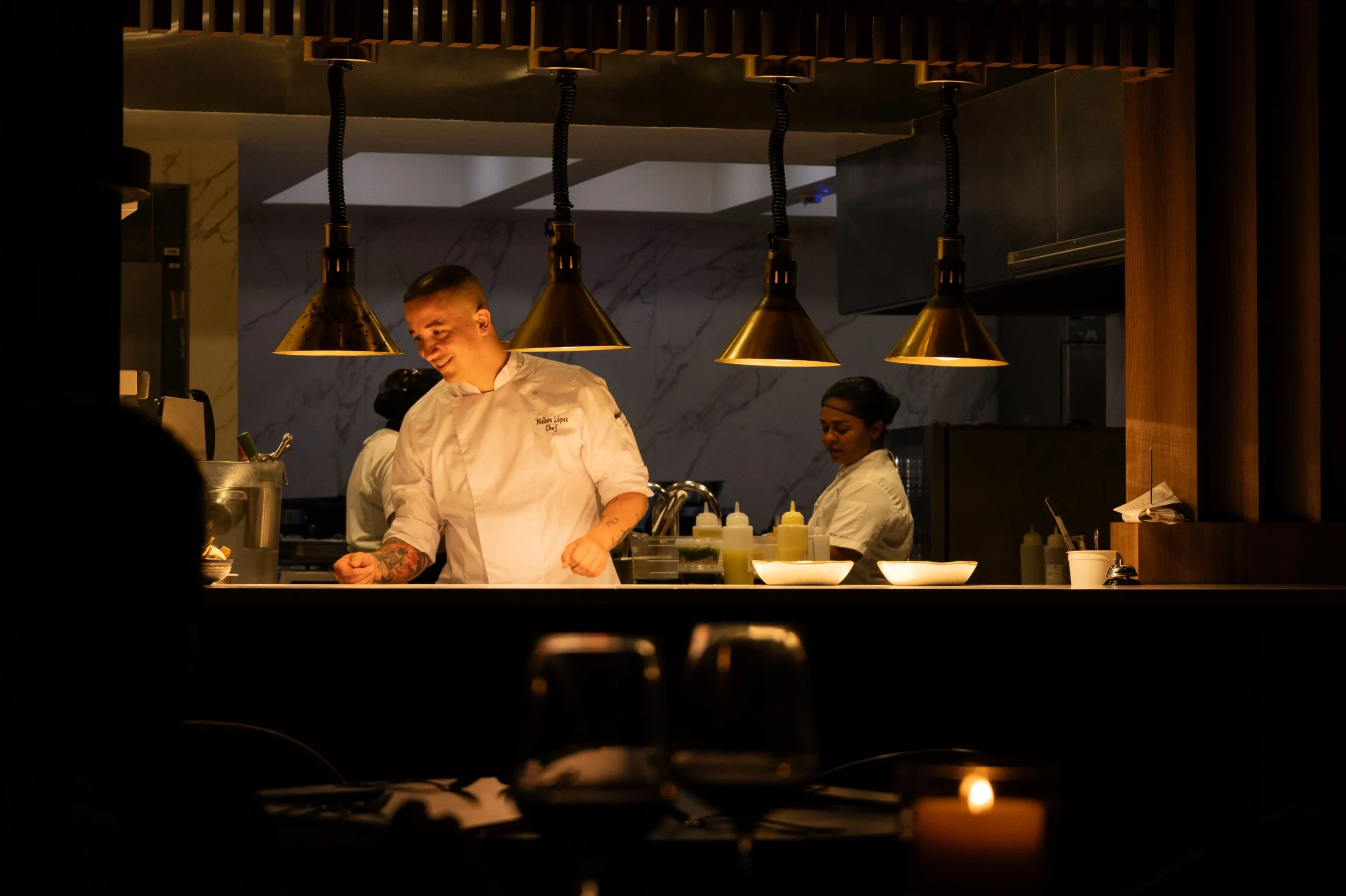
Chef David Suárez Estrada describes his relationship with sustainability plainly: “Cooking with purpose is cooking with a future.” That phrase sums up La Makha’s approach: sustainability isn’t a goal in itself, but the natural consequence of using local and seasonal ingredients, of knowing each producer personally, and of not generating waste that has no further use in the kitchen.
What makes this model different from surface-level sustainability is that it has a real operational cost. Buying directly from family farms instead of wholesale distributors means more logistics, smaller order volumes and more variability in availability. La Makha takes on that cost because the quality of the ingredient — and the story it carries — justifies the effort.
- Full traceability Every ingredient on the menu has a verifiable origin: region, producer, farming or harvesting method. The menu lists the source of each key ingredient.
- Short supply chains From producer to kitchen, with as few intermediaries as possible. Family farms in Antioquia, Boyacá and Cundinamarca instead of wholesale markets.
- Fair price Premium prices paid for exceptional quality. That gives small-scale producers the economic stability to maintain responsible farming practices.
- Zero waste Strict application of nose-to-tail and root-to-stem principles: every part of the ingredient has a use in the kitchen before it becomes waste.
- Variety rescue Ingredients like curuba de indio, cubio and creole corn varieties return to the gastronomic circuit, creating demand that gives farmers an incentive to keep growing them.
- Space design The restaurant was built with local and recycled materials, water and energy-saving systems, and a composting program that returns organic waste to the supplying farms.
The farm-to-city chain
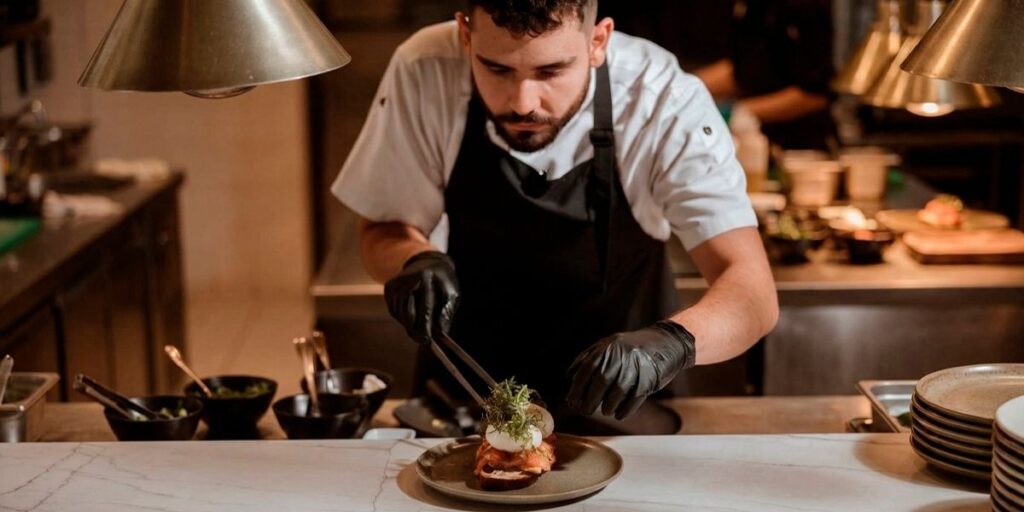
La Makha’s relationship with its suppliers follows a farm-to-city logic that few high-end restaurants apply consistently. The team doesn’t buy whatever arrives at the market — they visit the territories, get to know the producers and build relationships that go well beyond the weekly order.
1 — Territory visits
David Suárez and his team make regular trips to different regions of Colombia. On the Pacific coast they learned bijao leaf cooking techniques from local communities. In the Amazon they studied wild harvesting methods for açaí and copoazú. In Nariño they work directly with native potato farmers. That first-hand knowledge becomes part of the dish, not just the printed menu.
2 — Producer selection
Instead of going to large wholesale markets, La Makha works with family farms in Cundinamarca, Boyacá and Antioquia. The team knows by name the farmers who supply their aromatic herbs, lettuces and heirloom tomatoes. Several of these farms have adopted organic and regenerative practices because having a stable client that pays premium prices makes it economically viable.
3 — Direct agreement and fair price
Partnerships with producers are based on fair trade and prices that value exceptional quality, not volume. La Makha pays more for traceable ingredients than it would at a wholesaler. In return, it gets traceability, freshness and continuity of supply.
4 — Arrival at the kitchen
The ingredient arrives with its story. The menu tells it: geographic origin, harvesting or farming method, producer name where possible. The guest doesn’t just eat — they read a chain of decisions that started in a field or at sea, long before the restaurant.
5 — Waste that goes back to the farm
The composting program turns the kitchen’s organic waste into fertilizer for the same farms that supply it. The cycle closes: what didn’t make it onto the plate goes back to the land that produced it.
Impact on producer communities
La Makha’s sourcing model has concrete effects on the communities it works with. These aren’t effects declared in a corporate social responsibility policy — they’re direct consequences of the restaurant’s purchasing decisions.
Amazonía
La Makha works with indigenous communities that harvest açaí, copoazú and camu camu sustainably in the wild. The restaurant pays prices that recognize traditional knowledge and forest stewardship. That steady demand gives these communities an economic reason to keep forests productive rather than convert them to other uses.
Colombian Pacific
Buying octopus from La Guajira, white fish from the Pacific and viche canao from Afro-Colombian communities supports artisanal fishing and traditional distillation chains that have no access to conventional commercial channels. La Makha is the client that makes that small-scale production economically viable.
Andes and highlands
Working with native potato farmers in Nariño, lamb producers in Caldas and buffalo farmers in Planeta Rica gives small-scale producers access to a high-end market that pays for exceptional quality. Several supplying farms have adopted organic and regenerative practices driven by the specific demand of author-driven restaurants in Medellín.
Training and education
La Makha offers internships and training to young people from vulnerable communities in culinary techniques, sustainability and responsible business management. Through its social media and events, the restaurant also educates guests about ingredient origins and the importance of eating local and seasonal.
“It’s not just about buying local — it’s about building short, transparent supply chains where quality is valued over quantity and process over the final product.” — La Makha · Binnhotel
Zero waste in the kitchen
La Makha applies nose-to-tail and root-to-stem principles systematically. Every part of the ingredient has a use before it becomes waste. This isn’t just an ethical principle — it’s also a source of flavor: the parts that industrial kitchens discard tend to hold the most intense tastes.
| What others throw away | La Makha uses it as |
|---|---|
| Potato and cassava skins | Dehydrated → crispy chips or powders to thicken sauces |
| Broccoli stems | Fermented → pickles or added to umami broths |
| Carrot tops | Fermented → pickles or broth bases |
| Fish bones and heads | Toasted → soup stocks and intensely flavored marine sauces |
| Overripe vegetables | Fermented → fruit vinegars, fava bean miso, local kimchis |
| Kitchen organic waste | Composted → fertilizer for the supplying farms |
Sustainable restaurant design
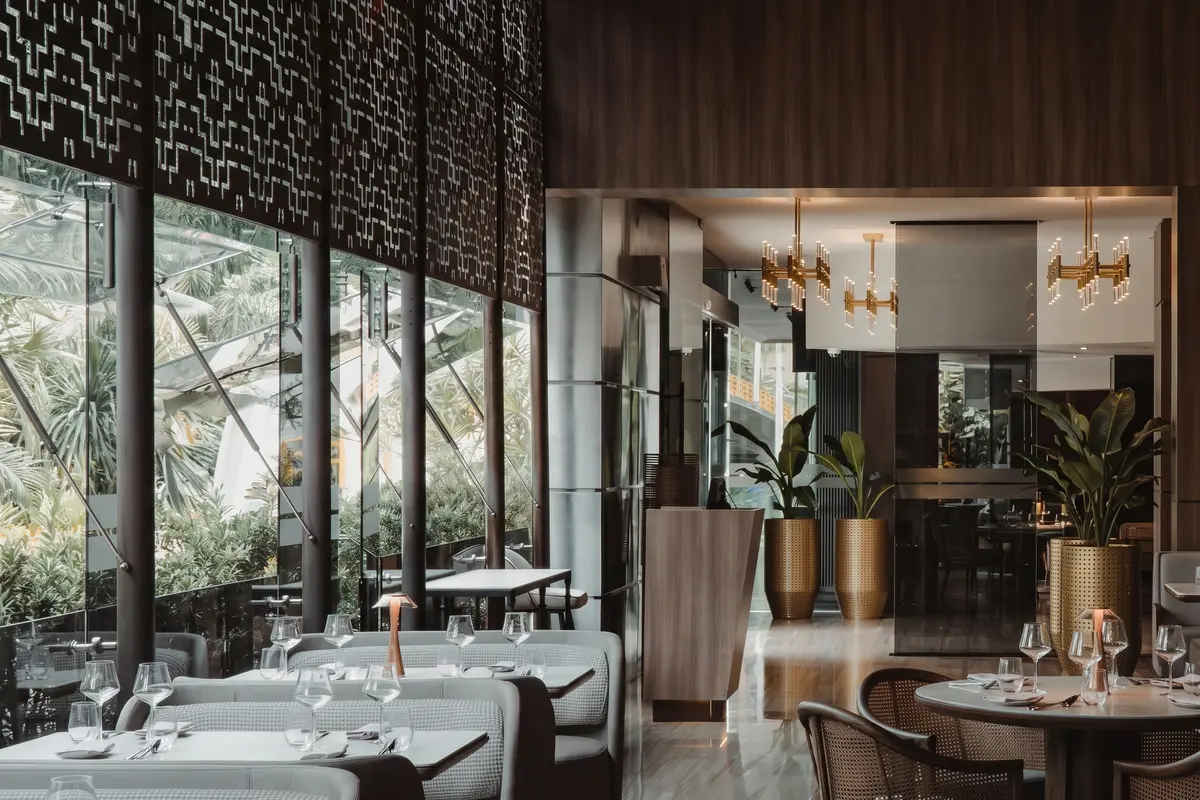
La Makha’s sustainability doesn’t start in the kitchen — it starts in the design of the space. The Binnhotel restaurant was built with local and recycled materials, with water and energy-saving systems built into the architecture. The lighting, ventilation and finishing materials were all chosen according to efficiency criteria that reduce the restaurant’s operational footprint.
The composting program closes the loop: organic waste from the kitchen becomes fertilizer that goes back to the supplying farms. That circuit — farm, kitchen, waste, farm — is what Binnhotel means by real sustainability in luxury gastronomy: not offsetting impact, but reducing it from the design stage.
Frequently asked questions about La Makha’s sustainable gastronomy
Is La Makha a sustainable restaurant?
Yes. It applies a comprehensive model that includes full ingredient traceability, direct producer relationships, fair pricing, zero kitchen waste, native variety rescue and a composting program that returns organic waste to the supplying farms.
Which communities does La Makha work with?
With indigenous communities in the Amazon, Afro-Colombian communities on the Pacific coast, small-scale farmers in Antioquia, Cundinamarca and Boyacá, and specialist producers in Caldas, Córdoba, La Guajira and Tumaco.
What does “origin cooking” mean in terms of sustainability?
It means every ingredient has a verifiable geographic origin and an identified producer. Supply chains are short — from producer directly to kitchen — which reduces the transport footprint, guarantees freshness and allows fair prices to be paid without intermediary margins.
Does La Makha have a zero waste program?
Yes. The kitchen applies nose-to-tail and root-to-stem: skins, stems, fish bones and heads all have specific uses in chips, stocks, ferments or pickles. Organic waste that isn’t used in the kitchen is composted and returned as fertilizer to the supplying farms.
Was the restaurant designed with sustainable criteria?
Yes. BINN Hotel designed the space with local and recycled materials, water and energy-saving systems, and a composting program integrated into the kitchen’s operations. Sustainability is built into the architecture, not added as an afterthought.
The perfect table doesn’t wait. Book in advance and let us know the occasion.
Discover the restaurant on La Makha’s page at Binnhotel. Instagram: @lamakharestaurante