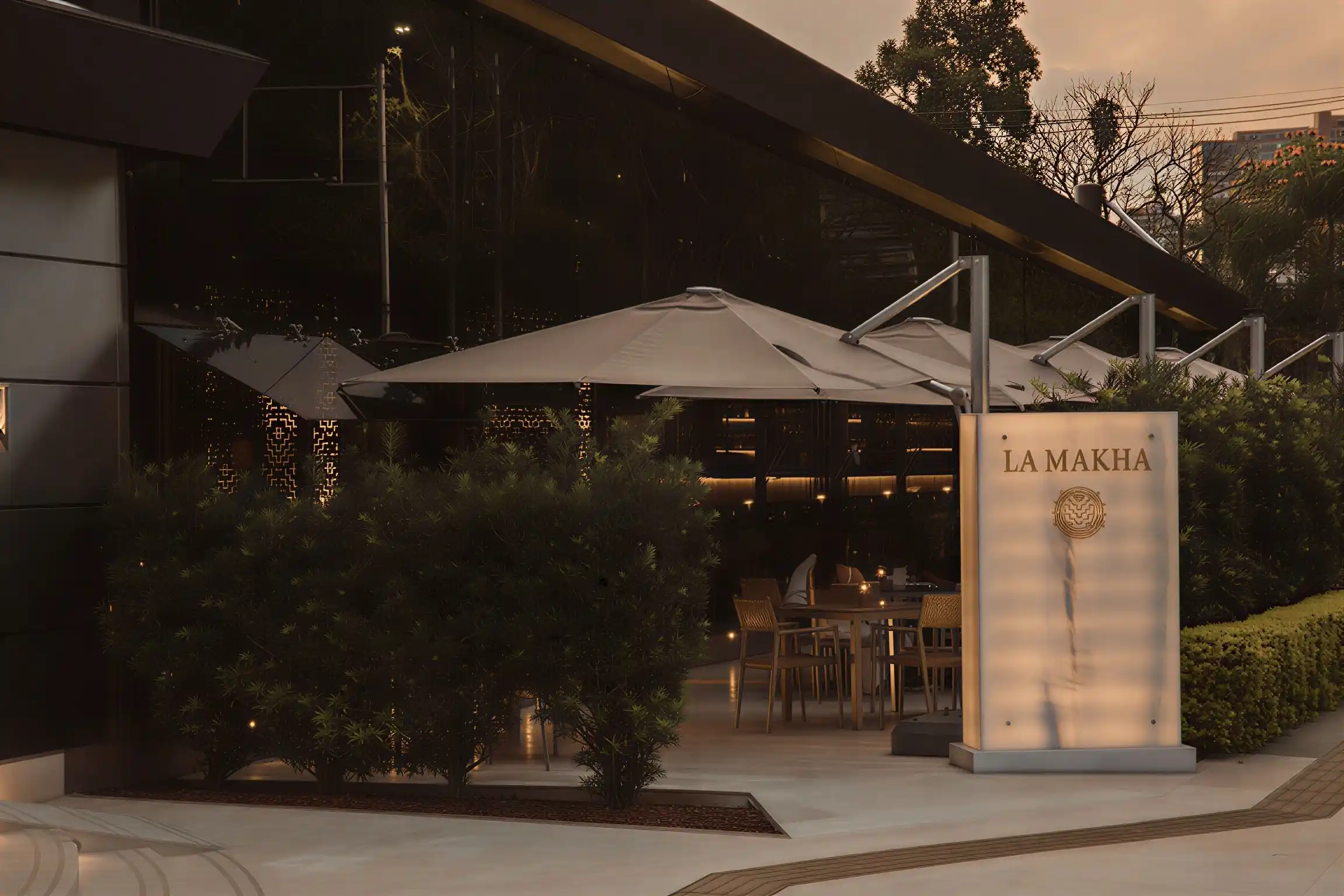
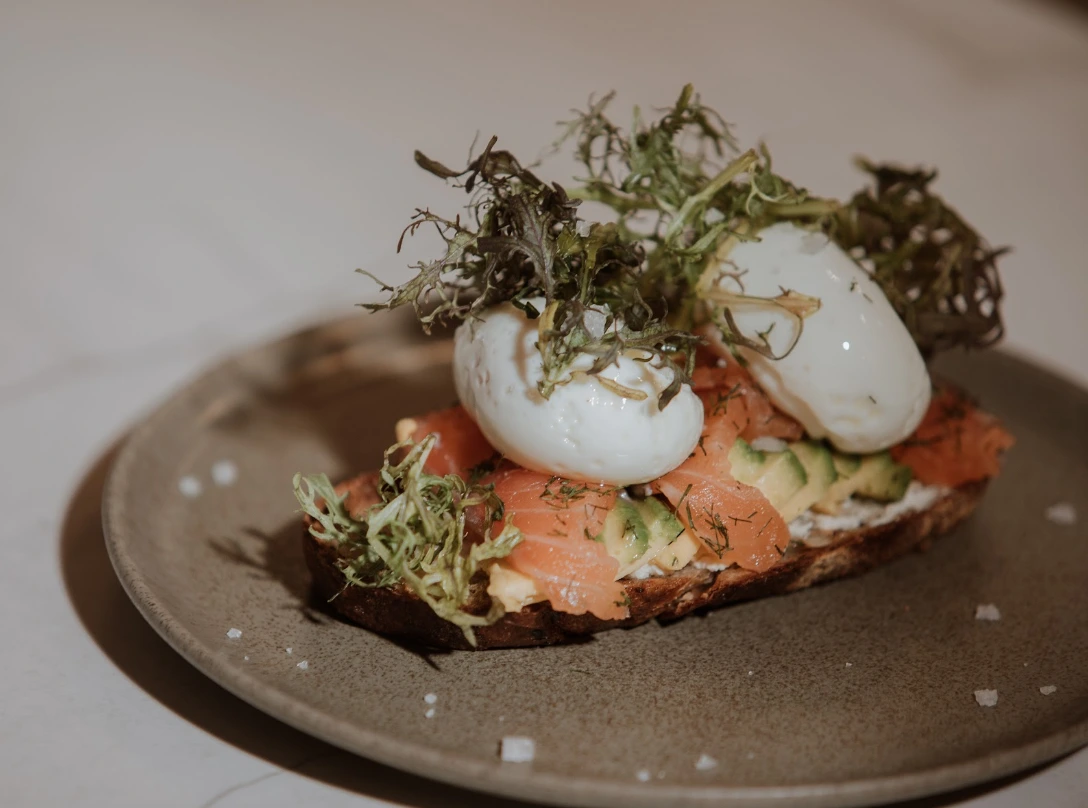
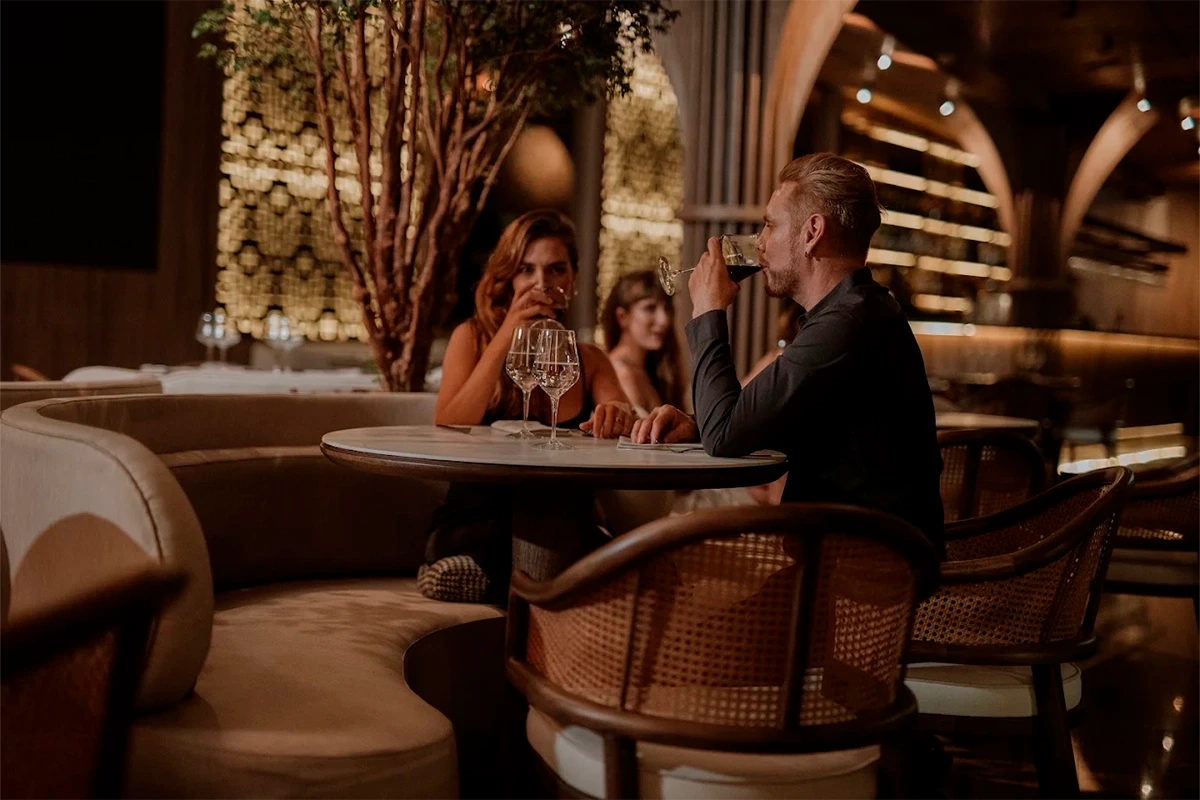
At La Makha, the drink is never an afterthought to the plate. Just as ingredients travel from different corners of Colombia to the table, the wine selection and the drinks that accompany each course are designed alongside the kitchen, not after it. That same logic applies to the coffee that closes dessert and to the cheese that shows up inside several dishes throughout the menu: nothing is served as filler, everything serves a purpose within the full experience.

Wine pairing
La Makha’s wine list brings together labels from Spain, Chile, Argentina, Italy and France, chosen to hold up against the acidic, earthy and sometimes spicy flavors of chef David Suárez Estrada‘s cooking:
- Spain: Beronia Crianza and Beronia Reserva, both tempranillo, alongside the Marques de Riscal Reserva.
- Chile: Doña Dominga in its carmenere, chardonnay and rosé versions, grown in the Colchagua Valley.
- Argentina: Angelica Zapata Cabernet, from the Uco Valley.
- Italy: Rocca di Montemassi, in both its red and white versions.
That same selection criteria carries over into the tasting menu, where each of the seven courses has a pairing curated by the kitchen, not assigned at random by an outside sommelier: a Basil Smash opens the journey alongside the crocante de maíz, Doña Dominga Chardonnay accompanies the ceviche’s acidity, Doña Dominga Sauvignon Blanc supports the vegetarian orellanas course, a Tom Collins refreshes the pesca del día, a 2022 Cool Coast Pinot Noir from Chile stands up to the three stage pork, and Doña Dominga Carmenere carries the weight of the lamb and Paipa cheese. The journey closes with a carajillo, which picks up the coffee from dessert.
For guests who prefer to order à la carte, the same logic holds: wines with more acidity and minerality, like the Galician Martin Codax or the Spanish Viñas del Vero Roble, work well with ceviches and fish preparations, while fuller bodied reds, like the Chilean Don Melchor Cabernet Sauvignon, are built to stand up to cuts like the grilled rib eye. The list also includes sparkling wines and champagnes, from the Italian Prosecco Zonin to Moët Chandon Brut Imperial, and the French Veuve Cliquot.
Specialty coffee
Coffee shows up at La Makha as part of the dessert’s narrative, not as a separate menu. The coconut and coffee flan combines a creamy flan with a coffee toffee, viche canao and a bitter orange cream, a close that sums up the same logic of the menu: Mediterranean technique applied to an ingredient with Colombian identity. That same coffee comes back in the carajillo that closes the tasting menu pairing, tying dessert and the final drink of the night together.
That way of using coffee, always built into a dish or a specific pairing, is consistent with the rest of the menu: no ingredient stands alone, each one serves a purpose within a larger sequence. For guests looking for a more extended specialty coffee experience, with its own menu and a space designed specifically for that, the recommendation is to head up one floor to Etro Rooftop, the other flagship venue at Binn Hotel. Up there, coffee takes center stage, while at La Makha its natural place remains the sweet close of dinner.
Cheese and local flavors
La Makha does not have a cheese board as a standalone course, but cheese does play a constant role throughout the menu, always built into a specific preparation:
- Stracciatella de búfala, made with product from Planeta Rica, accompanied by garlic smoked peas, a fennel and orange mousse and confit San Marzano tomatoes.
- Paipa cheese, semi hard and strongly flavored, inside the lamb, in a goat yogurt foam that balances the density of the dish.
- Fresh quesito, which adds brightness to the pesca del día, contrasting with the mushroom powder and purple basil.
- Parmesan, which tops the grilled rib eye alongside truffle infused fries.
That way of working with cheese, always as an ingredient within a dish and never as a standalone piece, is consistent with the house’s broader philosophy. For guests looking for a more extended wine and cheese experience, in board or tasting format, that offering also lives at Etro Rooftop, designed as a different moment from dinner at La Makha.
Reservations
Experiencing this pairing, whether à la carte or within the tasting menu, starts with reserving ahead at La Makha, the flagship restaurant of Binn Hotel in El Poblado, Medellín.
Hours
- Breakfast: daily, from 6:00 to 11:30 a.m.
- Dinner: Monday through Thursday, from 6:00 to 10:00 p.m.; Friday and Saturday, from 6:00 to 10:30 p.m.
- Sundays and holidays: closed.
To reserve, you can write to [email protected] or call +57 604 3220289. You can also follow the restaurant’s culinary story on Instagram, at @lamakharestaurante.