The mocktail had for many years the same problem as the vegetarian menu in high-level restaurants: it existed because it had to exist, not because there was a gastronomic criterion behind it. A fruit juice with sparkling water and a catchy name is not a mocktail. It is a fruit juice with a catchy name.
What is happening in Medellín’s haute cuisine in 2026, and at La Makha in particular, is different. The non-alcoholic concept has the same level of construction, ingredient selection and pairing criteria as the alcoholic one. And that completely changes the experience for those who do not drink.
Why a premium mocktail is harder than a cocktail
There is a reason most mocktails are unsatisfying: alcohol is not only a flavor vehicle. It is also a texture modifier, an aroma carrier and an acidity-sweetness balancer that non-alcoholic mixology has to resolve with other means.
An author cocktail like Etro’s Antioqueño Sour has a structure where artisan Antioquian aguardiente provides body, the citrus provides acidity and the egg white provides a foamy texture. Removing the aguardiente and replacing it with sparkling water produces something completely different in texture and body, not a “non-alcoholic version” of the same cocktail.
High-quality non-alcoholic mixology resolves that problem using ingredients that have the functionality of alcohol without the ethyl component: fermented concentrates (kombucha, water kefir, shrubs), botanical extracts, dense infusions and fruit reductions that provide body and complexity.
The Intrigo: La Makha’s signature mocktail
The Intrigo is the most representative mocktail of La Makha’s non-alcoholic concept. The official description is “spiced notes, spearmint and soda,” but that description does not capture the drink’s structure.
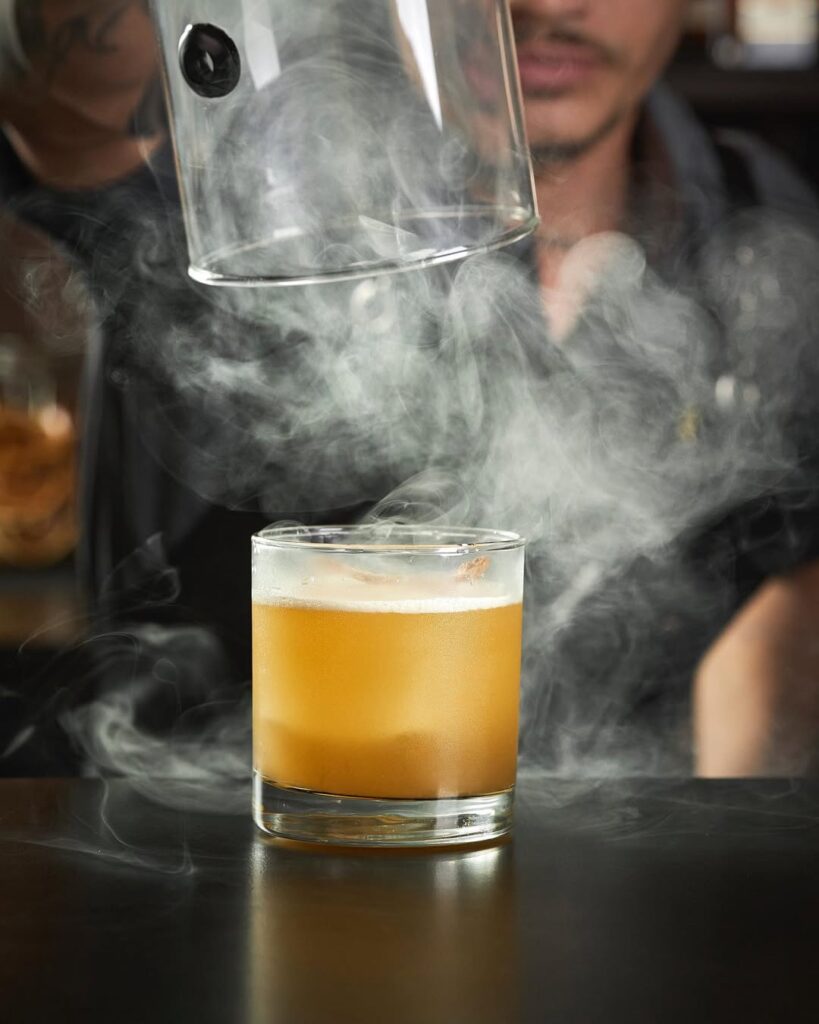
The Intrigo has a spice infusion base (cinnamon, cardamom, black pepper in specific proportions) that produces a complex aromatic profile before any flavor reaches the palate. The spearmint is not a decorative element: it is the fresh element that balances the intensity of the spices. The soda provides the carbonation that in a cocktail would come from the alcohol or tonic water.
The result is a drink with the aromatic complexity and structure of an author cocktail without the alcoholic component. It works as an aperitif before the tasting menu, as an accompaniment to the first courses and as an option for those who do not drink alcohol but want their drink to be at the same level as the food.
You can see how that same bar philosophy applies in the creative mixology at Etro Rooftop, the space that shares the building with La Makha.
Mocktails and pairing: how it works without alcohol
Pairing mocktails with haute cuisine requires the same principles as pairing wine or cocktails: contrast or harmony, acidity balance, presence without dominating.
A mocktail with a maracuyá, ginger and mandarina lime base has a pronounced acidity that works well with La Makha’s tuna ceviche because the ceviche already has acidity and the drink amplifies it rather than competing with it. The ginger adds a spicy note that connects with the ají chombo in the dish.
A mocktail with a chontaduro, panela and coconut base has a sweeter, denser profile that works better with the meat courses (Pork, Lamb) where the drink needs enough body not to disappear alongside proteins with intense flavor.
That pairing logic is the same applied to author cocktails and wines. The difference is that mocktails have to work harder to build the body that alcohol provides automatically.
The “sober curious” trend in Medellín’s haute cuisine
2026 is the year the “sober curious” movement (the curiosity about reducing or eliminating alcohol without adopting an ideological stance about it) arrives with force in Medellín’s haute cuisine.
It is not about more people not drinking alcohol. It is about more people wanting to be able to choose not to drink on a specific evening without that implying their gastronomic experience is second-rate. A diner who orders a mocktail at a haute cuisine restaurant does not want to be brought an orange juice while everyone else has author cocktails.
La Makha and Etro Rooftop have that concept covered. The mocktails are designed with the same criteria as the author cocktails, use Colombian ingredients of the same quality and are prepared with the same techniques. The diner who does not drink alcohol has access to a beverage experience that is at the level of the food, including the vegetarian and non-alcoholic options at Etro Rooftop.
Frequently asked questions
Does La Makha have non-alcoholic options for the tasting menu with pairing?
Yes. For the tasting menu with pairing ($420,000 COP), the team can prepare a non-alcoholic version where each course has a drink designed without an ethyl component but with the same pairing criteria as the alcoholic version. It is necessary to indicate this when booking so the kitchen can prepare the drinks in advance.
What is La Makha’s Intrigo?
The Intrigo is La Makha’s signature mocktail. It has a spice infusion base (cinnamon, cardamom, black pepper), fresh spearmint and soda. Its complex aromatic profile and balanced structure make it a beverage option at the level of the menu’s author cocktails.
Do Etro Rooftop’s mocktails use the same ingredients as the author cocktails?
Yes. Etro’s mocktails use the same fresh Colombian ingredients (tropical fruits, cold-climate herbs, artisan concentrates) as the alcoholic cocktails, prepared with the same construction techniques. The difference is the absence of the ethyl component, compensated with ferments, dense infusions and reductions that provide body and complexity.