Medellín has museums, galleries, murals in Comuna 13, and a contemporary art scene that surprises visitors from around the world. All of that cultural offering exists outside La Makha. Inside the restaurant, art takes another form: it doesn’t hang on the walls — it arrives on the plate.
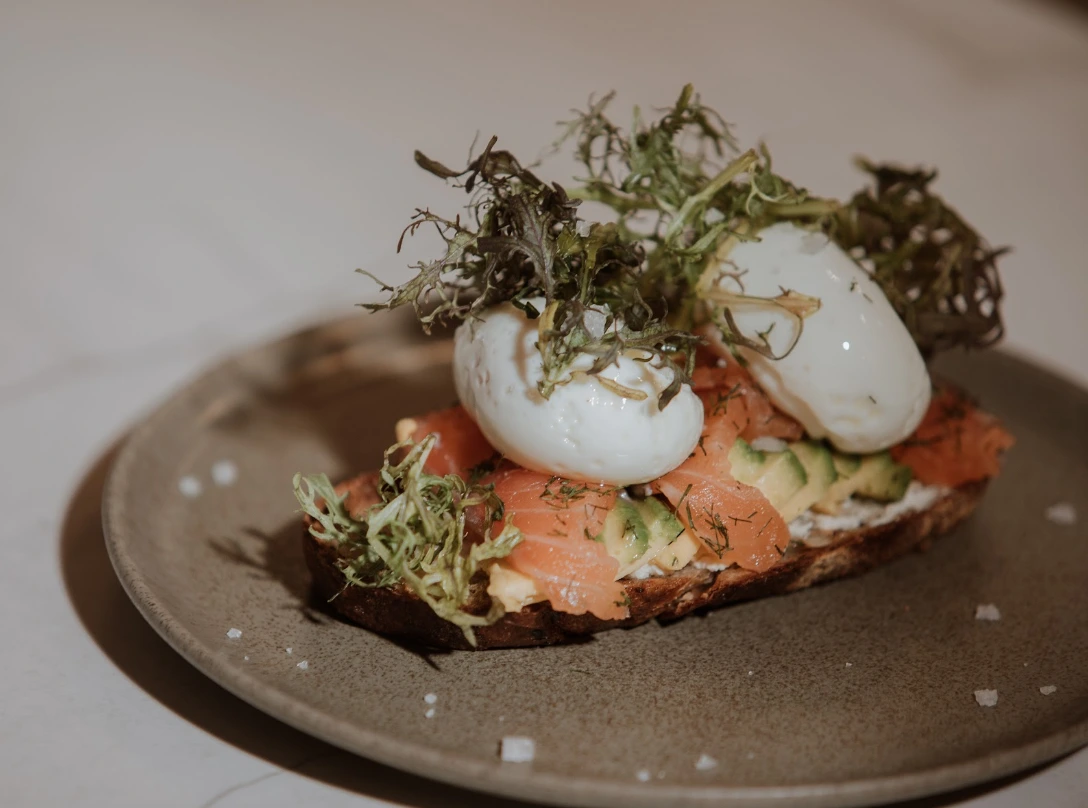
Binn Hotel describes La Makha’s visual narrative in precise terms: chefs approach each dish as a canvas where flavor and color coexist in balance. The golden tones of grilled seafood, the deep reds of the house reductions, the emerald greens of fresh accompaniments — everything serves a purpose: awakening memories, evoking curiosity, and inspiring conversation. This is not metaphor. It is the real plating criterion at La Makha.
This article explores that intersection between gastronomy and cultural expression — specifically within the restaurant, without stepping out to discuss Medellín’s museums, because that article already exists. La Makha is not a gateway to the city’s culture: it is culture in itself.
Gastronomy as a form of contemporary art
The debate over whether gastronomy is art has an easier answer at La Makha than at any other restaurant in Medellín: yes, under one condition — that the dish has something to say beyond flavor. That it expresses a point of view about the territory, about the culture that produced the ingredient, about the technique that transforms it.
At La Makha, that argument is built dish by dish. The chontaduro is not decorative in the ceviche — it is a declaration about the culture of the Colombian Pacific. The aged almojábana in the pulpo ajo blanco is not a folkloric nod — it is a vindication of Antioquian cuisine brought into the context of high Mediterranean cooking. The viche canao in the flan is not an exotic ingredient — it is the distillate of an Afro-Colombian tradition that deserves to close a first-rate gastronomic experience.
That is gastronomy as cultural declaration: not the representation of a culture, but its direct expression through the plate.
Visual dimension
The plating uses the natural colors of the ingredients to build a visual composition that communicates before the first bite arrives. No artificial colorants — all color is the ingredient itself.
Narrative dimension
Each dish tells a geographical and cultural story. The 7-course tasting menu is a journey through Colombia’s territories — from the Amazon to the Caribbean, from the Pacific to the Andes.
Material dimension
Colombian artisan tableware is part of the dish. Each piece is unique, made by local craftspeople. The plate arrives on an art object that is not repeated at any other table in the restaurant.
Temporal dimension
The menu changes with the seasons because the ingredients change. Visiting La Makha in May is different from visiting in October. That variation is not inconsistency — it is a work that breathes with time.
Sonic dimension
La Makha’s music is curated to accompany each moment without imposing itself. It is part of the restaurant’s sensory design, not a generic background. The experience has a soundtrack.
Performative dimension
When David Suárez Estrada steps out of the kitchen to explain a dish, he turns dinner into a performance. The chef as narrator. The table as stage. The guest as active participant.
“La Makha is not a restaurant; it is a culinary storyteller. Each dish is a chapter of a larger book — an ode to a farmer, to an indigenous community, to an ancestral fishing method.”
Binn Hotel · Colombia elevated
The dish as artwork: the visual dimension
The plating at La Makha operates on the same principles as visual composition in contemporary art: color, contrast, texture, balance, negative space. The difference is that the canvas must be edible and the color must be natural — no colorants, no artifice beyond what lives in the original ingredient.
Arroz Meloso
Black · Burgundy · White
The deep black Pacific seafood rice contrasts with the white foam of the encocado and the burgundy powder of hibiscus from the Montes de María. Three colors, three textures, three distinct geographical origins in a single dish. The visual palette was built with ingredients — not with decorative technique.
Cultural declaration: The black comes from Caribbean squid ink. The burgundy comes from Andean hibiscus. The white comes from Pacific coconut. A dish that geographically could not exist outside Colombia.
Ceviche
White · Yellow · Green
White fish over ivory tiger’s milk with pale pink pickled watermelon, yellow guineo chips, and microgreens. The composition has the structure of a still life — ingredients placed with precision that reveals their natural color without interference. The presentation evokes the freshness of the Colombian Pacific without representing it literally.
Cultural declaration: The ceviche is not Peruvian at La Makha — the chontaduro tiger’s milk transforms it into a Colombian Pacific preparation that has no equivalent in any other cuisine.
Oyster mushrooms
Brown · White · Black
Earthy brown oyster mushrooms over white goat yogurt foam with black smoke powder. The composition is minimalist — three elements, three colors, no unnecessary gesture. The dish closest to abstract art on the entire menu: the contrasts speak before the flavor does.
Cultural declaration: The Colombian oyster mushroom grown in Antioquia carries a history that Japanese shiitake does not. The smoke powder speaks of wood-fire kitchens, slow cooking, a tradition that predates the era of author restaurants.
Lamb
Red · White · Black
Braised Caldas lamb leg with shiny bone glacé, white Queso Paipa foam, and black San Marzano tomato powder. The composition carries the chromatic intensity of a Flemish painting — dramatic contrast, opposing textures, a clear center of gravity.
Cultural declaration: Caldas lamb has a specific profile tied to the Andean livestock tradition of Antioquia. Queso Paipa, with its Boyacá denomination of origin, completes the dish with the only cheese holding a territorial identity certification in Colombia.
Colombian craftsmanship at the table
The art at La Makha does not end at the dish — it begins in what holds it. Handmade artisan tableware by local craftspeople, hand-woven textile pieces, wood surfaces with visible grain: every object on the table is a functional piece with its own identity. None is repeated exactly at another table.
Colombian craft objects within the La Makha experience:
Artisan tableware
Bowls, plates, and accessories crafted by local artisans. Each piece is unique — just like the dishes it presents. The tableware is not neutral: its texture, size, and shape are part of the chef’s presentation. Ceviche in a rough ceramic bowl communicates something different than ceviche in fine porcelain.
Textiles
Hand-woven pieces, table linens, and decorative accents. In Colombia, weaving carries history — from the Wayuu indigenous communities of the Caribbean to the textiles of the Pacific. Incorporating local textile craftsmanship at the table is bringing that history into the service without declaring it.
Natural wood
Surfaces with visible grain, unfinished so it can shine. Colombian wood — oak, cedar, guadua — carries textures that industrial timber does not. Each board, each surface, is itself a piece with a verifiable origin.
Art on the walls
Local art adorns the walls of La Makha, turning every corner into a contemporary gallery that interacts with the kitchen. The artwork is not separate from the gastronomic experience — it occupies the same space, the same moment, as part of the same sensory language.
The ingredient as cultural document
At La Makha, ingredients are not just raw material. They are historical documents. Binn Hotel frames it clearly: chontaduro is a sacred food of Amazonian communities, not an “exotic superfruit.” Bijao leaves are the essence of pre-Hispanic cooking techniques, not an “alternative wrapper.” Native chilies represent specific micro-terroirs and irreplicable flavors, not trendy condiments.
When La Makha puts an ingredient on the menu, the card explains its geographical origin and, in many cases, the name of the producer or community that harvested it. That turns the guest into a witness of a value chain with history and real people behind it. This is not just supply chain transparency — it is an act of cultural recognition that few restaurants carry out with that consistency.
The viche canao from the Pacific could simply be “artisan distillate.” At La Makha it is the result of an Afro-Colombian ancestral practice that survived colonization and today arrives in the dessert course of a high cuisine menu in El Poblado. That cultural trajectory does not fit on the printed menu, but the guest who wants to hear it can ask — and the chef, when he steps to the table, tells it.
Parallels between gastronomy and visual art
The similarities between what La Makha does and what contemporary art does are not forced. They are structural.
Contemporary visual art
La Makha · Origin-driven gastronomy
- The artist selects materials for their cultural and symbolic meaning, not only for their appearance.
- The chef selects ingredients for their cultural and biogeographical meaning, not only for their flavor.
- The work uses local materials to speak from a specific place in the world.
- The menu uses ingredients of verifiable origin to speak from a specific Colombian territory.
- The artist applies contemporary techniques to translate a tradition into a new language.
- The chef applies Mediterranean techniques to translate Colombian ingredients into recognizable gastronomic languages.
- The work changes over time — different exhibitions, evolving installations.
- The menu changes with the seasons — May’s ingredients are not October’s.
- Art documents cultural history from the present.
- Gastronomy documents Colombian territory through the palate.
- The experience of art does not end in the gallery — it continues in the conversation it generates.
The gastronomic experience does not end at the plate — it continues in the conversation the chef provokes when explaining it.
Frequently asked questions about La Makha as a cultural experience
Is La Makha a cultural experience as well as a gastronomic one?
Yes. La Makha combines high-level gastronomy with a cultural narrative that makes each dish a document of Colombian territory. Ingredients carry verifiable origins and specific cultural meaning, the tableware is local craftsmanship, the plating uses natural ingredient colors as visual language, and the space incorporates art by local artists.
What makes La Makha’s plating different?
La Makha’s plating uses exclusively the natural color of the ingredients — no artificial colorants. The burgundy hibiscus, the black of squid ink, the white of coconut foam, the yellow of the guineo chip — all color is the ingredient. The visual presentation is a consequence of ingredient selection, not added decoration.
Is La Makha’s tableware Colombian artisan work?
Yes. La Makha uses bowls, plates, and accessories crafted by local artisans. Each piece is unique — none is repeated exactly at another table. The artisan tableware is part of the dish’s presentation and part of the restaurant’s Colombian identity language.
Does La Makha’s chef explain dishes at the table?
Yes. Chef David Suárez Estrada often steps to the table during service to explain the ingredients, their origin, and the technique behind each dish. That interaction turns dinner into an active cultural experience, where the guest is not a passive spectator but a participant in the menu’s narrative.
Does La Makha have art in the restaurant space?
Yes. Local art adorns the walls of La Makha at Binn Hotel, turning every corner of the restaurant into part of a contemporary gallery that interacts with the kitchen. The art is not separate from the experience — it occupies the same space and the same moment as the dishes.
Reserve your table and experience Colombian culture through the plate.