Sustainable tourism has a signal problem. The words “eco-friendly,” “sustainable” and “green” appear in the descriptions of hotels that have plants in the lobby and a sign asking guests not to change their towels. That is not sustainability: it is marketing that uses the aesthetic of sustainability without its substance.
For the traveler who wants their luxury stay to have a lower environmental impact, the question is not whether the hotel claims to be sustainable. It is what it does concretely, in which part of the operation and with what verifiable result.
This guide explains how to read those signals at luxury hotels in Medellín and why some practices matter more than others.
Real eco signals vs. greenwashing
The distinction between genuine sustainability and greenwashing is not always obvious from the hotel’s website. Some indicators help separate the two.
- Practices that tend to be substantial: changes in the supply chain (verifiable local suppliers, reduction of imports, seasonal menus that change according to real availability); design decisions that reduce energy consumption (natural ventilation, solar light maximization, energy efficiency systems); waste management with concrete protocols (composting, material separation, single-use plastic reduction across the entire operation).
- Practices that tend to be cosmetic: towel reuse presented as environmental policy; decorative plants in common areas; certifications without real operational backing; communication about “commitment to the environment” without metrics or specific actions.
The difference is not one of intention: it is of scale and integration into the hotel’s core operation.
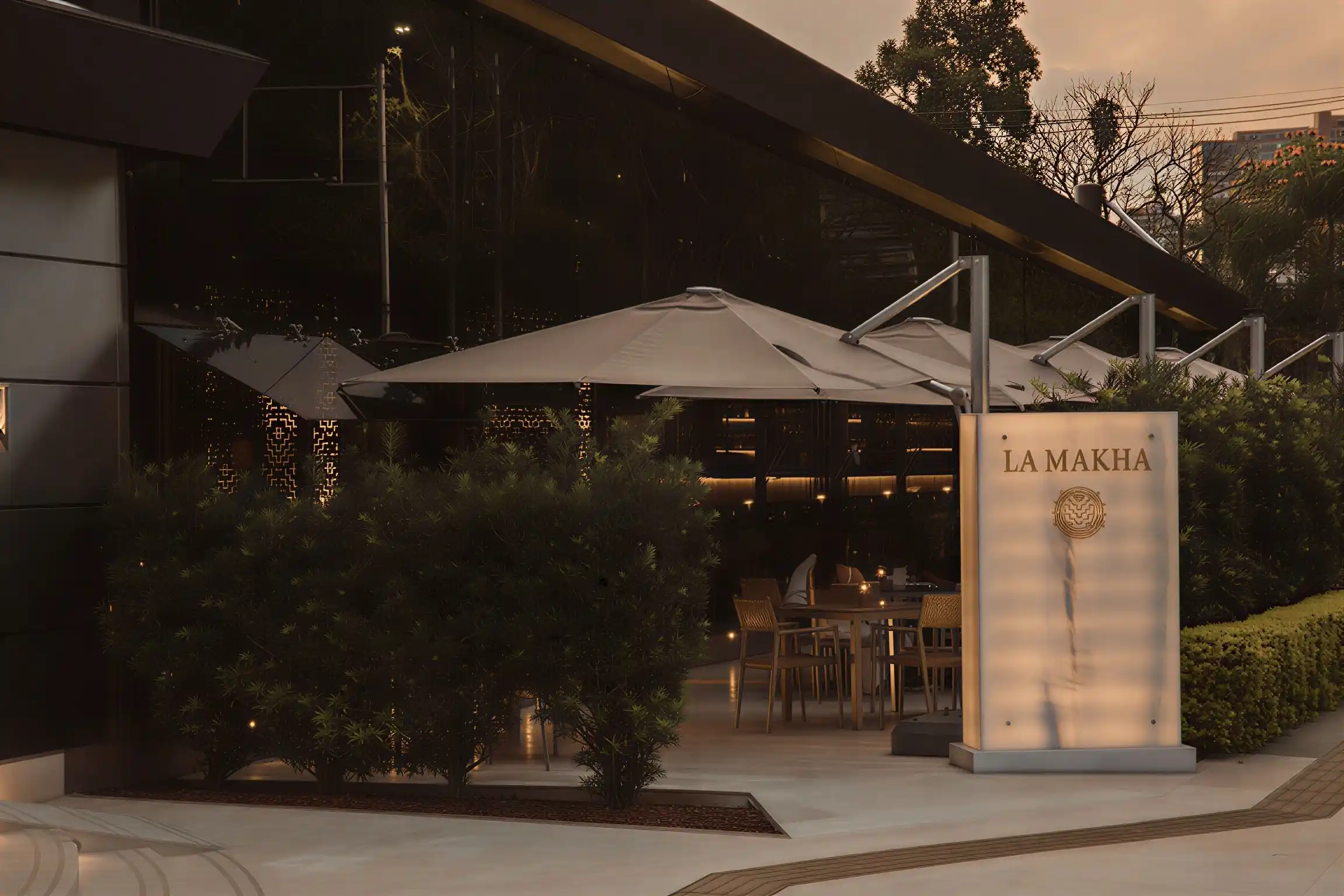
La Makha: zero-waste and living menu
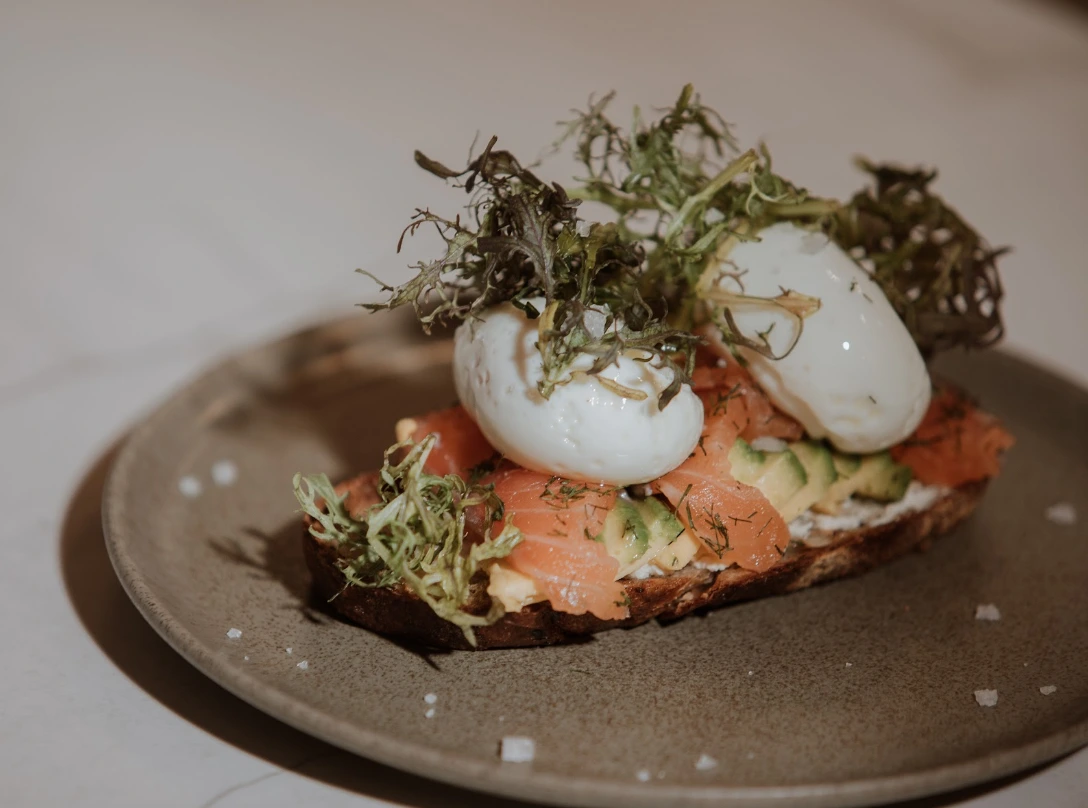
The most verifiable eco practice at Binn Hotel is in its restaurant. La Makha operates under what the team calls a “living menu”: a card that is not fixed but changes according to the seasonal availability of Colombian ingredients.
That has concrete consequences for waste. A restaurant with a fixed menu needs to stock all its card ingredients year-round, regardless of whether they are in season or not. A restaurant with a living menu buys what is available in adequate quantity and quality and designs dishes around that availability. The result is less kitchen waste and a shorter supply chain.
La Makha’s suppliers are primarily Colombian regional producers. Fish comes from the Pacific and Caribbean coasts. Vegetables and tubers from the Antioquian highlands and nearby valleys. Tropical fruits from the warm zones of the department. Not all ingredients can be local at all times (there are products without a Colombian equivalent that high-quality cooking requires) but the proportion of local input at La Makha is significantly higher than at most restaurants in the same segment in Medellín.
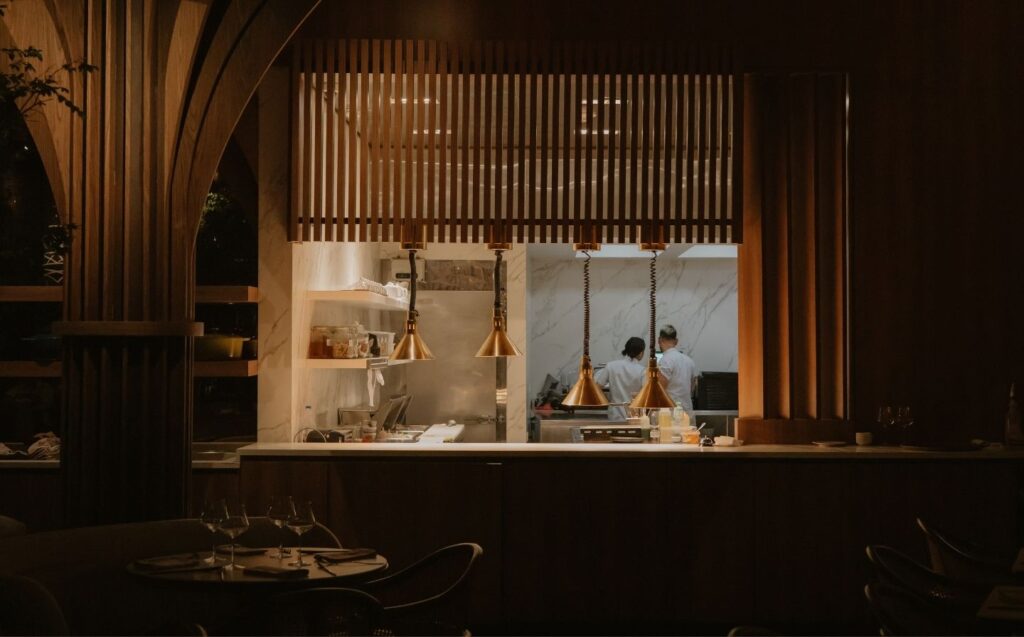
The zero-waste approach in the kitchen also means that trimmings, by-products and surpluses from one service are processed for the next (stocks, broths, ferments) rather than going directly to waste. It is not a perfect system, but it reduces waste in a measurable way. You can go deeper into the gastronomic philosophy behind these decisions in the article on responsible cuisine at La Makha.
Building design: INTO architecture and natural light
Architect Andrés Martínez of studio INTO designed the Binn Hotel building with an explicit principle: minimize the environmental impact of construction and subsequent operation without compromising the hotel’s aesthetic and functional standard.
The two design decisions with the greatest impact on operational sustainability are the floor-to-ceiling windows and the building’s orientation.
The floor-to-ceiling windows in the rooms are not only an aesthetic resource, although they are that too. They allow natural light to enter the rooms for most of the day, reducing the need for artificial lighting. In a city like Medellín, with sun most of the year and temperatures that rarely require heating, that decision has a direct impact on energy consumption.
The building’s orientation and distribution of common spaces maximize natural cross-ventilation. The Valle de Aburrá has air currents that at El Poblado’s altitude are sufficient to maintain comfortable temperatures without relying exclusively on air conditioning for most of the year.
The materials used in the interior (locally sourced wood, stone from Colombian quarries, natural fibers in the textiles) have a lower transport footprint than imported materials and have visual coherence with the valley’s natural environment.
Responsible sourcing: beyond the kitchen
Binn Hotel’s responsible sourcing practices extend beyond La Makha. Room amenities prioritize brands without single-use plastic or with refillable containers. Spa products use locally sourced ingredient formulations when available. The selection of maintenance and cleaning suppliers incorporates environmental impact criteria in the evaluation.
None of these practices make Binn Hotel a 100% sustainable hotel (that standard does not exist in luxury hotels with the service level this type of accommodation implies). What does exist is an operation that makes concrete decisions in the right direction, without using sustainability only as a marketing argument.
For the traveler who values that kind of coherence, the difference is perceptible: not in a bathroom sign, but in the quality of the local product at breakfast, in the space design that does not depend on artificial light during the day and in the restaurant menu that changes because the products change.
Why Medellín’s climate is a structural advantage
Medellín has something most cities where luxury hotels are built do not have: a climate that requires neither heating nor aggressive cooling for most of the year. The average temperature between 22 and 26 degrees Celsius across all twelve months allows spaces to be designed that depend primarily on natural ventilation and sunlight.
That climate characteristic is a structural advantage for any hotel wanting to operate with lower energy consumption. It does not require additional investment in technology: it requires architectural design that takes advantage of what the climate already offers. Studio INTO incorporated this as a principle in Binn Hotel’s design.
In practical terms, that means guests spending an afternoon on the 16th floor terrace are not using air conditioning. That rooms with valley-facing windows need less artificial lighting during the day. That La Makha can operate with natural ventilation during part of its hours. These are efficiencies that accumulate over a year of operation. To see how sustainable design translates into a real hospitality experience, the article on sustainable luxury design in Medellín develops those principles in more detail.
Frequently asked questions
Does Binn Hotel have gourmet dining with a sustainable focus?
Yes. La Makha combines haute cuisine with local sourcing and a living menu that adapts to seasonal availability. It is one of the dining concepts with the greatest coherence between quality and sustainability in El Poblado.
Do guest ratings reflect Binn Hotel’s sustainable practices?
Guest reviews on TripAdvisor and Google frequently mention the quality of the materials, the natural light in the rooms and La Makha’s dining concept. Sustainability does not appear explicitly in most reviews: it appears as unlabeled experience.
Does Binn Hotel have rooftop pools with efficient water management?
The 16th floor pool uses recirculation and water treatment systems that minimize consumption and chemical use. Maintenance follows protocols in line with high-standard hotel industry practices.
Best rate guaranteed · Local gastronomy · Sustainable design · Flexible cancellation