Bread at a haute cuisine restaurant is the first judgment the diner makes about the kitchen before any dish from the menu arrives. Industrial white bread served in a wicker basket with a refrigerator butter packet communicates exactly the opposite of what a silent luxury restaurant should communicate.
Sourdough changed the conversation about bread in global haute cuisine more than a decade ago. But in Medellín, the genuine adoption of slow fermentation as a baking practice (not as a trend announced on the menu with nothing behind it) is more recent and more selective.
Why sourdough is not just a trend
Sourdough fermentation produces bread different from commercial yeast bread for verifiable technical reasons, not because it is artisan or because it sounds good.
Slow fermentation (between 12 and 72 hours depending on temperature and hydration) produces natural acidity in the crumb that acts as a natural preservative and flavor modifier. The lactic acid and acetic acid produced by sourdough bacteria during fermentation create a complex flavor profile that commercial yeast cannot replicate because it ferments too quickly to produce those compounds in sufficient quantity.
The crust of a well-baked sourdough has a more developed Maillard reaction (the caramelization process that occurs with heat in proteins and sugars) than a commercial yeast bread, producing a crust with more color, more crunch and more complex aromas.
For a restaurant like La Makha, where the texture and flavor profile of every element on the table are conscious decisions, sourdough is not a trend: it is the only option coherent with the level of the rest of the concept.
Ancient grains as an ingredient with terroir
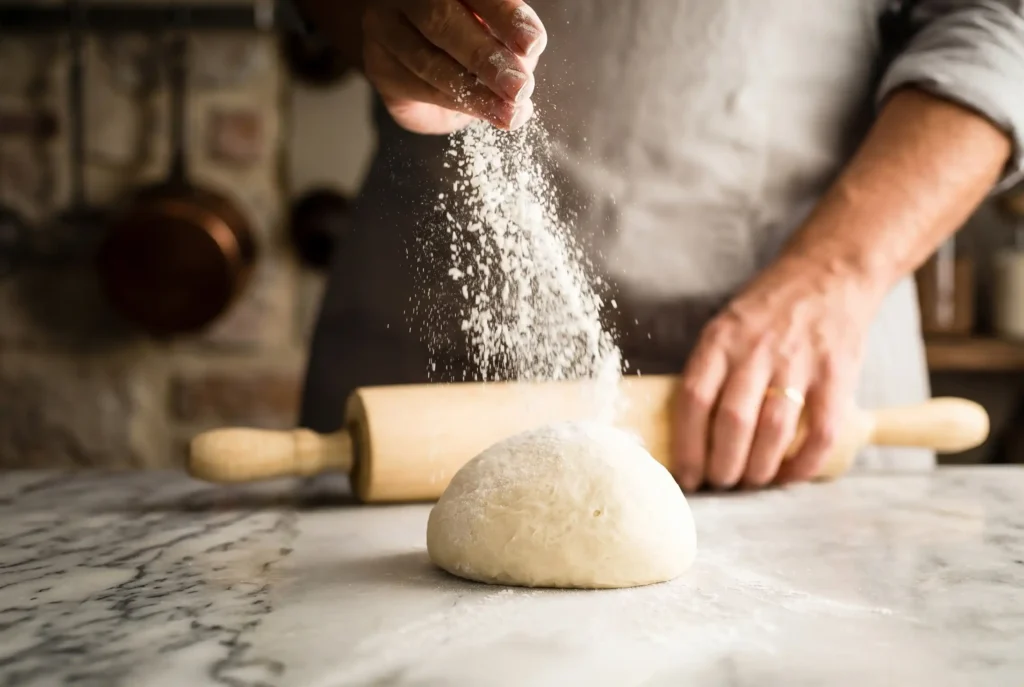
The ancient grain recovery movement (einkorn, spelt, emmer, heirloom wheats from different regions) arrived in haute cuisine baking because those grains have flavor profiles and nutritional properties that high-yield modern wheats do not have.
Modern wheats were selected to maximize yield per hectare and gluten content (to produce fluffier, higher-volume loaves). That selection process sacrificed flavor complexity for production volume. Ancient grains have lower yield and less gluten, but more flavonoid diversity, more minerals and a more complex, less neutral flavor profile.
In the context of Colombian haute cuisine, the integration of native corn flours in bread preparations is a natural extension of the same philosophy: using the Colombian grain with the same criteria applied to any other origin ingredient. You can go deeper into how the team applies this principle in the article on the exclusive author techniques behind La Makha’s menu.
Bread as the kitchen’s first presentation
In a tasting experience like the one La Makha offers, the bread that arrives at the table before the first course serves a function that goes beyond satisfying appetite while waiting for the dishes.
It is the first conversation between the kitchen and the diner. A sourdough with a well-developed crust, open crumb and balanced acidity communicates that what follows was built with the same level of care. A sliced commercial loaf or industrial baguette communicates the opposite, regardless of how good the dishes that follow are.
The bread accompaniments also have argument. An Andean herb butter (with cold-climate rosemary, mountain thyme or lemon verbena) or an olive oil infused with local ingredients has a coherence with the origin cooking concept that a standard butter does not have. They are the first example of the restaurant’s philosophy before the menu begins.
Fermentation as a common language between bread and kitchen
One of the most coherent aspects of sourdough integration in haute cuisine is that fermentation is also one of La Makha’s central technical languages: the peach kimchi, the Colombian fruit ferments, the ají chombo pickles.
That technical coherence between the bread and the dishes is not accidental. When a restaurant works with fermentation as a core technique, sourdough is the most immediate and accessible expression of that technique for the diner. It is the most direct entry point to the restaurant’s technical philosophy.
The diner who understands why the bread has that specific acidity already has the frame of reference to understand why the peach kimchi in the Duck Magret dish has exactly the fermentation level it has, and why the seasonal menu at La Makha changes with the same logic every week.
Frequently asked questions
Does La Makha serve sourdough bread in its service?
Yes. The bread that accompanies the experience at La Makha is prepared with the same quality criteria as the rest of the menu. Slow fermentation and quality ingredients are part of the concept from the first element that arrives at the table.
What is the difference between sourdough and commercial yeast bread?
Sourdough’s slow fermentation (between 12 and 72 hours) produces lactic and acetic acid that create a complex flavor profile, a crust with greater Maillard reaction and different digestibility. Commercial yeast ferments quickly and produces volume but does not have the time needed to develop those compounds.
Can I ask for more bread during the tasting experience?
Yes. The dining room team can bring additional bread during the experience. In the tasting menu, bread is usually served in the first courses where the palate needs a neutral element between preparations with intense flavor.