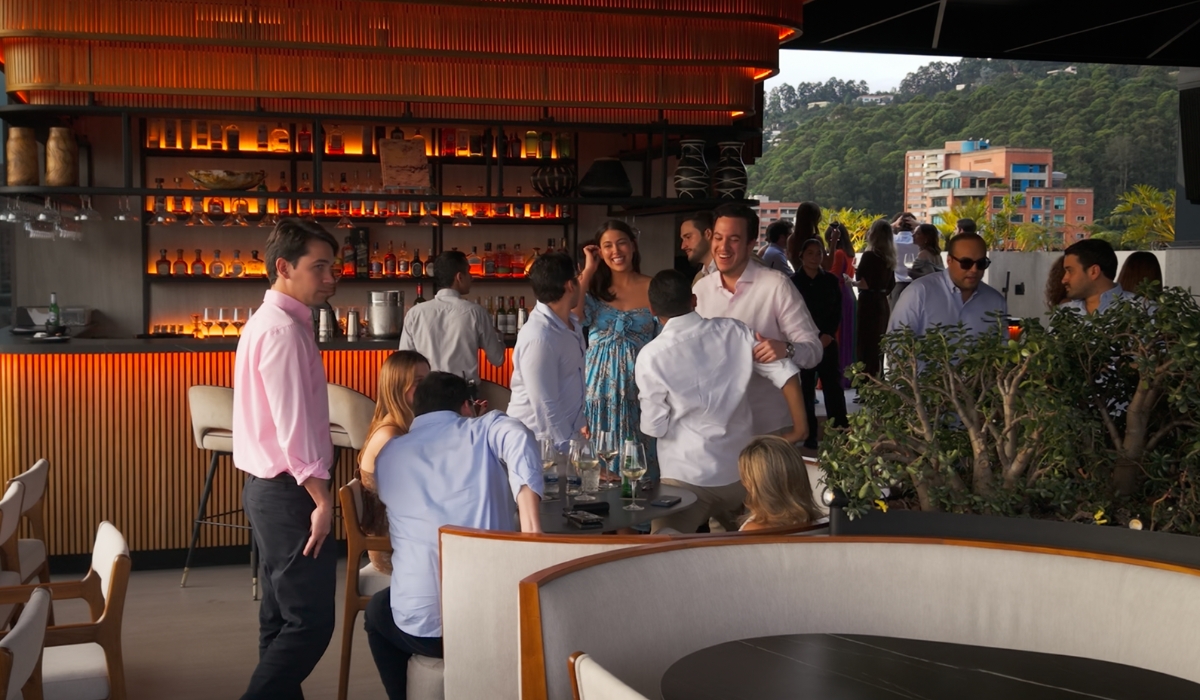
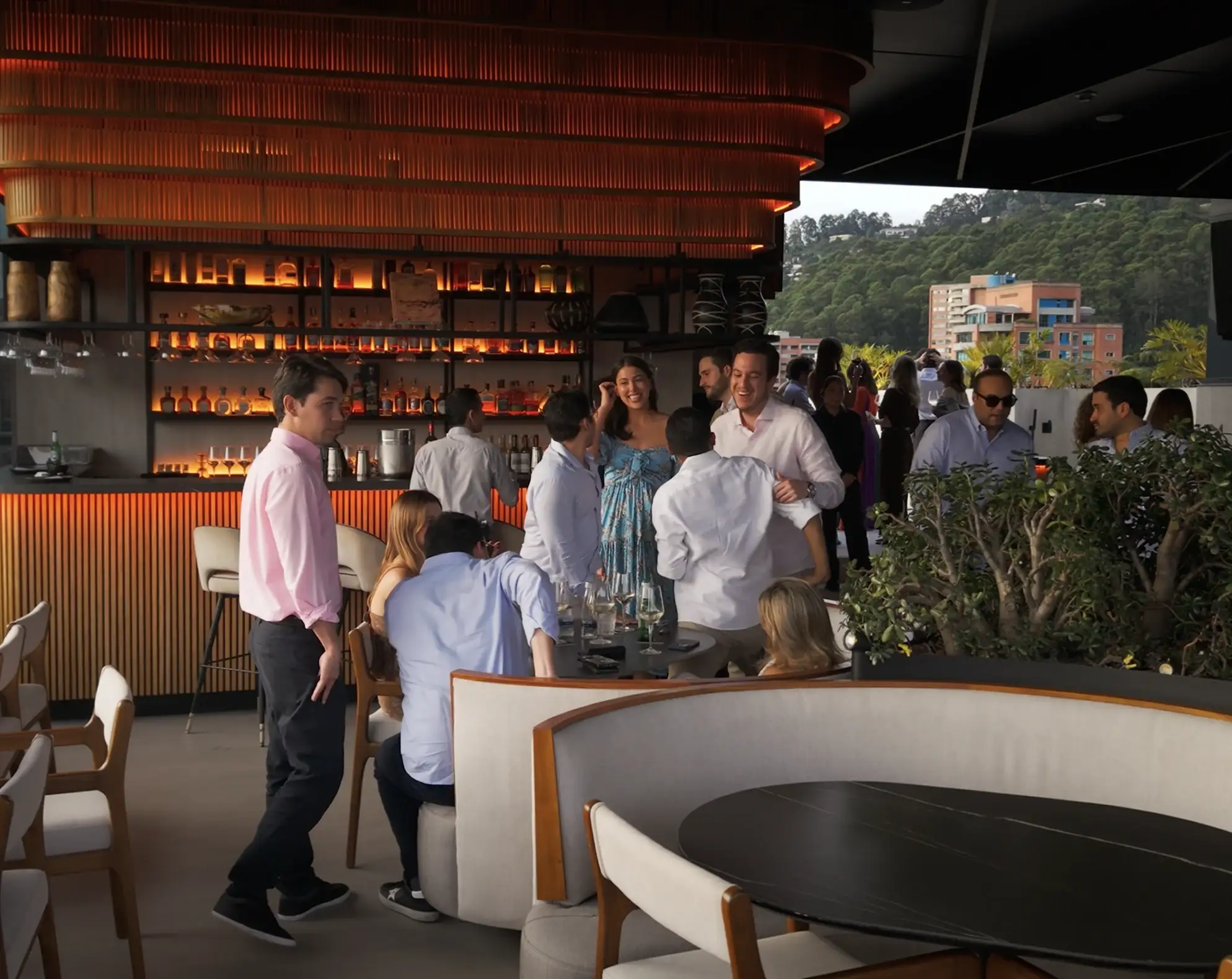
High in the hills of El Poblado, inside Binnhotel, there’s a restaurant that takes an unusual position in Medellín’s dining scene. La Makha doesn’t describe itself as fusion. The word on the menu is cocina de origen — source cuisine. The distinction matters.
Every dish on the menu carries coordinates: octopus from La Guajira, buffalo mozzarella from Planeta Rica in Córdoba, shrimp from Tumaco on the Pacific coast, lamb from Caldas. Chef David Suárez Estrada doesn’t put Colombian ingredients on a Mediterranean menu as a nod to local sourcing. He uses them because, in these specific dishes, they work better than their imported equivalents. That’s a harder claim to make — and La Makha makes it hold.
What La Makha actually is
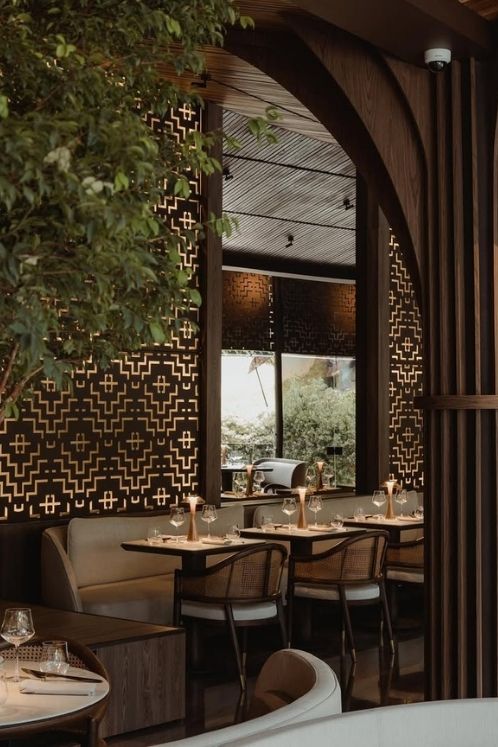
The restaurant sits inside Binnhotel, one of Medellín’s design-forward hotels in El Poblado. The name La Makha, the menu’s visual language, the carefully sourced ingredients — all of it points to a kitchen that has thought carefully about what it wants to say, and then found a way to say it through food.
Mediterranean cooking has clear internal logic: seasonal ingredients, techniques that respect the raw material, flavors that don’t compete with each other. That logic travels. A Colombian pantry has ingredients that fit that framework just as well as anything you’d find in Spain or Lebanon — often better, because they haven’t traveled. Chontaduro, the Andean palm fruit, brings a fatty sweetness to a tiger’s milk that lemon alone can’t achieve. Almojábana — an aged fresh cheese from Antioquia — does the same work as the toasted bread in a classic Spanish ajo blanco. Hibiscus from the Montes de María has the acidity and color that, in another context, you’d get from red wine.
Suárez doesn’t combine things to surprise. He combines things when the Colombian ingredient makes the dish better than its imported counterpart would. That distinction is what makes La Makha worth paying attention to.
“Ingredients that tell stories, transformed into gastronomic poetry.”— La Makha, @lamakharestaurante
David Suárez Estrada
David Suárez Estrada approaches Colombia from its ingredients outward — not from its traditional dishes inward. The difference shows in how he constructs a menu.
At La Makha, salt comes from La Guajira. So does the octopus. The heirloom corn in the Crocante de Maíz is from the Montes de María. The chicken is a native breed from eastern Antioquia. The lamb arrives from Caldas. Each of these is a deliberate choice, not a marketing decision. The ingredient is there because it does something specific in that dish that nothing else would.
The clearest example is the viche canao in the flan — an artisanal spirit from Colombia’s Pacific coast, made by Afro-Colombian communities using traditional methods. It’s not an ingredient anyone would expect in a Mediterranean-influenced dessert. But paired with coffee and bitter orange, inside a coconut flan with sunflower praline and coffee toffee, it tells a story no European spirit could tell in that same bowl. That’s Suárez’s argument, made quietly, plated beautifully.
The menu: source cuisine in practice
The menu at La Makha isn’t long, which is a choice. There’s an à la carte selection and a seven-course tasting menu — the more complete way to understand what the kitchen is doing. Each dish has a name, and below it, three ingredients listed in small type: the protagonists of what’s coming.
| Dish | What happens on the plate | Key Colombian origin |
|---|---|---|
| Stracciatella Peas · Fennel · Pennyroyal | Buffalo stracciatella with smoked garlic peas, fennel and orange mousse, confit San Marzano tomato, pennyroyal oil. The Colombian cheese as the lead in an Italian-structured plate. | Córdoba Buffalo from Planeta Rica |
| Corn Crostini Arepa · Oyster mushrooms · Sorrel | Heirloom corn arepa as the base for tuna tartare. Oyster mushroom emulsion, sorrel paste, scallion powder, and La Guajira salt flakes. Starts on the Caribbean coast, finishes in the Atlantic. | Montes de María Corn Bahía Solano Tuna La GuajiraSalt |
| Octopus Almojábana · Azotea herbs · Leek | Confit octopus with azotea herb chimichurri — a Caribbean rooftop herb garden tradition — and ajo blanco made from aged almojábana instead of toasted bread. Spanish technique, Antioquian ingredient. | La Guajira Pulpo · Almojábana |
| Ceviche Chontaduro · Watermelon · Mandarin Lime | White fish from the Pacific with chontaduro tiger’s milk. The palm fruit brings fatty sweetness and body that lime alone can’t. Pickled watermelon and plantain chips add crunch and acid. | Pacific White fish · Chontaduro |
| Catch of the Day Shrimp · Mandarin Lime · Purple Basil | Fresh Pacific fish with house-made rigatoni and Tumaco shrimp encocado — the coastal tradition of braising in coconut milk — used as a pasta sauce. Italian format, Pacific coast soul. | Tumaco Shrimp · Pacific encocado |
| Creamy Rice Seafood · Coconut · Hibiscus | Black creamy rice with Pacific shrimp, Caribbean squid and shrimp. Encocado foam and hibiscus powder from the Montes de María: floral acidity and a deep burgundy color from a dried flower. | Pacific & Caribbean Seafood Montes de María Hibiscus |
| Lamb Yogurt | Capeletti filled with braised lamb leg, with yogurt foam, Paipa cheese — a semi-hard cheese from Boyacá — and San Marzano tomato powder. Italy, the Andes, and the Eastern Mediterranean in one dish. | Caldas Lamb · Paipa cheese |
| Chicken Pipián · Bok Choi · Chimichurri | Native chicken breast with pipián cream from Popayán — a pre-Hispanic sauce of peanut and native potato — and grilled bok choy. A sauce from Colombia’s Pacific south as the base of a Mediterranean-leaning plate. | Eastern Antioquia Native chicken Popayán Pipián |
Tasting Menu · 7 Courses
The full argument from the kitchen runs seven courses — from the Corn Crostini to the coconut flan with viche canao and bitter orange. Each course comes with a suggested pairing: a Basil Smash cocktail to start, a Chilean Carmenere with the lamb, a Carajillo to close. The pairings were chosen by the kitchen, not assembled as an afterthought.
COP $330.000 per person · With pairings COP $420.000
How to drink at La Makha
The bar program follows the same logic as the kitchen: Colombian ingredients in recognizable cocktail structures. The signature cocktail list is short and intentional.
Esfumado
Aged rum, Frangelico, tamarind syrup and orange peel. Clarified for transparency in a drink whose flavors are anything but.
Niebla
8-year espadín mezcal with pennyroyal syrup — an herb from Antioquian kitchen gardens — and mandarin lime. The most Colombian drink on the list.
Revelación Rubí
Rye bourbon with corozo syrup, the palm fruit from Colombia’s Caribbean coast. The corozo does what bitters would in a classic Old Fashioned.
Sabroso
Red wine reduction with berries, spearmint syrup and vodka. Works as an aperitif or a digestif depending on when you order it.
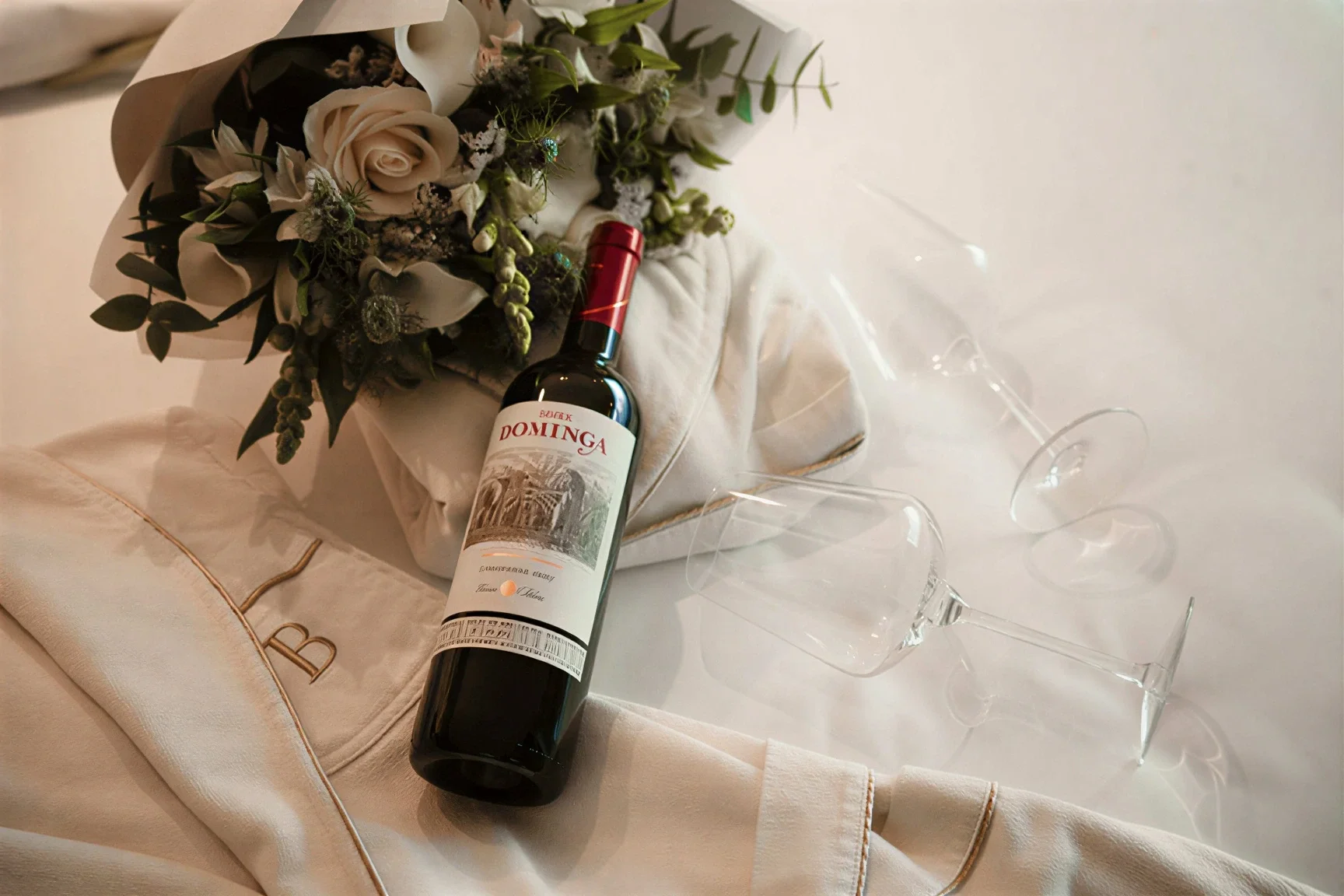
The wine list covers Spanish references — Beronia, Marqués de Riscal, Viñas del Vero — and Italians, alongside Chilean labels like Doña Dominga and Cool Coast that anchor the tasting menu pairings. It’s not a long list, but every bottle was chosen for specific dishes. Worth asking the table why.
What sets La Makha apart from other Mediterranean restaurants in Medellín isn’t technique, price, or atmosphere. It’s a clear point of view, held consistently across every plate. Every ingredient came from a specific part of Colombia. Every technique has a recognizable Mediterranean reference. In that intersection, David Suárez Estrada has built a cuisine that sounds neither imported nor folkloric. It sounds like his own.
Frequently asked questions about La Makha
Where is La Makha restaurant in Medellín?
La Makha is located inside Binnhotel in El Poblado, Medellín. It accepts reservations from hotel guests and outside visitors.
What kind of food does La Makha serve?
La Makha describes its cuisine as cocina de origen (source cuisine) — Mediterranean techniques applied to Colombian ingredients sourced from specific regions across the country, from the Pacific coast to the Andean highlands.
Who is the chef at La Makha?
The chef is David Suárez Estrada, whose approach centers on Colombian ingredients — their region of origin, their seasonal availability, and how they interact with Mediterranean technique.
Does La Makha offer a tasting menu?
Yes. The seven-course tasting menu runs COP $330.000 per person, or COP $420.000 with course-by-course beverage pairings curated by the kitchen.
How do I book a table at La Makha?
Reservations can be made through binnhotel.com. The restaurant is open to guests of the hotel and outside visitors.
Is La Makha good for vegetarians?
The menu includes vegetarian options — notably the Stracciatella, the Oyster Mushrooms with corn cake and goat yogurt foam, and the dessert selection. It’s worth mentioning dietary preferences when booking.
Planning your visit
La Makha no es un restaurante para todas las noches — no por código de vestimenta ni por precio, sino porque los platos merecen atención. El menú requiere ser leído. Los maridajes requieren una segunda opinión de quien los preparó. Eso no es inconveniente; es la condición para que la experiencia funcione.
For couples
The tasting menu is built for two people at an unhurried pace. Seven courses leave room to talk between plates.
For food travelers
Every ingredient has a name and a region. The staff can tell you where the corn came from. That’s the kind of detail this kitchen tracks.
For Binn Hotel guests
The direct connection to the hotel makes the experience more seamless. Starting or ending the night in the same building where you’re staying has its own logic.
For business dinners
The atmosphere is calm without being stiff. The menu is interesting without being difficult to explain to someone unfamiliar with Colombian cuisine.
La Makha is not an everyday restaurant — not because of dress code or price point, but because the dishes reward attention. The menu needs to be read. The pairings need a second opinion from whoever made them. That’s not a barrier; it’s the condition under which the experience works properly.
La Makha accepts reservations for Binnhotel guests and outside visitors in El Poblado, Medellín.
See the full restaurant page at La Makha en Binnhotel. Instagram: @lamakharestaurante.