La Makha’s organic design: architecture and interiors that immerse you in Colombia

Before you even take the first bite, La Makha has already seduced you with its spaces.

At most restaurants, the design is what guests look at while waiting for the food to arrive. At La Makha the design is part of the food. The way light falls on the plate, the texture of handmade ceramic in your hand, the noise level that lets you hear the chef when he explains the ingredient — all of that shapes how you perceive what’s on the plate.

BINN Hotel calls it “luxury you inhabit, not luxury you display.” La Makha’s design is the most concrete expression of that idea: quality materials without ostentation, earth tones that don’t compete with the colors of the menu, acoustics that make conversation possible. This guide breaks down each design decision and explains why it’s there.

The philosophy of the space: luxury you feel, not luxury you show

La Makha takes an approach to luxury that moves away from shine and scale. No crystal chandeliers, no mirrored surfaces. No volumes that intimidate, no decoration that demands attention for itself. The space is designed to disappear — so that what occupies the center of attention is the conversation, the dish and the person sitting across from you.

In design terms that translates to: materials with texture but without noise, warm lighting that isn’t dramatic, controlled acoustics that absorb sound without creating the coldness of total silence. The result is a space that feels intimate without being small, sophisticated without being cold.

“La Makha is not just a place to eat. It’s a space that breathes with you. Every detail is designed so the space accompanies, never interrupts.” — BINN Hotel · La Makha organic design

The materials and what they communicate

La Makha’s material vocabulary speaks of Colombian territory with Mediterranean references. Nothing was imported for aesthetics — every material has a logic that connects it to the kitchen surrounding it.

Wood

surfaces with visible grain, real texture. Not lacquered to shine — wood that connects with nature and with Colombian hospitality. Connection: the same warmth as the ingredients from the Antioquian countryside.

Stone

surfaces that add depth and balance. Stone brings visual weight that anchors the space — it contrasts with the lightness of the dishes and keeps the atmosphere from feeling temporary. Connection: the stability that reflects origin cooking.

Handmade ceramics

Bowls, plates and accessories made by local artisans. Each piece is unique — just like the dishes it presents. The tableware isn’t neutral: it’s part of the chef’s presentation. Connection: local craftsmanship in dialogue with the menu’s ingredients.

Natural textiles

Hand-woven pieces, tablecloths and decorative accents that add movement and organic lightness. They absorb sound and soften the acoustics without drawing attention to themselves. Connection: Colombian craftsmanship integrated as a functional element.

Glass and metal

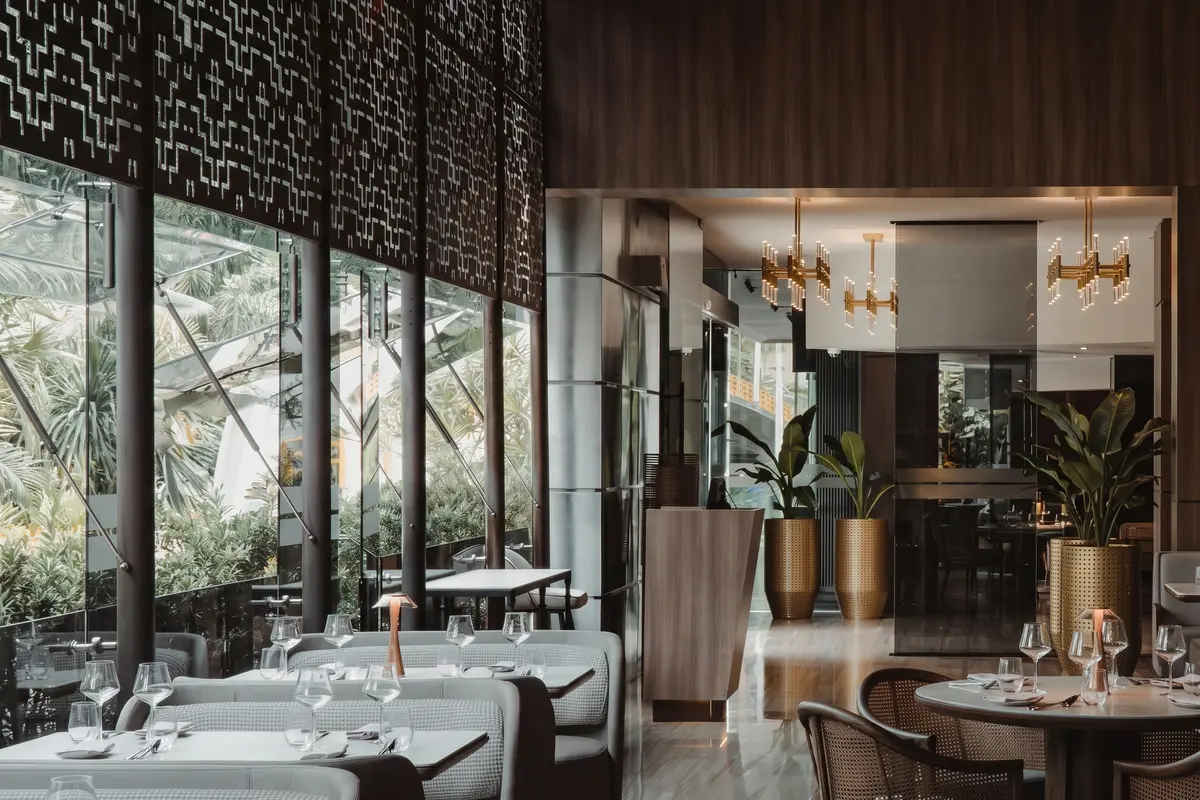
BINN Hotel’s glass and steel architecture defines the structure of the space: floor-to-ceiling windows that frame the views of El Poblado and the mountains, with metal as the structural element that gives contemporary precision to the whole. Connection: openness to the territory, transparency of origin.

Vegetation

Living plant elements integrated into the design that reduce visual noise and connect the interior with El Poblado’s natural surroundings. Not as occasional decoration — as a constant part of the spatial language.
Connection: the nature that provides the ingredients enters the restaurant.

Detalle de una mesa en La Makha Medellín, mostrando la combinación de madera y sillas de mimbre en su diseño.

The palette: earth tones that frame the dishes

The color palette decision has a functional logic as well as an aesthetic one: earth tones and neutrals create the ideal background so that the colors of the menu can take center stage. A black rice dish with burgundy hibiscus powder, a ceviche with pickled watermelon and yellow plantain chips — those natural colors need a background that doesn’t compete.

ToneApplicationFunction
Deep brownDark wood, stoneAdds depth and anchors the space
Warm terracottaWalls and mid-range texturesWarmth without aggression
Golden ochreLighting and detailsThe accent that brings life without distracting
Natural creamLight surfaces, linen, ceramicsThe clean background for the plate

This palette also has a documented effect in restaurant design: earth tones induce calm and encourage conversation. Guests arrive carrying the pace of El Poblado and the space gradually slows them down, preparing the state of attention the tasting menu requires.

Light as a design element

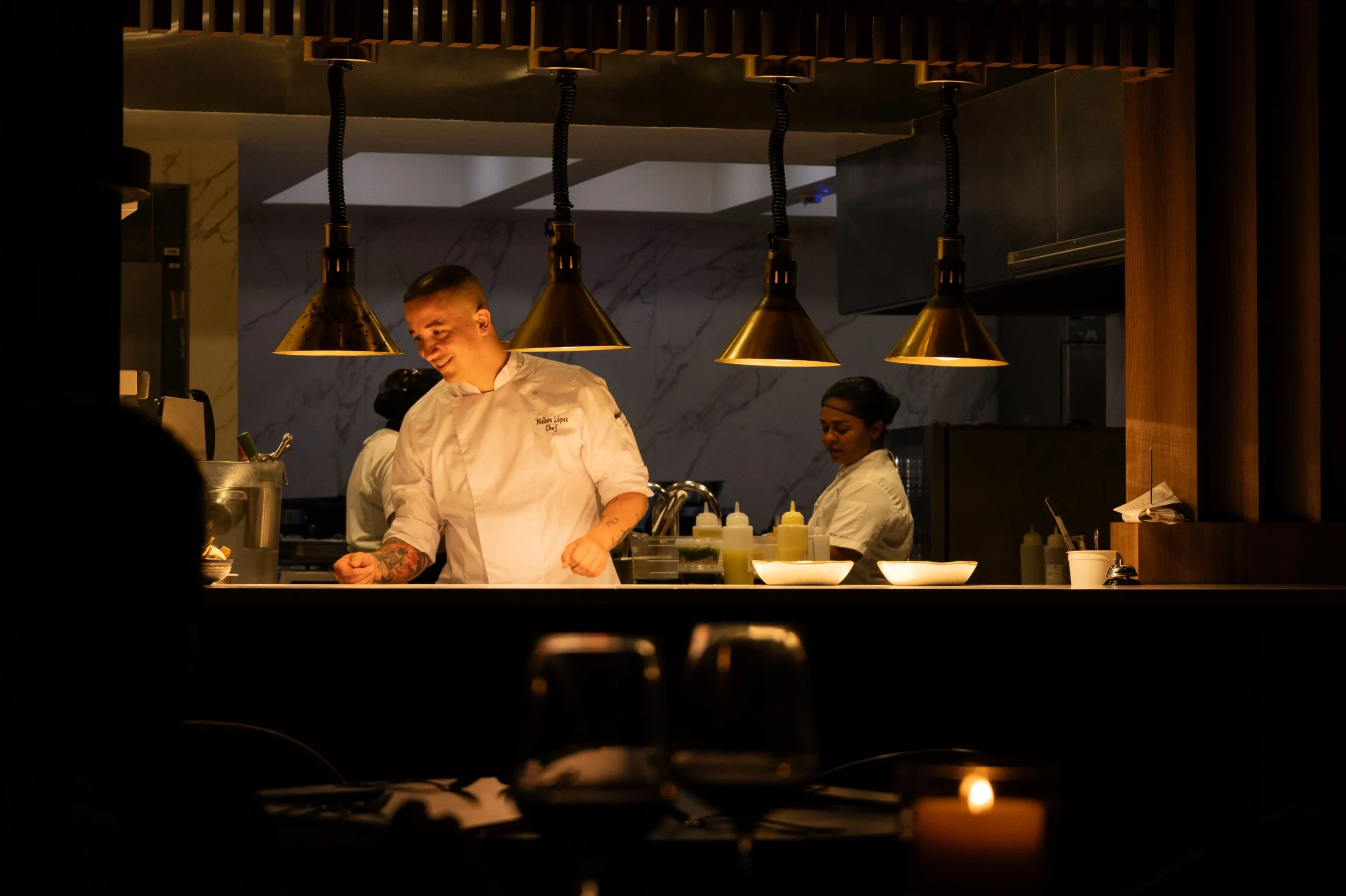
La Makha’s lighting was designed to shift through the night, following the rhythm of the service. It’s not fixed lighting — it’s a light choreography that accounts for how the dishes evolve and how the perception of colors and textures changes as the evening progresses.

Entering the restaurant

Warm light that transitions from the outside. The shift from El Poblado’s pace to La Makha’s interior is supported by light temperature — warmer, lower and more directional than the light on the street.

During service

Focal light over the tables that brings out the textures and colors of the dishes. The handmade ceramics, the burgundy hibiscus powder, the yellow plantain chips — all of them benefit from correctly directed light.

As the night advances

As Medellín lights up outside the windows, La Makha’s interior finds its counterpoint: the city’s glow framed by the glass panels contrasts with the controlled warmth inside.

The role of the views

The windows aren’t just a visual opening — they’re a source of natural light during lunch service and a panoramic frame at dinner. The mountains of El Poblado enter the restaurant as a design element no architect can manufacture.

The complete sensory experience

La Makha’s design works all five senses deliberately. Not as a theoretical exercise — as concrete architectural and operational decisions that shape how every dish is perceived.

  • Sight An earth-tone palette that yields the spotlight to the plate. Focal lighting that reveals textures. Windows with views of El Poblado and the mountains.
  • Touch Handmade ceramics with their own texture in the hand. Natural textiles on the table. Wood with visible grain. Nothing smooth or generic.
  • Hearing Controlled acoustics that allow effortless conversation throughout the service. Carefully selected music that accompanies without imposing. A noise level that never interferes with the chef’s explanation of a dish.

Smell

The open kitchen lets the aromas of dishes being prepared reach the dining room gradually. The smell is part of the anticipation before the plate arrives at the table.

Taste

The complete environment — light, temperature, noise level, texture of the tableware — shapes the perception of flavor. Studies in gastronomic neuroscience confirm that the same dish tastes different in different settings.

The relationship between the restaurant and the hotel

La Makha is on the ground floor of Binnhotel — it’s not an independent restaurant that shares an address with a hotel. It’s part of a coherent design ecosystem where the hotel’s architecture and the restaurant’s interiors share the same language: minimalism, quality materials, natural light, connection with the surroundings.

That coherence has practical consequences. A guest who has breakfast at La Makha and then goes up to their suite isn’t moving between different worlds — they’re in the same design universe. The gastronomic experience and the accommodation experience reinforce each other.

The most exclusive area of the restaurant — the glass and metal zone — gives visual access to Binnhotel’s architecture from the inside and to El Poblado’s views from the outside. It’s the point where the space’s design and La Makha’s origin-driven kitchen meet the territory that inspired both.

Frequently asked questions about La Makha’s design

What is the interior design of La Makha in Medellín like?

It has an organic design based on natural materials: wood with visible grain, stone, local handmade ceramics, hand-woven natural textiles and living plant elements. The palette is earth tones — deep brown, terracotta, ochre and cream — which create a neutral background so the colors of the dishes can take the lead.

Does La Makha have an open kitchen?

Yes. The open kitchen concept lets guests perceive the aromas of dishes being prepared and, at certain moments, see part of the process. This adds an element of anticipation to the gastronomic experience.

What is the best table at La Makha?

The glass and metal area is the most exclusive section of the restaurant. It has floor-to-ceiling windows with views of El Poblado and the mountains, and it’s where BINN Hotel’s architecture integrates most completely with the restaurant’s design. It can be requested when booking.

Is La Makha’s design photogenic?

Yes. The handmade ceramics, warm directional lighting and earth-tone palette mean dishes photograph well from any angle. The glass panels and natural materials also offer visually appealing backgrounds for atmosphere shots.

Does La Makha have live music?

La Makha has carefully selected music that accompanies the service without imposing itself. It’s not a live music venue — the acoustics are designed so that conversation is always possible. For special events with a live musician, BINN Hotel can arrange additional options.

Discover the restaurant on La Makha’s page at Binnhotel. Instagram: @lamakharestaurante

SHARE

Welcome to Binn Hotel

Discover the art of inhabiting silence. Stories, spaces, and experiences that elevate pause into a way of life.