The word sustainable is used so often in gastronomy that it barely means anything anymore. It appears on menus, in press releases and in chef statements with a frequency that far exceeds any restaurant’s capacity to verify what it means in practice. The result is that diners learn to ignore it.
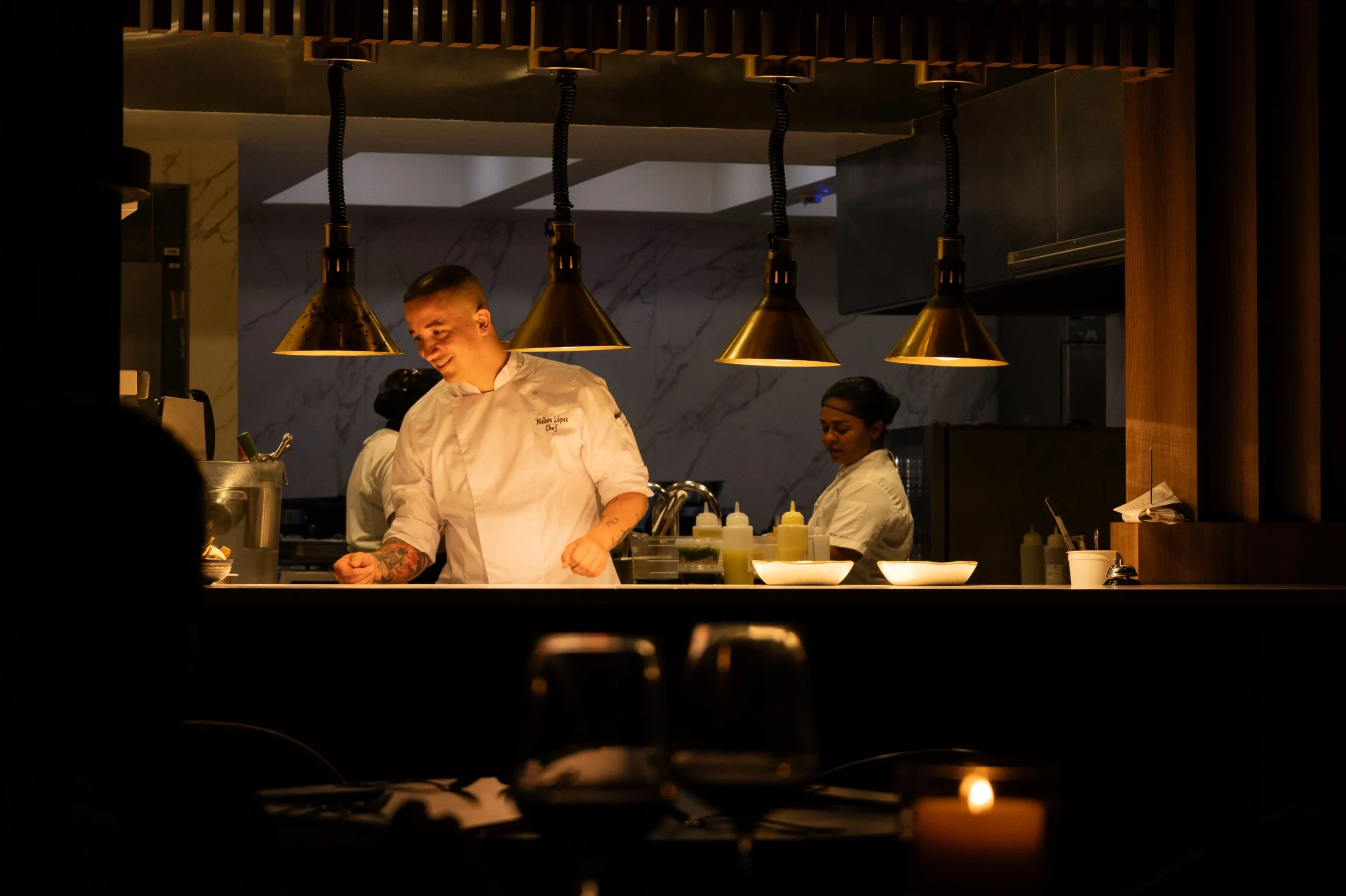
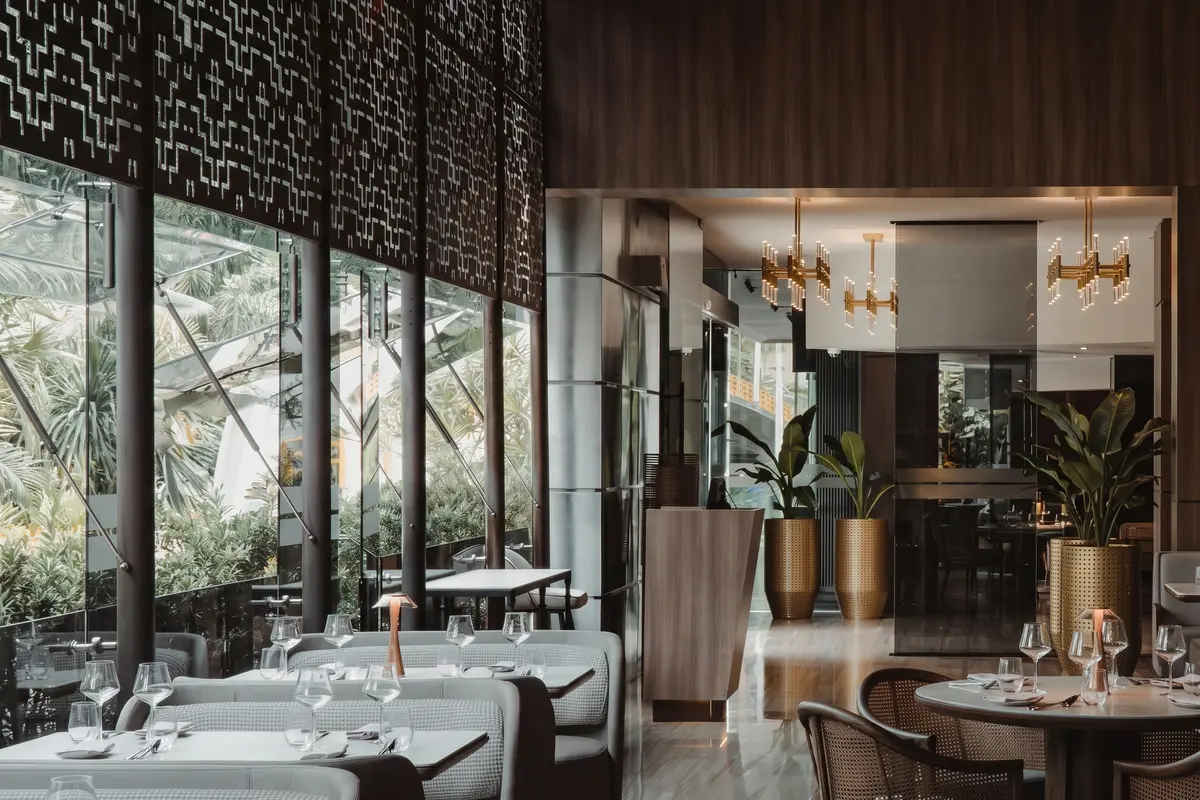
La Makha Restaurant, on the first floor of Binn Hotel in El Poblado, Medellín, does not build its sustainability proposal on declarations. It builds it on a list of suppliers with specific names and provenance, on purchasing decisions that prioritize local product over imported when the quality justifies it and on a kitchen that does not use Colombian ingredients as a decorative element on a menu oriented in a different direction.
What sustainability means in La Makha’s kitchen
At La Makha, sustainability has three concrete dimensions that can be verified on the menu.
The first is verified origin of ingredients. Not all restaurants that claim to use local product can say which farm their cheese comes from or at which port their fish was caught. La Makha can. The tuna comes from Bahía Solano in Chocó. The prawns are from Tumaco on the Pacific coast of Nariño. The stracciatella is from Planeta Rica buffalo in Córdoba. The native corn comes from Montes de María. The salt is from La Guajira. The Paipa cheese, the only Colombian cheese with a denomination of origin, comes from the municipality of Paipa in Boyacá. The viche canao has a denomination of origin from the Colombian Pacific.
That specificity is not decorative. It has consequences for the quality of the product that arrives at the table and for the economic impact that the restaurant’s cooking has on the producing communities of those regions.
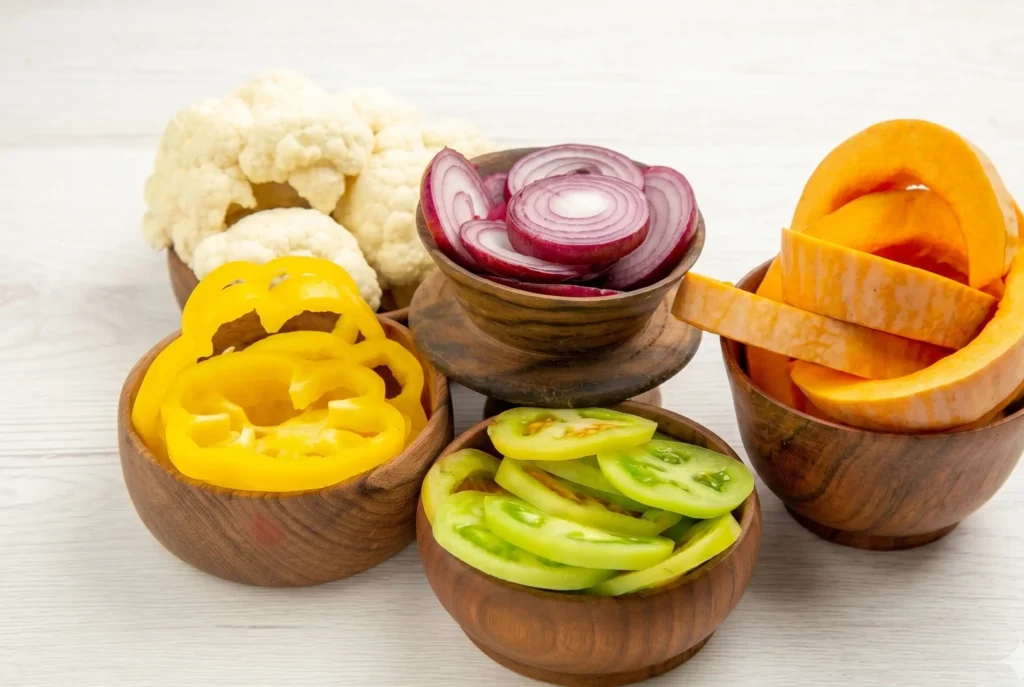
The second dimension is working with responsible producers. La Makha works with producers who apply responsible farming, fishing and agriculture criteria. The fish arrives fresh from the Pacific three times a week instead of being bought frozen from an uncertain origin. The buffalo cheese comes from a farm that works with animal welfare standards above those of conventional farming. The Antioquian oyster mushrooms are crops that do not require deforestation or intensive use of agrochemicals.
The third is waste reduction through use-it-all cooking. The bone glaze in the Lamb course of the tasting menu is a direct example: the restaurant does not throw away the bones after the braise, it uses them to build the sauce that gives character to the dish. The house vinegar used to make the pickled beets in the Pork Belly is another: instead of buying industrial vinegar, they produce their own with the fermentation residues available.
The sustainable suppliers that define the menu
La Makha’s relationship with its suppliers is not a shopping list. It is fieldwork that took years and that continues to evolve. The restaurant does not buy from generic wholesalers. It works directly with producers it knows and whose practice it can verify.
Fresh Pacific fish is the most visible example. Receiving fresh fish directly from Bahía Solano three times a week requires logistics that most restaurants in El Poblado do not have and are not willing to maintain. It means working with artisanal fishermen who practice selective fishing, without trawling, with quotas that respect the sustainability of the resource. The logistical cost is higher than buying frozen fish of generic origin. The difference in quality and impact on the fishing community justifies it.
The Antioquian oyster mushrooms that appear in the Corn Crisp Arepa and in the Orellanas course of the tasting menu come from farms on the Antioquian plateau that produce without agrochemicals and with production cycles that respect the natural rhythms of the mushroom. They are not industrially farmed oyster mushrooms. They are mushrooms with their own aromatic profile that the kitchen team knows and knows how to work.
The native corn from Montes de María is one of the ingredients with the greatest cultural and sustainable weight on the menu. Native corn varieties are endemic varieties that the farming communities of that region have cultivated for generations. Buying directly from those producers has a real economic impact on families who work the land with practices that industrial agriculture has been displacing. La Makha is a customer that gives economic value to that work and contributes to it making economic sense to continue doing it.
Viche canao and cultural sustainability
Sustainability at La Makha is not only environmental. It also has a cultural dimension that viche canao represents better than any other ingredient.
Viche is a spirit artisanally distilled by Afro-Colombian communities in the Pacific. For decades it was a clandestine drink: produced in marginalized areas of the country, consumed locally and with no legal or economic recognition for its producers. The denomination of origin that viche obtained in 2021 changed that: it formalized the production, recognized the ancestral knowledge of the producing communities and opened the possibility of that drink reaching higher value-added markets.
When La Makha uses viche canao in the Basil Smash of the tasting menu and in the Carajillo that closes the dinner, it is not being exotic. It is participating in an economic chain that has real impact on communities that have historically been outside the benefits of gastronomic tourism and luxury consumption.
That is cultural sustainability: taking ingredients that have a history of marginalization and giving them a place in author gastronomy that corresponds to their quality and identity.
Sustainability and price: the honest relationship
A sustainable gastronomy has costs that a gastronomy that does not ask those questions does not have. Buying fresh fish directly from Bahía Solano is more expensive than buying frozen fish of generic origin. Working with native corn producers from Montes de María is logistically more complicated than buying industrial corn at the Medellín wholesale market.
La Makha assumes those costs and passes them on to the menu price proportionally. The tasting menu at $330.000 without pairing and $420.000 with curated pairing reflects the real cost of a kitchen that works with ingredients of this quality and provenance. It is not an arbitrary price. It is the price of a sustainable production chain that has a name at every link.
For the diner, that means that every time they choose the La Makha tasting menu, they are participating in an economy that supports artisanal fishermen from the Pacific, native corn producers from the Colombian Caribbean, Antioquian mushroom growers and Afro-Colombian communities that produce viche with a denomination of origin. That is not on the printed menu. But it is in every dish.
To know in detail La Makha’s relationship with its suppliers and the work behind each ingredient, the article on sustainable suppliers and responsible cooking at La Makha documents the selection process and the practices that define the restaurant’s production chain.
Hours and reservations
La Makha opens for dinner Monday to Thursday from 6:00 p.m. to 10:00 p.m., and Friday and Saturday until 10:30 p.m. Sundays and holidays are closed for dinner. Breakfast is available every day from 6:00 a.m. to 11:30 a.m.
The restaurant is at Carrera 25 #10-51, Transversal Superior, El Poblado, Medellín, on the first floor of Binn Hotel, with free covered parking.
FAQs about sustainable gastronomy at La Makha
What makes La Makha’s gastronomy sustainable?
It works with verified-origin ingredients from specific producers: artisanal fishing from Bahía Solano, prawns from Tumaco, native corn from Montes de María, Antioquian oyster mushrooms, viche canao with denomination of origin from the Pacific. Every ingredient has a traceable production chain.
How does La Makha contribute to Colombian producing communities?
By buying directly from local producers at prices that recognize the quality and work of their sustainable practices. The use of viche canao, for example, supports Afro-Colombian communities from the Pacific that for decades had no access to the luxury gastronomy market.
What is viche canao and why is it sustainable?
It is a variety of Colombian Pacific viche, an artisanal distilled spirit with a denomination of origin since 2021. Its production is in the hands of Afro-Colombian communities and the denomination of origin protects that ancestral knowledge and formalizes its economic chain.
Where is La Makha in Medellín?
At Carrera 25 #10-51, Transversal Superior, El Poblado, Medellín, on the first floor of Binn Hotel.
Why does sustainable gastronomy have a higher price?
Because it works with ingredients from verified provenance that have real logistical and economic costs. Artisanal direct fishing from the Pacific, native corn from farming producers and viche with a denomination of origin have more costly production chains than their industrial equivalents. La Makha’s menu price reflects those costs proportionally.
How much does the tasting menu at La Makha cost?
$330.000 per person without pairing and $420.000 with curated pairing that includes cocktails with viche canao and Chilean wines selected for each course.
To book and live a gastronomic experience that has real impact beyond the table, the starting point is the official La Makha Restaurant page. Sustainability in gastronomy should not be a sales argument. It should be the normal way of doing things. At La Makha it is.