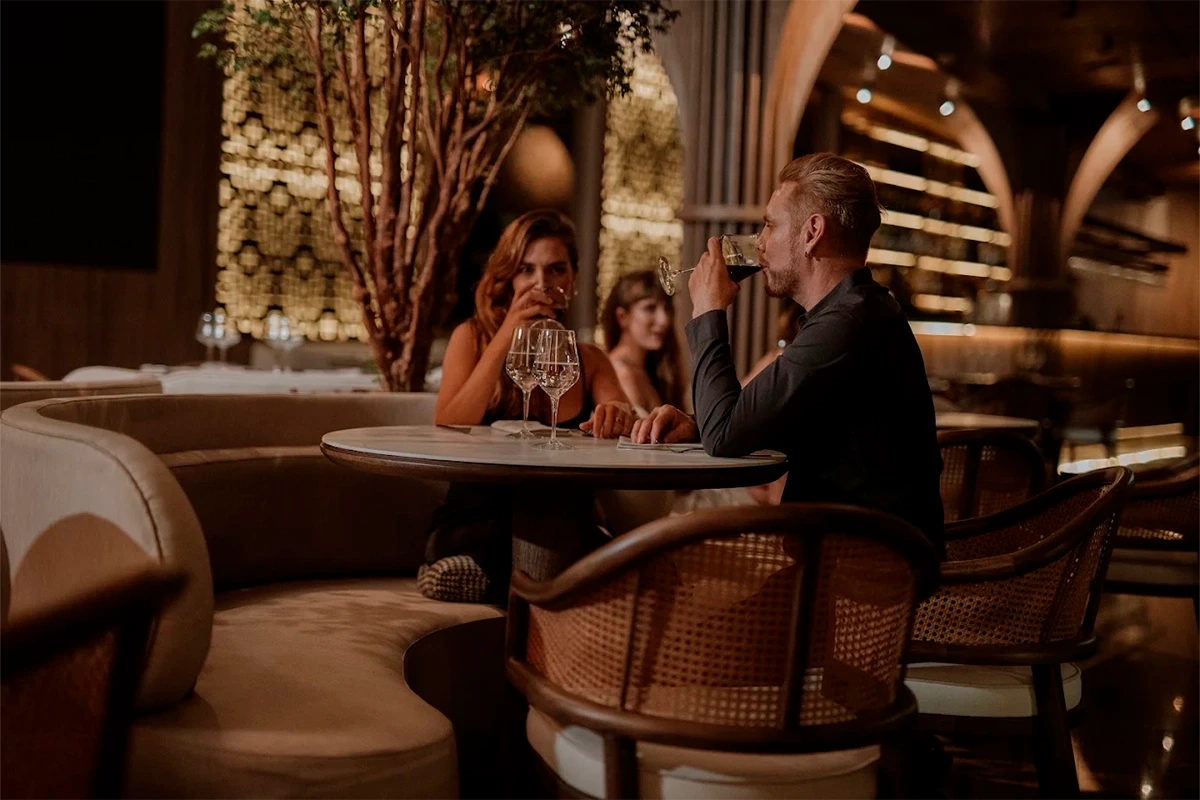
For a long time, not drinking alcohol at an author restaurant meant settling for water, orange juice or a soft drink that arrived at the table with no care at all. That reality is changing, but slowly. Few luxury restaurants in Medellín have a non-alcoholic drinks proposal that matches the rest of the gastronomic experience.
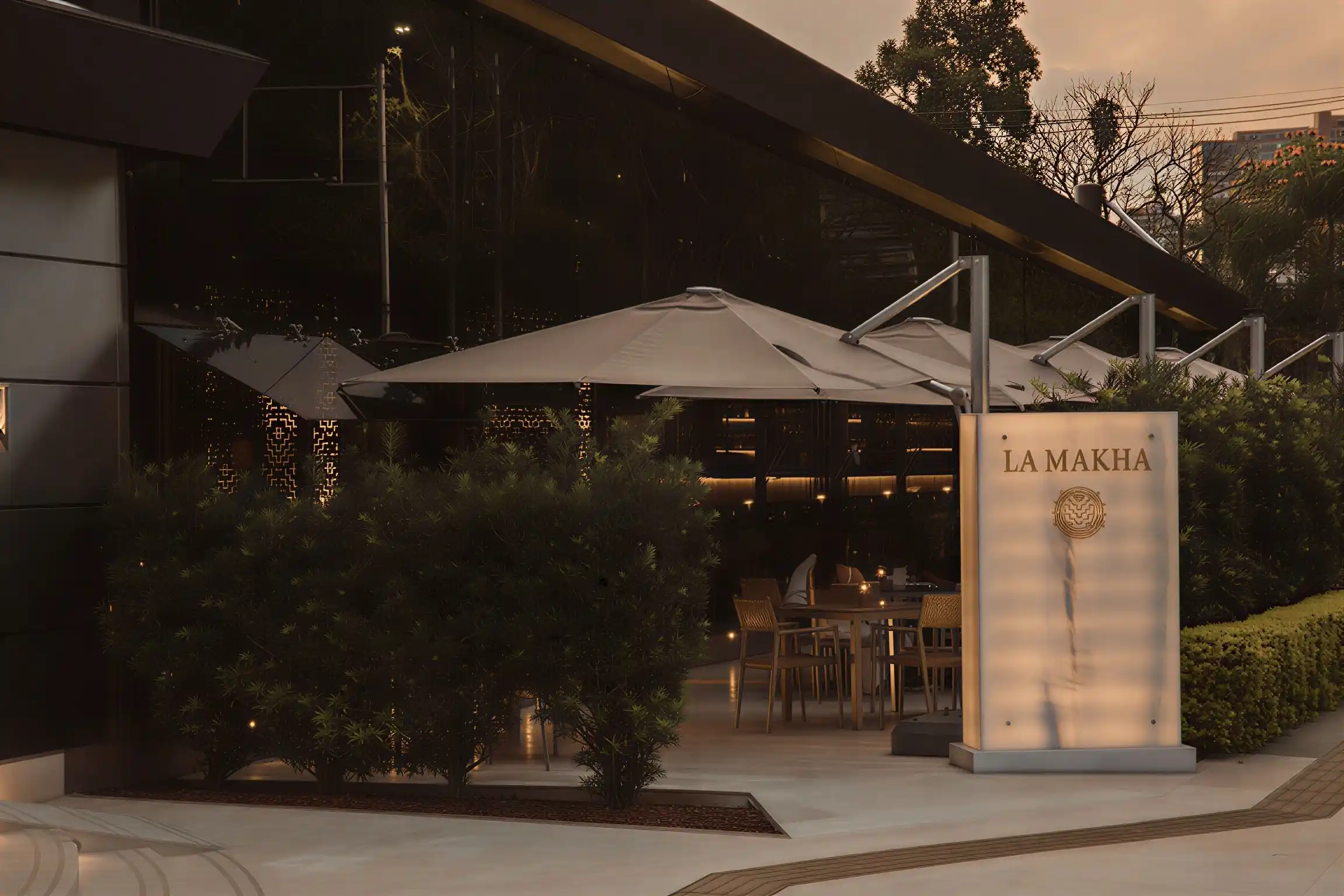
La Makha Restaurant, on the first floor of Binn Hotel in El Poblado, works non-alcoholic bartending with the same logic as its signature cocktails: ingredients from specific origins, bar technique applied with judgment and combinations that have a reason to exist beyond simply removing the alcohol from a conventional recipe. It is not a list of substitutes. It is its own proposal.
Why author mocktails deserve attention
A badly made mocktail is basically a juice with ice and a nice name. An author mocktail is something else: a construction of flavors where acidity, sweetness, bitterness and texture are balanced with the same care as in a cocktail with alcohol. The absence of ethanol does not simplify the work. In many cases it complicates it, because alcohol acts as a vehicle for aromas and as a balancing element between the components of a drink.
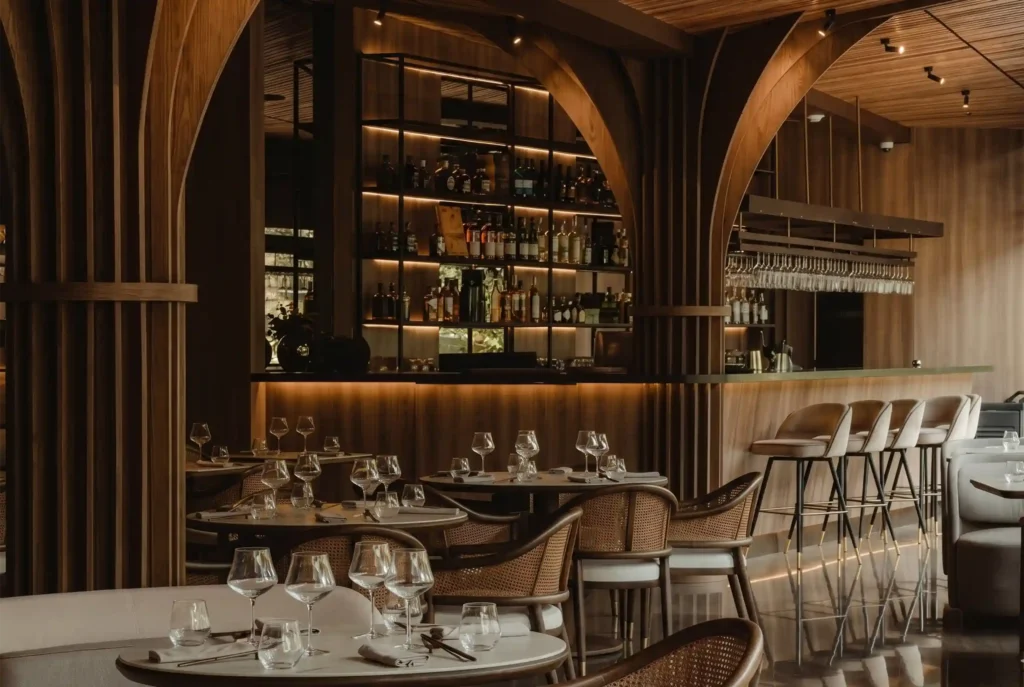
La Makha’s bar works with Colombian ingredients that have enough aromatic complexity to build non-alcoholic drinks with their own character. Chontaduro from the Pacific, pennyroyal from the Antioquian mountains, mandarin lemon, corozo from the coast, hibiscus from Montes de María. All appear in the signature cocktail menu and all have applications in non-alcoholic versions that the team can prepare on request.
La Makha’s mocktail proposal
La Makha does not have a separate mocktail menu from the cocktail menu. It has a signature cocktail proposal where the bar team can build non-alcoholic versions of several creations on the menu, using the same base ingredients but with adjustments to the structure of the drink to compensate for the absence of alcohol.
The Silencio ($38.000) in its alcoholic version uses Absolut Vodka infused with coconut oil, thyme syrup, mandarin lemon juice and topped with soda. The aromatic base of the cocktail, the coconut oil and thyme syrup, has enough complexity to build a non-alcoholic version that preserves the profile of the original. The mandarin lemon brings citric acidity and the soda gives effervescence and lightness.
The Sabroso ($45.000) uses a red wine reduction with berries, mandarin lemon juice, mint syrup, Absolut Vodka and tonic. A non-alcoholic version can be built with the berry reduction, mandarin lemon, mint and tonic water, maintaining the fruity complexity and acidity of the original. The result is a mocktail with body and color that does not seem like a diminished version of anything.
The Revelación Rubí ($45.000) combines bourbon with corozo syrup, pineapple extract and lemon juice. Corozo is a fruit from the Colombian coast with a flavor between tamarind and plum, with natural acidity and an intense red color. Used as the base of a mocktail with pineapple extract and lemon, it produces a drink with its own Colombian character that does not need the bourbon to have complexity.
The ingredients that make La Makha’s non-alcoholic bartending possible
La Makha’s ability to build quality mocktails depends directly on the quality of its base ingredients. Several of those used in its signature cocktails have enough aromatic complexity to work as protagonists in non-alcoholic versions.
Pennyroyal is a herb from the Antioquian mountains that appears in the Niebla cocktail syrup. It has a profile between mint and chamomile, softer than either, with a slightly bitter note that in mocktail form works as a contrasting element with the sweetness of other ingredients.
Corozo is the fruit that gives character to the Revelación Rubí syrup. Its natural acidity and notes between tamarind and red fruits make it an ideal base for mocktails with body and color without needing artificial colorings.
Hibiscus from Montes de María appears in the Creamy Rice on the menu as powder. In liquid form, whether as an infusion or as a syrup, it has a floral acidity and a deep red color that work very well in haute cuisine mocktails.
Mandarin lemon is an ingredient that appears in several La Makha dishes and cocktails. Unlike conventional Tahiti lemon, it has sweeter and more aromatic notes that make it especially useful in non-alcoholic drinks where you need complexity in the acidity, not just simple acidity.
Mocktails and pairing with La Makha’s cuisine
One of the most interesting possibilities of La Makha’s mocktails is their integration into the tasting menu pairing. For diners who do not drink alcohol, the team can build a sequence of non-alcoholic drinks to accompany each course of the menu with the same logic as the official curated pairing.
The Corn Crisp Arepa, with its Bahía Solano tuna tartare and Guajira salt, calls for a drink with acidity and freshness that cleanses the palate between bites. A non-alcoholic version of the Basil Smash, with unfermented viche, basil, lemon and simple syrup, can fill that role. The Watermelon Ceviche, with its chontaduro leche de tigre, needs something that balances the acidity of the dish without competing with it. A cold hibiscus infusion with mandarin lemon works.
That personalization capacity is part of what defines the service experience at La Makha. It is not a restaurant where the response to “I don’t drink alcohol” is a list of packaged juices. It is a space where the team has the ingredients and the judgment to build something worth drinking.
To explore La Makha’s complete drinks proposal, including signature cocktails, wine list and non-alcoholic options, the article on signature cocktails and Colombian mixology at La Makha details the bar philosophy and the ingredients that define it.
Hours and reservations
La Makha opens for dinner Monday to Thursday from 6:00 p.m. to 10:00 p.m., and Friday and Saturday until 10:30 p.m. Sundays and holidays are closed for dinner. Breakfast is available every day from 6:00 a.m. to 11:30 a.m.
The restaurant is at Carrera 25 #10-51, Transversal Superior, El Poblado, Medellín, on the first floor of Binn Hotel, with free covered parking.
Frequently asked questions about mocktails at La Makha
Does La Makha have a mocktail menu?
La Makha does not have a separate mocktail menu but does have the capacity to build non-alcoholic versions of its signature cocktails using the same base ingredients with technical adjustments to compensate for the absence of alcohol.
What ingredients does La Makha use in its mocktails?
Antioquian pennyroyal, corozo from the Colombian coast, hibiscus from Montes de María, mandarin lemon, Pacific chontaduro and other verified-origin Colombian ingredients that have enough aromatic complexity to work in non-alcoholic drinks.
Can you have a non-alcoholic pairing at La Makha?
Yes. The La Makha team can build a non-alcoholic drink sequence to accompany the tasting menu, using the bar ingredients with the same logic as the official curated pairing.
How much do the signature cocktails at La Makha cost?
Signature cocktails cost between $38.000 and $60.000. Non-alcoholic versions are built on request with similar prices depending on the ingredients used.
Where is La Makha in Medellín?
At Carrera 25 #10-51, Transversal Superior, El Poblado, Medellín, on the first floor of Binn Hotel.
How much does the tasting menu at La Makha cost?
$330.000 per person without pairing and $420.000 with curated pairing. For diners who do not drink alcohol, the team can build a non-alcoholic pairing at a similar price.
To book and explore La Makha’s full proposal, the starting point is the official La Makha Restaurant page. Not drinking alcohol should not be a reason to have a lower quality experience at the table. At La Makha it is not.