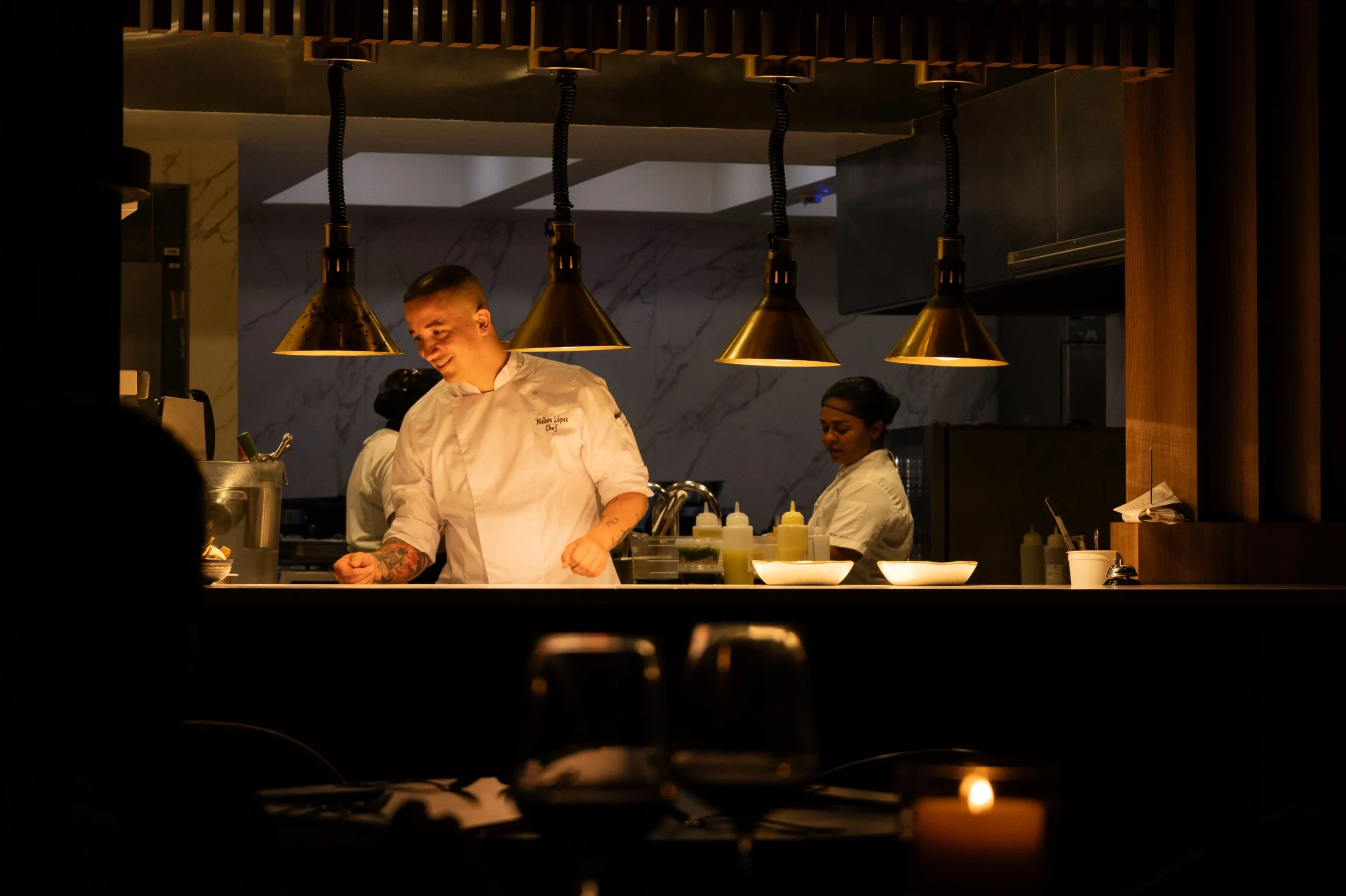
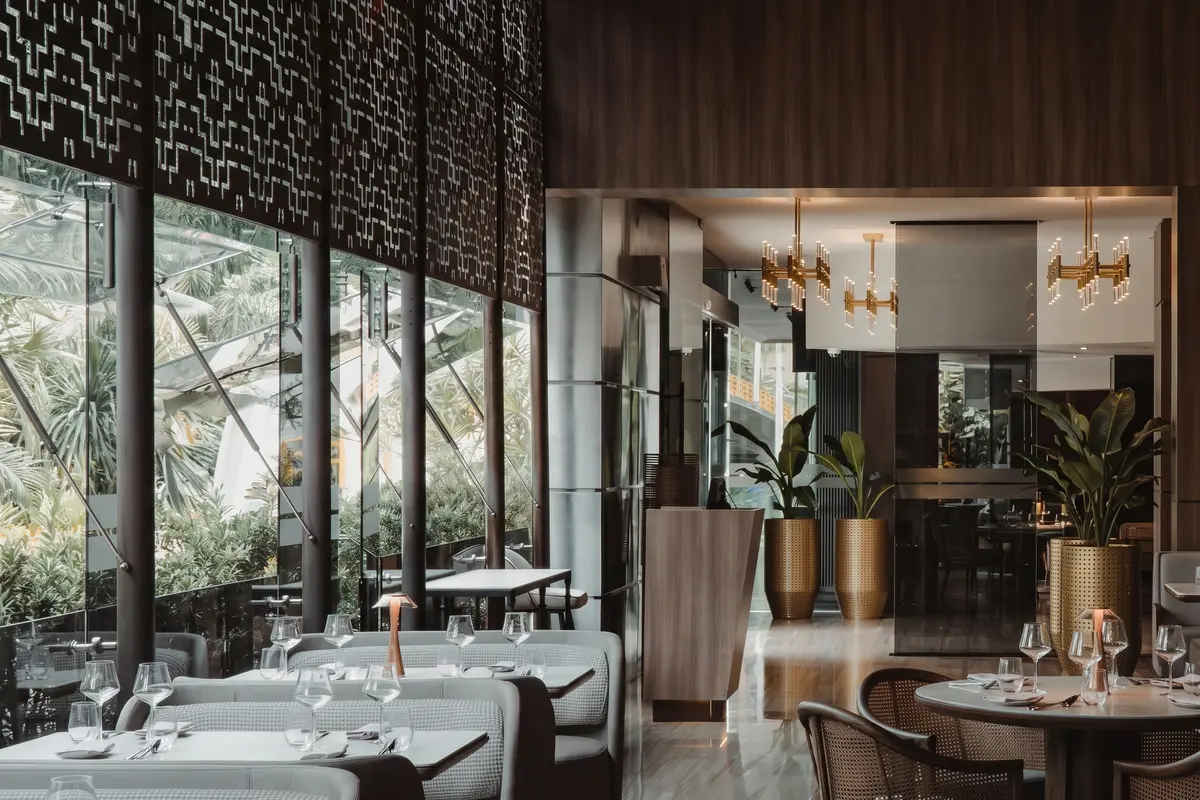
Colombia has two oceans and a network of rivers that crosses the country from north to south. It has the Pacific with its cold waters and deep-sea fishing, the Caribbean with its tropical seafood and intense flavors, and the inland rivers with endemic species that few author kitchens have explored seriously. That aquatic richness is extraordinary. And in most restaurants in Medellín, it goes completely unnoticed.
La Makha Restaurant, on the first floor of Binn Hotel in El Poblado, works differently. The fish does not come from a generic supplier. Fresh white fish arrives from the Colombian Pacific three times a week, directly from Bahía Solano in Chocó. The prawns are from Tumaco. The squid is from the Caribbean. Every marine protein has a name and a provenance, and that translates into a difference in flavor and texture that the diner perceives even without knowing exactly where it comes from.
Why the origin of the fish changes everything
The cold chain for fish is unforgiving. A tuna that traveled poorly or that waited too long in an intermediate warehouse does not have the same flavor as one that arrived within the last few hours from its fishing point. The texture changes, the freshness changes and the flavor changes. This is not a marketing argument. It is basic biochemistry.
When La Makha says it works with fresh Pacific fish, it is not a statement of intentions. It is a logistical decision that has a cost and that defines the quality of several of the most important dishes on the menu. Receiving directly from Bahía Solano three times a week means the restaurant adjusts its menu according to what arrives, not the other way around. The Catch of the Day does not have a fixed name on the menu because the fish changes according to the catch. That is exactly what defines a kitchen that is honest with its ingredient.
The sea and river dishes on the menu
The La Makha menu has several dishes where fish and seafood are the center of the proposal.
The White Fish Ceviche ($50.000) is the Pacific in starter format. Fresh white fish marinated in chontaduro leche de tigre and mandarin lemon emulsion. Textures of pickled watermelon, fried capers and crispy plantain chips. The chontaduro in the leche de tigre is the element that defines the Colombian character of the dish: it is not a Peruvian ceviche or a generic ceviche. It has the Pacific fruit as the base of the marinade and that changes everything in terms of acidity, sweetness and body.
The Octopus ($135.000) is confit with hierbas de azotea chimichurri, over silky corn purée and white garlic from aged almojábana. The confit is a slow fat cooking technique that produces a texture that grilling or sautéing cannot replicate: the octopus comes out firm on the outside and tender inside without the risk of overcooking that makes it rubbery. The hierbas de azotea chimichurri, with its profile between the Caribbean and the Pacific, connects the sea with the inland territory.
The Catch of the Day ($112.900) is the dish that most clearly expresses La Makha’s philosophy with marine product. Fresh Pacific white fish with artisanal rigatoni, Tumaco prawn encocado, mandarin lemon meunière, local fresh cheese, mushroom powder and purple basil. The encocado is a traditional Pacific Colombian preparation with coconut milk. At La Makha it arrives with Tumaco prawns, the most valued on the coast for their intense flavor and firm texture. The mandarin lemon meunière is French technique applied to Colombian product. The local fresh cheese adds a creaminess that balances the intensity of the encocado.
The Creamy Rice ($95.000) brings Pacific prawns, shrimp and Caribbean squid together in a creamy black rice crowned with coconut foam and hibiscus powder from Montes de María. Two oceans in one plate. The black rice, which takes its color from squid ink, has a creaminess that recalls risotto but with a completely different flavor profile. The hibiscus powder adds a floral and acidic note that no marine ingredient alone could provide.
The tasting menu and the sea
In the 7-course tasting menu, the sea appears from the first course. The Corn Crisp Arepa uses fresh tuna tartare from Bahía Solano on the native corn arepa. The Watermelon Ceviche has chontaduro leche de tigre that connects with the Pacific through its fruit. The Catch of the Day is the fourth course of the tasting menu, with the Tumaco prawn encocado as the central element.
The progression of the tasting menu has a territorial logic: it starts with the sea through the tuna and chontaduro, moves through the land with Antioquian oyster mushrooms, returns to the sea with the fish and prawns, and then advances toward land proteins with pork and lamb. It is a journey through Colombia that uses the sea as a starting point and constant reference.
The tasting menu costs $330.000 per person without pairing and $420.000 with curated pairing, which includes a Tom Collins as the pairing for the Catch of the Day course.
The river in La Makha’s proposal
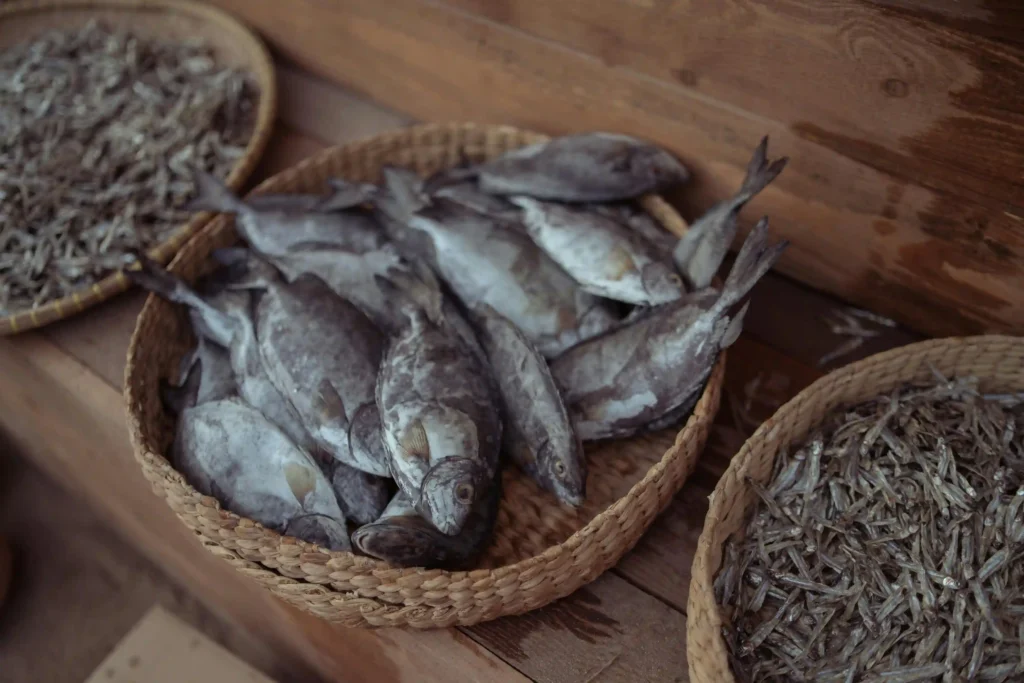
Colombia also has a river fishing tradition that few author kitchens have explored with the same seriousness as marine fishing. The rivers of the Magdalena, Cauca, Atrato and their tributaries have species like bocachico, bagre, capaz and nicuro that are historical ingredients of popular Colombian cooking but rarely appear in fine dining restaurants.
La Makha works with the premise that elevated Colombia does not mean ignoring what comes from the river. The verified-origin cooking that defines the restaurant’s proposal has room for freshwater product when it arrives with the quality the restaurant requires. The variety of the Catch of the Day reflects that openness: it is not always marine fish. Sometimes it is a river species that arrives in the condition the kitchen team needs to work it with the technique the dish requires.
To understand better how La Makha selects and works its marine product, the article on local fish on the plate at La Makha details the supplier selection process and the chain from sea to table.
Hours and reservations
La Makha opens for dinner Monday to Thursday from 6:00 p.m. to 10:00 p.m., and Friday and Saturday until 10:30 p.m. Sundays and holidays are closed for dinner. Breakfast is available every day from 6:00 a.m. to 11:30 a.m.
The restaurant is at Carrera 25 #10-51, Transversal Superior, El Poblado, Medellín, on the first floor of Binn Hotel, with free covered parking.
FAQ about fish and seafood at La Makha
Where does the fish La Makha uses come from?
Fresh white fish arrives from the Colombian Pacific three times a week, directly from Bahía Solano in Chocó. The prawns are from Tumaco and the squid is from the Colombian Caribbean.
What sea dishes does La Makha have on its menu?
The White Fish Ceviche ($50.000), the Octopus ($135.000), the Catch of the Day ($112.900) and the Creamy Rice ($95.000) are the main dishes that work with Colombian fish and seafood.
What is the Catch of the Day at La Makha?
It is a dish that changes according to the day’s catch. The current version includes fresh Pacific white fish with artisanal rigatoni, Tumaco prawn encocado, mandarin lemon meunière, local fresh cheese, mushroom powder and purple basil.
What is the Tumaco prawn encocado?
It is a traditional Colombian Pacific preparation that uses coconut milk as its base. At La Makha it is made with Tumaco prawns, one of the most important fishing ports on the Colombian Pacific coast.
Where is La Makha in Medellín?
At Carrera 25 #10-51, Transversal Superior, El Poblado, Medellín, on the first floor of Binn Hotel.
How much does the tasting menu cost at La Makha?
$330.000 per person without pairing and $420.000 with curated pairing. À la carte dishes with fish and seafood range from $50.000 to $135.000.
To book and secure the table, the most direct path is the official La Makha Restaurant page. If Colombian marine product is part of what you are looking for, La Makha has a proposal with origin to back it up.