There is a moment in any author dinner that says a lot about what comes next: when the bread arrives. Not because bread is the most important dish of the evening, but because it reveals whether the kitchen takes seriously the details that nobody specifically asks for but that everyone perceives.
At La Makha Restaurant, on the first floor of Binn Hotel in El Poblado, Medellín, the sourdough bread does not arrive as a generic gesture. It arrives as part of a dish: the Buffalo Stracciatella, where the artisanal herb bread is the vehicle designed to accompany the creamy cheese from Planeta Rica, the smoked peas, the fennel and orange mousse and the confit San Marzano tomatoes. It is not accompaniment bread. It is bread with purpose.
Why sourdough matters in author cuisine
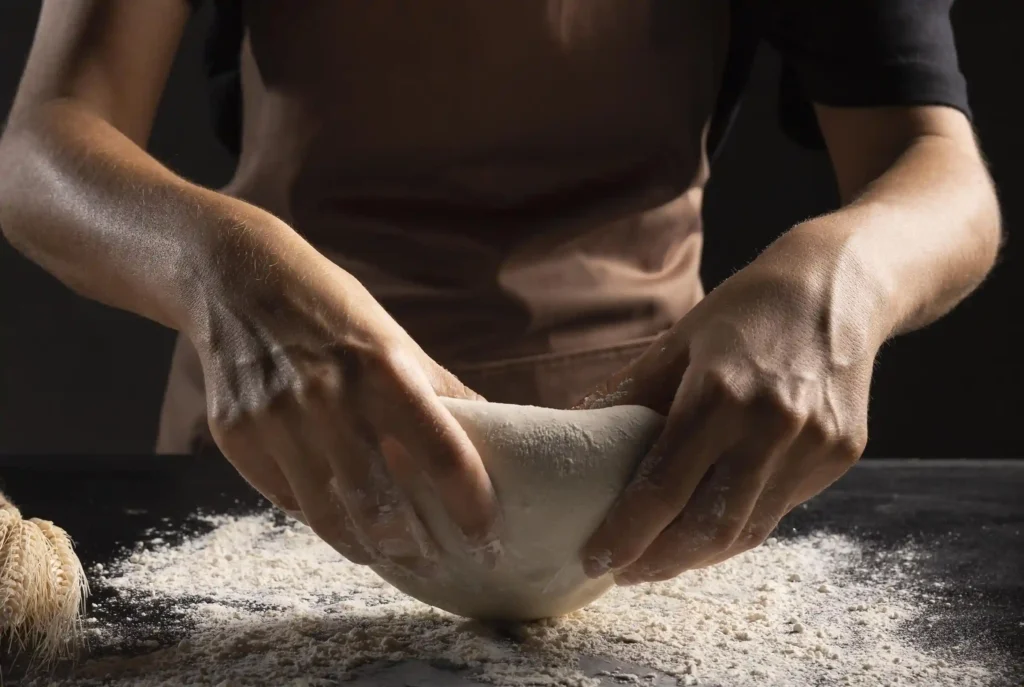
Sourdough is a living fermentation. A mixture of flour and water that captures wild yeasts and bacteria from the environment and uses them to leaven the bread slowly, without commercial yeast. The result is bread with a more pronounced crust, a crumb with irregular holes, a subtle acidity that varies according to the starter and the fermentation time, and a longer shelf life than industrial yeast bread.
Those characteristics are not aesthetic. They are functional. In an author kitchen that works with verified-origin ingredients and contemporary haute cuisine techniques, sourdough follows the same logic as any other ingredient on the menu: it contributes something specific that nothing else can replace.
In the context of La Makha, the artisanal herb bread that accompanies the Buffalo Stracciatella has a concrete role: to clean the palate between bites of creamy cheese and to absorb the oils and juices of the dish without competing with the main flavors. The herbs it carries, consistent with the aromatic proposal of the pennyroyal that finishes the dish, create a continuity that is not accidental.
The Buffalo Stracciatella: the dish where bread has a starring role
The Buffalo Stracciatella ($55.000) is one of the most complete starter dishes on the La Makha menu. Creamy buffalo stracciatella from Planeta Rica, a municipality in Córdoba with a buffalo farming tradition, accompanied by garlic-smoked peas, fennel and orange mousse, confit San Marzano tomatoes and pennyroyal oil.
The pennyroyal oil is the detail that connects everything. Pennyroyal is an aromatic herb from the Antioquian mountains with a profile between mint and chamomile, more herbal and less intense than either. In oil form, its presence is discreet but recognizable. And it is exactly that kind of detail that makes the herb bread accompanying the dish make sense: the herbs in the bread speak to the pennyroyal oil in the dish without duplicating it.
For those who have not tried Colombian buffalo stracciatella, the texture is creamier and wetter than conventional mozzarella. It shreds to the touch, hence the name, and has a dairy richness that needs contrast. The garlic-smoked peas provide it. The fennel and orange mousse too. And the sourdough bread, with its subtle acidity and its crust, completes the picture.
Sourdough as an expression of terroir
There is a dimension of sourdough bread that is rarely mentioned in the Colombian gastronomic context: its capacity to express terroir. A sourdough starter fed with local flours that captures the wild yeasts of El Poblado’s environment produces a bread different from one made with the same starter in another city. It is a fermentation of place, not just of technique.
La Makha works with that logic throughout its entire proposal. The chontaduro that appears in the leche de tigre of the tasting menu’s Watermelon Ceviche is not a generic chontaduro: it comes from the Pacific. The oyster mushrooms in the Corn Crisp Arepa are Antioquian. The buffalo cheese is from Planeta Rica. The herb bread follows that same line: it is an artisanal preparation that responds to the geography of the restaurant, not an industrial product disguised as artisanal.
That consistency of criteria is what defines a serious Colombian author kitchen. It is not enough to use local ingredients in the main dishes and serve industrial bread at the table. Attention to detail must be consistent from the beginning to the end of the dinner.
Fermentation as technique in La Makha’s proposal
Sourdough bread is the most visible expression of fermentation in the La Makha menu, but it is not the only one. The restaurant works with its own pickles: the pickled chayote in the Orellanas, the pickled mustard seeds in the tasting menu’s Watermelon Ceviche, the house-pickled beets in the Pork Belly ($68.000). All are fermentation or acidification processes that the kitchen team controls internally.
That fermentation culture is not a convenience trend. It is a natural consequence of working with fresh and seasonal product: fermentation allows the preservation, transformation and deepening of the flavor of ingredients that would otherwise have a very short window of use. House-pickled beets have a different acidity profile from industrial pickled beets. The La Makha team knows exactly how much time and what proportion of vinegar produces the result they want.
The article on fermentation and modern cuisine at La Makha goes deeper into how the restaurant applies these techniques in its proposal and why fermentation is a central tool in contemporary Colombian author cuisine.
Hours and reservations
La Makha opens for dinner Monday to Thursday from 6:00 p.m. to 10:00 p.m., and Friday and Saturday until 10:30 p.m. Sundays and holidays are closed for dinner. Breakfast is available every day from 6:00 a.m. to 11:30 a.m.
The restaurant is at Carrera 25 #10-51, Transversal Superior, El Poblado, Medellín, on the first floor of Binn Hotel, with free covered parking.
Frequently asked questions about sourdough bread at La Makha
Does La Makha have sourdough bread in its proposal?
Yes. The artisanal herb bread that forms part of the Buffalo Stracciatella is an artisanal preparation that accompanies the dish with a specific purpose within the gastronomic construction.
What is La Makha’s Buffalo Stracciatella?
It is a starter dish at $55.000 that uses creamy buffalo stracciatella from Planeta Rica with garlic-smoked peas, fennel and orange mousse, confit San Marzano tomatoes, pennyroyal oil and artisanal herb bread.
Why does La Makha use fermentations in its menu?
Fermentation is a technique that allows the transformation and deepening of the flavor of fresh and seasonal ingredients. La Makha uses its own pickles of chayote, mustard seeds and beets to add acidity and complexity to its dishes without relying on industrial products.
Where is La Makha in Medellín?
At Carrera 25 #10-51, Transversal Superior, El Poblado, Medellín, on the first floor of Binn Hotel.
How much does dinner at La Makha cost?
The tasting menu costs $330.000 without pairing and $420.000 with curated pairing. À la carte dishes range from $45.000 to $275.000. Desserts cost $35.000 and signature cocktails start at $38.000.
What other artisanal processes does La Makha use in its kitchen?
In addition to artisanal bread, the restaurant makes its own pickles of chayote, mustard and beet, uses house vinegar in the Pork Belly and works with Colombian ferments like viche canao in its signature cocktails and pairings.
To book a table and experience the complete experience from bread to dessert, the starting point is the official La Makha Restaurant page. The details nobody mentions are often the ones most remembered.