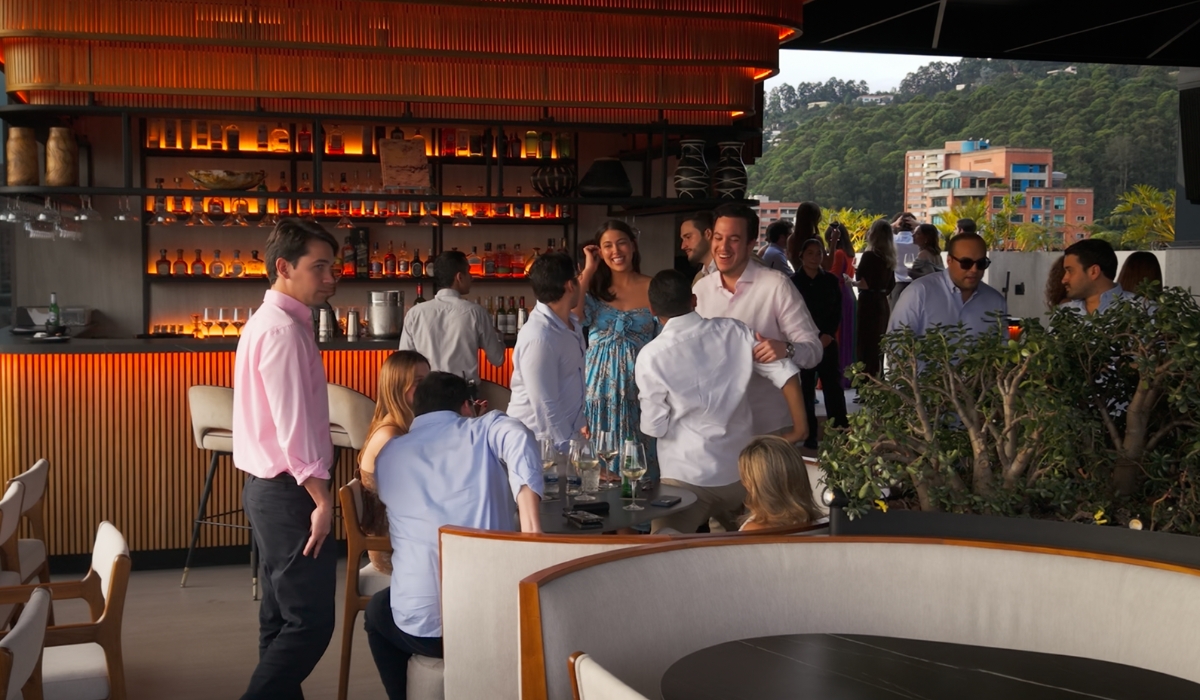
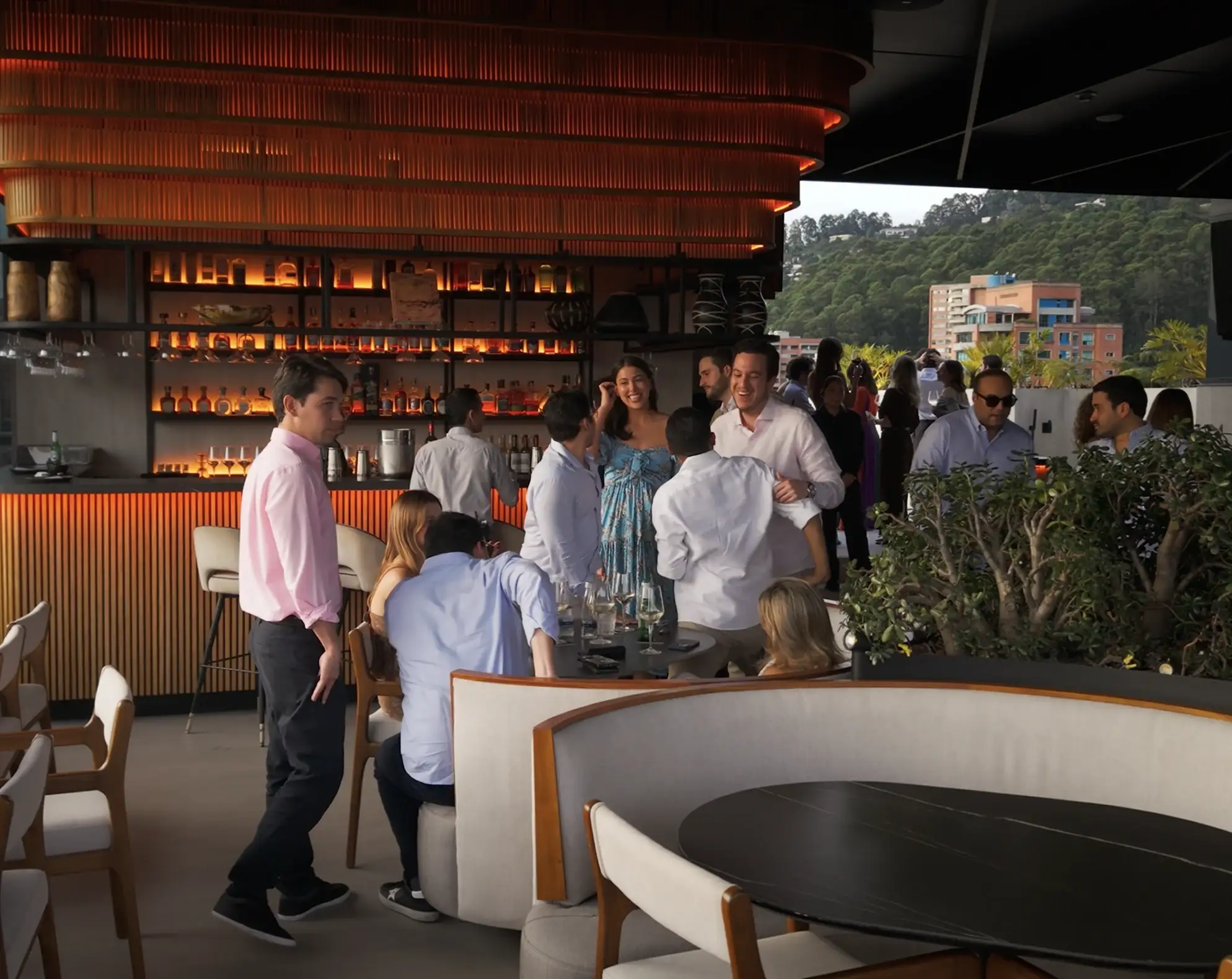
La Makha does not practice fusion. It practices culinary excavation.
“Mediterranean-Colombian fusion” is the easiest description of La Makha. It’s also the least accurate. Something gets lost when you label a proposal that chef David Suárez Estrada describes very differently: not as a blend of two traditions, but as a deepening of one — the Colombian one — using tools that come from somewhere else.
The difference isn’t semantic. It has consequences in every kitchen decision: which ingredient leads the dish, which technique gets applied and why, what story each bite tells.
The problem with “fusion”
Gastronomic fusion, as a global trend, frequently produces results that don’t belong to any tradition with any real depth. Mango sushi, kimchi tacos, arepa with prosciutto — these combinations can be delicious, but they rarely tell a story that couldn’t be told another way. They’re juxtapositions, not syntheses.
The problem isn’t mixing. The problem is mixing from the outside in: taking an exotic ingredient and placing it on a familiar base to generate novelty. La Makha works in the opposite direction. The starting point is always Colombia — its territories, its communities, its ingredients, its ancestral techniques. The question is never “what Mediterranean ingredient can I use today?” but “what does this specific Colombian ingredient need to give its best?”
When the answer to that question turns out to be a Spanish, Italian or French technique, that technique gets applied. But the argument is always made by the Colombian ingredient. That’s not fusion — it’s identity with borrowed tools.
“La Makha doesn’t practice fusion; it practices culinary excavation, unearthing flavors, techniques and stories that have always been there, waiting to be reinterpreted with creative rigor and ancestral respect.” — BINN Hotel · La Makha, beyond fusion
Fusion vs. identity: the concrete difference
Fusion takes external elements and incorporates them into a local base. Identity digs into the local until it finds something universal. These aren’t the same operation in reverse — they’re completely different operations.
Conventional gastronomic fusion
- The imported ingredient carries the dish. The local element is context or decoration.
- The technique is the argument. The ingredient is the excuse to apply it.
- Novelty comes from the unexpected combination of two different traditions.
- The result could have been cooked in another city with similar ingredients.
- The dish’s identity is ambiguous — it doesn’t belong to any tradition with depth.
Identity with borrowed technique · La Makha
- The Colombian ingredient leads. The Mediterranean technique exists so that ingredient can give its best.
- The ingredient is the argument. The technique is the tool that translates it.
- Novelty comes from going deep into the local until something universal emerges.
- The result can only exist in Colombia — because the ingredients that make it possible only exist here.
- The dish’s identity is unmistakably Colombian, even if the technique is Spanish or French.
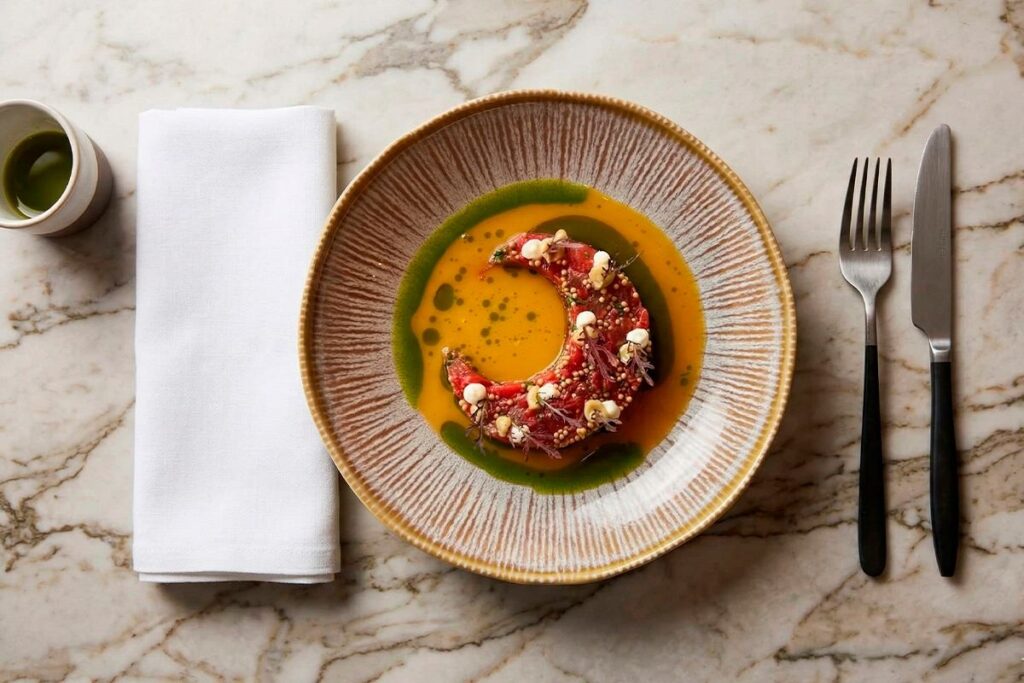
The example that illustrates this most precisely: a criolla potato risotto with buffalo milk curd cheese isn’t “Italian-Colombian fusion.” It’s the natural evolution of ancestral techniques — the Colombian potato purée taken to its maximum textural expression. The Italian technique doesn’t impose its identity on the dish. The dish remains deeply Colombian, narrated in a vocabulary that an international guest can recognize.
Real cases: how it works in the dishes on the menu
Octopus from La Guajira · Technique: Spanish ajo blanco Ajo blanco is an Andalusian preparation — a base of almonds or toasted bread, garlic, oil and vinegar. At La Makha, the toasted bread is replaced by aged Antioquian almojábana: matured fresh cheese with a density and flavor that bread doesn’t have. The technique comes from Andalusia. The culinary argument only exists in Antioquia.
Where Colombia is: Andalusian ajo blanco has existed for centuries. Antioquian almojábana ajo blanco can’t be made in any other kitchen in the world because aged almojábana doesn’t exist anywhere else.
Catch of the day · Rigatoni with encocado · Technique: Italian pasta Encocado is a preparation from Colombia’s Pacific coast — a stew of seafood or fish in coconut milk, with spices specific to the Afro-Colombian cooking of that coast. At La Makha it’s served over house-made rigatoni. The pasta is the format — the language in which it’s presented. The sauce, the flavor and the story belong to the Colombian Pacific.
Where Colombia is: no Italian restaurant would make an encocado because encocado doesn’t exist in Italy. The pasta is the vehicle. The destination was always the Colombian Pacific.
Ceviche · Chontaduro leche de tigre · Technique: Latin American ceviche Ceviche uses citric acid to “cook” the fish. At La Makha, the acidic base isn’t just lime: it includes chontaduro, a palm fruit from the Colombian Pacific with a fatty, sweet profile that transforms the leche de tigre into something no Peruvian ceviche could imitate.
Where Colombia is: La Makha’s leche de tigre is unreplicable outside Colombia. The chontaduro gives it a richness that only exists in that specific ingredient from that specific region.
Lamb · Paipa cheese foam · Technique: European avant-garde foam Foam is a technique from Spanish avant-garde cooking. At La Makha, the foam uses Paipa cheese — Colombia’s only cheese with a protected designation of origin, produced exclusively in Boyacá. The technique is Spanish. The flavor is from Boyacá.
Where Colombia is: the tool travels. The ingredient doesn’t.
Flan · Viche canao · Technique: Mediterranean flan. Flan has existed in the Mediterranean tradition since the Roman Empire. At La Makha the coconut flan includes viche canao — an ancestral artisanal distillate made by Afro-Colombian communities on the Pacific coast using methods that haven’t changed in generations. The form is Mediterranean. The soul is from the Pacific.
Where Colombia is: viche canao doesn’t exist outside the communities that distill it on the Colombian Pacific. No European chef could make this dish because the ingredient that defines it only exists here.
La Makha’s philosophical manifesto
Sustainability as consequence, not objective Sustainability arises naturally from using seasonal, proximity ingredients. It’s not a marketing strategy — it’s the direct result of buying from Colombian producers instead of importing. The dish’s identity and sustainability go hand in hand because both depend on the same principle: the Colombian ingredient first.
Elevation as an act of respect, not elitism Elevating a humble ingredient — güatila, aged almojábana, viche canao — is an act of cultural reclamation, not appropriation. When La Makha puts viche canao on the tasting menu, it doesn’t exoticize it. It places it where it belongs: as the ingredient that closes the restaurant’s most sophisticated gastronomic experience.
Innovation as exploration, not rupture Innovation happens within tradition, never against it. The Corn Cracker doesn’t break with the Colombian arepa — it deepens it, taking the texture of creole corn from the Montes de María to its maximum technical expression. Innovation at La Makha always starts with a question about the Colombian ingredient, never with an international trend being imported.
Why European training reinforces, rather than dilutes, the identity
The apparent paradox of La Makha is that David Suárez Estrada trained in Michelin-starred kitchens in Spain and France — the same ones that developed many of the techniques he now applies in Medellín. Shouldn’t that training pull the chef toward the European style?
Suárez Estrada‘s answer is that European training didn’t give him recipes — it gave him a system of thinking. He learned to understand cooking as an orchestra of processes: temperature, texture, acidity, fat, time. Those tools are neutral. They have no homeland. What turns them into Colombian identity cooking is the repertoire of ingredients they’re applied to.
The question the chef asked himself on returning to Colombia sums it all up: how would the great European masters apply their techniques if they had Colombia’s biodiversity at their disposal? That question doesn’t dilute Colombian identity — it magnifies it. Because the answer can only be built with chontaduro, viche canao, octopus from La Guajira, Paipa cheese. With ingredients that don’t exist in any European kitchen.
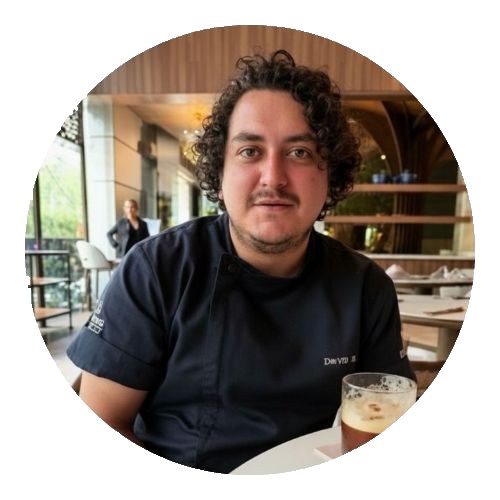
“We want every guest to feel the Mediterranean in every texture, but the soul must remain Colombian.” — Chef David Suárez Estrada · La Makha
Frequently asked questions about La Makha’s culinary philosophy
Is La Makha a Mediterranean-Colombian fusion restaurant?
The most accurate description is “Colombian identity cooking with Mediterranean technique.” La Makha uses European techniques — sous vide, foams, confit, fermentations — but the culinary argument is always made by a Colombian ingredient. The restaurant’s identity is unmistakably Colombian.
What’s the difference between fusion and identity in cooking?
Fusion takes external elements and incorporates them into a local base. Identity cooking digs into the local until it finds something universal. At La Makha, the Colombian ingredient always leads the dish. The Mediterranean technique exists so that ingredient can give its best — never to be the protagonist.
Why does La Makha use European techniques if its cooking is Colombian?
Culinary techniques are neutral tools. Sous vide, confit and foam have no national identity — they’re methods for transforming an ingredient in a specific way. At La Makha, those techniques are applied when they resolve the Colombian ingredient better than any local alternative. The tool travels. The ingredient doesn’t.
What makes La Makha’s menu unique compared to other fusion restaurants in Medellín?
Most fusion restaurants start from an international technique or trend and look for Colombian ingredients that fit. La Makha starts from the Colombian ingredient and looks for the technique that elevates it. That’s the reverse order — and it produces results that can’t be replicated in another city because the ingredients that make them possible only exist in Colombia.
What does “origin cooking” mean at La Makha?
It means every ingredient on the menu has a verifiable geographic origin in Colombia. “Origin” isn’t just traceability — it’s the source of the dish’s identity. Knowing where an ingredient comes from means knowing the story the chef is telling. To understand how that philosophy shows up in each preparation, it’s worth exploring La Makha’s exclusive signature techniques.
Colombian identity is served on a plate. Make a reservation and see for yourself.
Discover the restaurant on La Makha’s page at BINN Hotel. Instagram: @lamakharestaurante